Op Ed by Ragnar Almqvist, Ireland’s non-resident ambassador to Kosovo
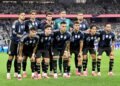
Football, the beautiful game, can also be cruel. After heroic campaigns, Ireland and Kosovo came very close to qualifying for the World Championship, but remained very close to achieving this goal. However, at least this autumn we can look forward to our teams and fans – among the most vibrant and unique in the world – meeting for the first time in the Nations League. Regardless of the outcome, it will strengthen the friendship between two nations that, throughout history, have experienced more than defeats, but have always risen stronger.
Before that, Ireland have another target. On July 1, we take the Presidency of the Council of the European Union for the eighth time. The motto of our Presidency is an old Irish proverb – “Ní neart go cur le chéile”, which means “In unity there is strength”. Our aim, at a time of geopolitical turmoil, is to reaffirm the EU’s greatest asset – our unity – and give new impetus to efforts to deliver concrete results for our citizens.
During our six-month mandate, working with the European Commission, the European Parliament and other partners, we will try to advance three interrelated priorities. We want to speed up the work to restore the EU’s competitiveness and revitalize our economies. We want to strengthen our collective security. And we want to reaffirm the values that lie at the heart of the EU – democracy, the rule of law and fundamental rights.
Our ambition is great. But this article is short. Our program at www.Ireland2026.EU sets out in detail the policies we will advance to deliver this agenda. Here, I want to focus on what is most important for Kosovo.
As two small nations whose independence was won with great sacrifice, Ireland and Kosovo have long shared a sense of closeness. We have a lot in common – large diasporas, rich cultures and the highest public support in Europe for the European Union. As a people, we share the conviction that, even as times change, our fundamental values cannot. This is why Ireland has been so steadfast in its support for Ukraine – a key priority of our Presidency. And also why Ireland, which joined the EU in its first enlargement half a century ago, remains today among the strongest supporters of enlargement.
We know where Kosovo’s beliefs lie. “Mother Teresa” boulevard in Pristina is bordered by two banners in blue and yellow. One expresses Kosovo’s support for Ukraine – which we greatly appreciate – while the other conveys the message that the European Union is “on your side”.
Ireland was among the first EU countries to recognize Kosovo’s independence. Since then, no matter how far we are geographically, we have been on your side, supporting Kosovo in affirming its place in Europe and the world. Our Defense Forces have served in KFOR for more than a quarter of a century, promoting peace and stability. Irish experts within the EU in Kosovo, EULEX, the Council of Europe, the OSCE and other organizations support your institutions in strengthening rights and the rule of law. Recently, with the initiative of our Government, we have created new educational partnerships, cultural exchanges and professional training programs. Of course, Ireland does much more as part of the European Union – Kosovo’s strongest and most reliable partner – supporting with nearly €4 billion in grants since 1999 and, through the Growth Plan for the Western Balkans, allocating nearly €900 million until 2027 to accelerate your integration with European partners.
We can and will do more bilaterally as well. But at the end of the day, Ireland wants to see the day when we and the European Union are not just on the side of Kosovo, but when Kosovo – and all the countries of the Western Balkans – are with us within the European Union. We consider enlargement a fundamental value of the EU, as well as an investment in the peace, prosperity and security of our continent. Our Presidency will work with candidate and potential candidate countries to support their path to membership, in accordance with the merit-based process. As Commissioner Kos has pointed out, the expansion is experiencing a new momentum. We have to capitalize on it. Our Presidency will focus especially on Albania and Montenegro, with the hope that the latter will close the remaining chapters this year and become the 28th member state of the EU in 2028. But we will also support other partners in the region and build on the historic progress achieved by Ukraine and Moldova.
None of this will be easy. For Kosovo, whose application for candidate country status has not yet been accepted by the Council, the challenges are clear. As president of the Council, Ireland will engage with EU institutions and member states to advocate on your behalf. But in EU enlargement, there are no goals scored without opposition. If Kosovo wants to move forward, the political leaders must convince all 27 partners and, following the example of your outstanding footballers, show real ambition to achieve the goal.
What does this mean in practice?
After three democratic and comprehensive elections in less than two years, it means reaching the inter-party compromises necessary for political stability, the election of the President and the implementation of the Reform Agenda. In accordance with the Constitution, it means recommitment to the rule of law, respecting the decisions of the courts, just as football players respect the referees, even – perhaps especially – when they disagree with them. It means actively preserving Kosovo’s multi-ethnic character and building bridges that connect communities and not divide them, recognizing that there are times when delegation of power is the best way to empower it. Finally, it means fulfilling the obligations within the Belgrade-Pristina Dialogue and fully implementing the Ohrid Agreement, acknowledging, as President Costa emphasized last month, that normalization is essential for the European future of both Kosovo and Serbia.
Compromise is difficult. But the rewards can be great. We know this in Ireland. Securing peace in Northern Ireland, after decades of bitter conflict, required extraordinary patience and even greater compromise from the British and Irish governments, but above all from local leaders and the communities they represented. Nearly three decades after the Good Friday Agreement, the process remains a work in progress. However, being careful in equating the two different contexts, if one lesson can be drawn from this experience, it is that with patience, persistence and the courage to be creative, dialogue can yield results. We hope that the new government, as soon as it is constituted, will recognize this.
While visiting the birthplace of his ancestors in 1963, President John F. Kennedy called Ireland “first among small nations.” We see Kosovo as part of that same club. For nations like ours, there are no easy paths – neither to qualification for the World Championship nor to international recognition. But as our footballers – and many others at this World Cup – have shown, small nations can achieve great things. On and off the field, I hope to see Kosovo and Ireland progress and flourish in the coming months.