Wednesday, July 1, 2026
    The GeoStrategic Consensus
    No Result
    View All Result
    • Login
    • HOME
    • AMERICAS
      • Argentina
      • Brazil
      • Canada
      • Chile
      • Colombia
      • Costa Rica
      • Cuba
      • Dominican Republic
      • Ecuador
      • El Salvador
      • Greenland
      • Guatemala
      • Honduras
      • Mexico
      • Nicaragua
      • Panama
      • Paraguay
      • Peru
      • United States
      • Uruguay
      • Venezuela
    • ASIA-PACIFIC
      • Australia
      • Brunei Darussalam
      • Cambodia
      • China
      • Federated States of Micronesia
      • Fiji
      • Indonesia
      • Japan
      • Kiribati
      • Laos
      • Malaysia
      • Marshall Islands
      • Mongolia
      • Myanmar
      • Nauru
      • New Zealand
      • North Korea
      • Palau
      • Papua New Guinea
      • Philippines
      • Samoa
      • Singapore
      • Solomon Islands
      • South Korea
      • Taiwan
      • Thailand
      • Timor-Leste
      • Tonga
      • Tuvalu
      • Vanuatu
      • Vietnam
    • CARICOM
      • CARICOM – Non-English
        • Haiti
        • Suriname
      • CARICOM Associates
        • Anguilla
        • Bermuda
        • British-Virgin-Islands
        • Cayman-Islands
        • Curacao
        • Turks-and-Caicos
      • CARICOM English
        • Antigua and Barbuda
        • Barbados
        • Belize
        • Dominica
        • Grenada
        • Guyana
        • Jamaica
        • Montserrat
        • Saint Kitts and Nevis
        • Saint Lucia
        • Saint Vincent and the Grenadines
        • The Bahamas
        • Trinidad and Tobago
    • EURASIA
      • Armenia
      • Azerbaijan
      • Balarus
      • Georgia
      • Kazakhstan
      • Kyrgyzstan
      • Moldova
      • Russia
      • Tajikistan
      • Turkmenistan
      • Ukraine
      • Uzbekistan
    • EUROPE
      • Albania
      • Andorra
      • Austria
      • Bosnia and Herzegovina
      • Bulgaria
      • Croatia
      • Cyprus
      • Czech Republic
      • Denmark
      • Estonia
      • Finland
      • France
      • Germany
      • Greece
      • Holy See
      • Hungary
      • Iceland
      • Ireland
      • Italy
      • Kosovo
      • Latvia
      • Liechtenstein
      • Lithuania
      • Luxembourg
      • Malta
      • Monaco
      • Montenegro
      • Netherlands
      • North Macedonia
      • Norway
      • Poland
      • Portugal
      • Romania
      • San Marino
      • Serbia
      • Slovakia
      • Slovenia
      • Spain
      • Sweden
      • Switzerland
      • United Kingdom
    • MIDDLE EAST AND NORTH AFRICA
      • Algeria
      • Bahrain
      • Egypt
      • Iran
      • Iraq
      • Israel
      • Jordan
      • Kuwait
      • Lebanon
      • Lybia
      • Morocco
      • Oman
      • Palestinian Territories
      • Qatar
      • Saudi Arabia
      • Syria
      • Tunisia
      • Turkey
      • United Arab Emirates
      • Western Sahara
      • Yemen
    • SOUTH ASIA
      • Afghanistan
      • Bangladesh
      • Bhutan
      • India
      • Maldives
      • Nepal
      • Pakistan
      • Sri Lanka
    • SUB-SAHARAN AFRICA
      • Angola
      • Benin
      • Botswana
      • Burkina Faso
      • Burundi
      • Cabo Verde
      • Cameroon
      • Central African Republic
      • Chad
      • Comoros
      • Cote d’Ivoire
      • Democratic Republic of the Congo
      • Djibouti
      • Equatorial Guinea
      • Eritrea
      • Eswatini
      • Ethiopia
      • Gabon
      • Gambia
      • Ghana
      • Guinea
      • Guinea Bissau
      • Kenya
      • Lesotho
      • Liberia
      • Madagascar
      • Malawi
      • Mali
      • Mauritania
      • Mauritius
      • Mozambique
      • Namibia
      • Niger
      • Nigeria
      • Republic of the Congo
      • Rwanda
      • Sao Tome and Principe
      • Senegal
      • Seychelles
      • Sierra Leone
      • Somalia
      • South Africa
      • South Sudan
      • Sudan
      • Tanzania
      • Togo
      • Uganda
      • Zambia
      • Zimbabwe
    • HOME
    • AMERICAS
      • Argentina
      • Brazil
      • Canada
      • Chile
      • Colombia
      • Costa Rica
      • Cuba
      • Dominican Republic
      • Ecuador
      • El Salvador
      • Greenland
      • Guatemala
      • Honduras
      • Mexico
      • Nicaragua
      • Panama
      • Paraguay
      • Peru
      • United States
      • Uruguay
      • Venezuela
    • ASIA-PACIFIC
      • Australia
      • Brunei Darussalam
      • Cambodia
      • China
      • Federated States of Micronesia
      • Fiji
      • Indonesia
      • Japan
      • Kiribati
      • Laos
      • Malaysia
      • Marshall Islands
      • Mongolia
      • Myanmar
      • Nauru
      • New Zealand
      • North Korea
      • Palau
      • Papua New Guinea
      • Philippines
      • Samoa
      • Singapore
      • Solomon Islands
      • South Korea
      • Taiwan
      • Thailand
      • Timor-Leste
      • Tonga
      • Tuvalu
      • Vanuatu
      • Vietnam
    • CARICOM
      • CARICOM – Non-English
        • Haiti
        • Suriname
      • CARICOM Associates
        • Anguilla
        • Bermuda
        • British-Virgin-Islands
        • Cayman-Islands
        • Curacao
        • Turks-and-Caicos
      • CARICOM English
        • Antigua and Barbuda
        • Barbados
        • Belize
        • Dominica
        • Grenada
        • Guyana
        • Jamaica
        • Montserrat
        • Saint Kitts and Nevis
        • Saint Lucia
        • Saint Vincent and the Grenadines
        • The Bahamas
        • Trinidad and Tobago
    • EURASIA
      • Armenia
      • Azerbaijan
      • Balarus
      • Georgia
      • Kazakhstan
      • Kyrgyzstan
      • Moldova
      • Russia
      • Tajikistan
      • Turkmenistan
      • Ukraine
      • Uzbekistan
    • EUROPE
      • Albania
      • Andorra
      • Austria
      • Bosnia and Herzegovina
      • Bulgaria
      • Croatia
      • Cyprus
      • Czech Republic
      • Denmark
      • Estonia
      • Finland
      • France
      • Germany
      • Greece
      • Holy See
      • Hungary
      • Iceland
      • Ireland
      • Italy
      • Kosovo
      • Latvia
      • Liechtenstein
      • Lithuania
      • Luxembourg
      • Malta
      • Monaco
      • Montenegro
      • Netherlands
      • North Macedonia
      • Norway
      • Poland
      • Portugal
      • Romania
      • San Marino
      • Serbia
      • Slovakia
      • Slovenia
      • Spain
      • Sweden
      • Switzerland
      • United Kingdom
    • MIDDLE EAST AND NORTH AFRICA
      • Algeria
      • Bahrain
      • Egypt
      • Iran
      • Iraq
      • Israel
      • Jordan
      • Kuwait
      • Lebanon
      • Lybia
      • Morocco
      • Oman
      • Palestinian Territories
      • Qatar
      • Saudi Arabia
      • Syria
      • Tunisia
      • Turkey
      • United Arab Emirates
      • Western Sahara
      • Yemen
    • SOUTH ASIA
      • Afghanistan
      • Bangladesh
      • Bhutan
      • India
      • Maldives
      • Nepal
      • Pakistan
      • Sri Lanka
    • SUB-SAHARAN AFRICA
      • Angola
      • Benin
      • Botswana
      • Burkina Faso
      • Burundi
      • Cabo Verde
      • Cameroon
      • Central African Republic
      • Chad
      • Comoros
      • Cote d’Ivoire
      • Democratic Republic of the Congo
      • Djibouti
      • Equatorial Guinea
      • Eritrea
      • Eswatini
      • Ethiopia
      • Gabon
      • Gambia
      • Ghana
      • Guinea
      • Guinea Bissau
      • Kenya
      • Lesotho
      • Liberia
      • Madagascar
      • Malawi
      • Mali
      • Mauritania
      • Mauritius
      • Mozambique
      • Namibia
      • Niger
      • Nigeria
      • Republic of the Congo
      • Rwanda
      • Sao Tome and Principe
      • Senegal
      • Seychelles
      • Sierra Leone
      • Somalia
      • South Africa
      • South Sudan
      • Sudan
      • Tanzania
      • Togo
      • Uganda
      • Zambia
      • Zimbabwe
    No Result
    View All Result
    Agentially
    No Result
    View All Result
    Home EUROPE Ireland

    How the lives of primary schoolchildren changed during and after Covid – The Irish Times

    The Analyst by The Analyst
    July 1, 2026
    in Ireland
    How the lives of primary schoolchildren changed during and after Covid – The Irish Times


    Shay is a primary school student in a disadvantaged area of one of Ireland’s big cities. He is a capable, bright and sensitive little boy, full of energy and determination.

    READ ALSO

    Andy Burnham’s Britain appears to be moving towards reality. What would it look like? – The Irish Times

    His teachers and his mother say he is strong-willed, and needs to be kept busy with activities so he stays out of trouble.

    Routine and consistency are key to keeping Shay on track – but the Covid-19 pandemic and subsequent school closures disrupted this entirely for him.

    In fact, it changed the course of his academic life – and many other children’s, too.

    Shay is one of 4,000 children across almost 200 schools who were surveyed over five years, from 2019 to 2023, in a landmark longitudinal study of Irish primary schools.

    The study, Children’s School Lives, was undertaken by UCD’s school of education and funded by the National Council for Curriculum and Assessment (NCCA).

    While not by design, it ended up producing an unprecedented data set on how the Covid-19 pandemic affected children in Ireland and their educational outcomes.

    It showed us that Irish children became less accomplished in reading and mathematics after the pandemic, with the gap between poor and affluent children widening even further than before.

    Many of the findings in the research are broken down into Deis (Delivering Equality of Opportunity in Schools) and non-Deis schools.

    The Deis scheme is a Government funding stream aimed at reducing educational disadvantage by providing extra support to schools in poorer socio-economic areas.

    While it is used to denote children from poorer backgrounds in this study, researchers are keen to point out there are poor children in non-Deis schools who may not be fully captured by the data as presented.

    The study showed us that children in these Deis schools, as well as those from poorer backgrounds, from immigrant families, and Traveller children scored significantly lower on average in reading and maths than their peers in non-Deis schools in both periods.

    However, this gap widened after Covid, with the study showing rising inequalities for children from poorer homes during the pandemic, in relation to access to digital technologies and parents’ own knowledge of how to support their children’s learning at home during lockdowns.

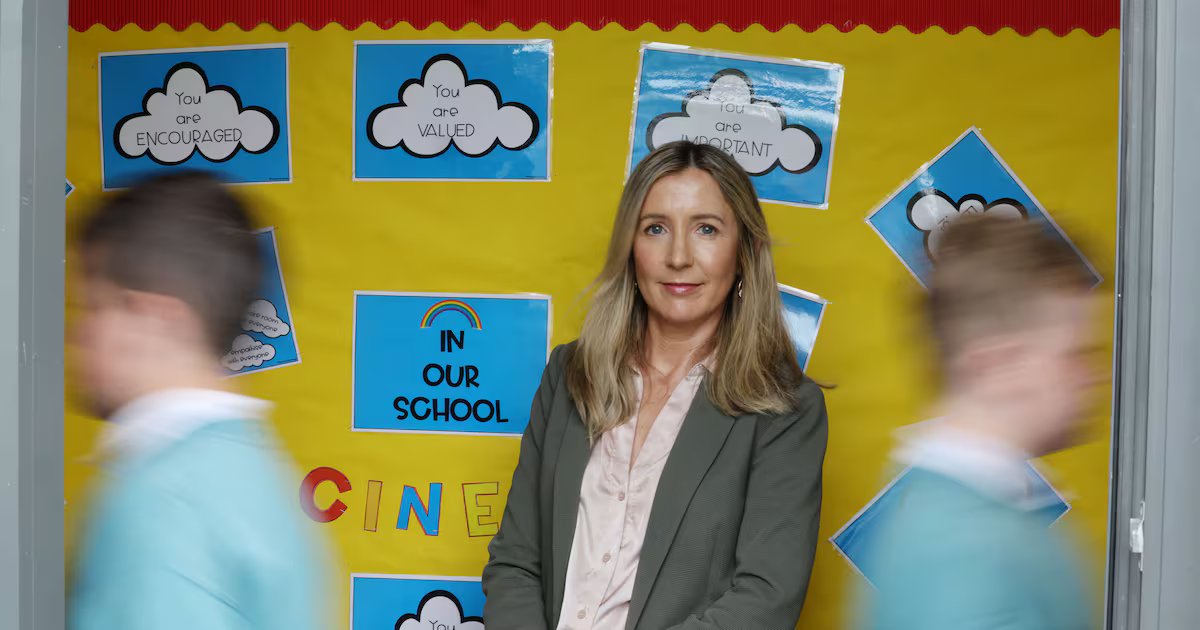
    Órla Hanahoe is principal at Cnoc Mhuire SNS, a Deis Plus school in Tallaght, Dublin 24.

    “Some of the children coming into our school are from very challenging backgrounds. There is often antisocial behaviour in the community, and children can be exposed to that, things like open drug use, open drug dealing, high levels of crime, homelessness and overcrowded houses.

    “Some of them are setting their own alarms, and getting themselves into school.

    “They often come from a lot of trauma, sometimes a lot of death around them. We run a couple of Rainbows programmes [bereavement support programmes] every year within the school.

    “They’ve been exposed to so much trauma, like death, loss, illness, and even just the trauma of being exposed to addiction, things like that,” she says.

    This leads to children often coming in dysregulated in the morning and needing a lot of attention before the business of learning can begin.

    Many attend a breakfast club, and teachers spend time warming them up in the morning with ‘circle time’, where they discuss how they’re feeling. Some are taken for a cup of tea with a teacher if they are in need of some one-to-one time to regulate.

    When Covid came and disrupted all of this, it really impacted the children in her school.

    Primary schooling is a window in time for children, and if you can provide the kind of support for children and their families who are under stress, that does impact on their capacity to cope with school, and the earlier you can provide that intervention, the better

    —  Dympna Devine

    “They were disproportionately affected by Covid. Schools are the anchors in communities like this. They put structure and routine into a community, so when that structure was gone, I think the children really suffered,” she says.

    Trying to keep the children learning during lockdowns proved extremely difficult.

    “None of the children had devices, they didn’t have laptops, they didn’t even have their books. A lot of them were living in overcrowded homes, with no space to learn. A lot of the parents wouldn’t have had the educational attainments to support the learning, and that was really difficult,” she says.

    The research also shows us the pressures that teachers and principals are under in these schools, and how this worsened after Covid.
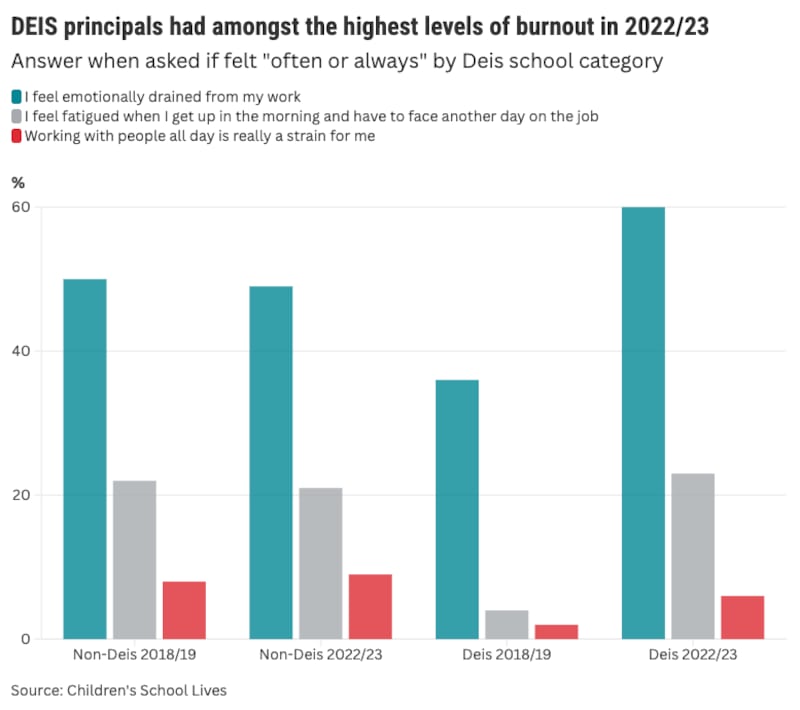
    Graphic showing results of survey of principals for Children's School Lives
    Graphic showing results of survey of principals for Children’s School Lives

    Principals in Deis schools reported higher stress, burnout and lower self-efficacy – or belief in their own capability – than their peers in non-Deis schools, both before and after the pandemic. However, these issues worsened significantly post-Covid, with the number of principals in Deis schools who reported feeling emotionally drained almost doubling from 36 per cent pre-pandemic to 60 per cent after.

    Similarly, those who reported feeling fatigued rose from 4 per cent in 2018/19 to 23 per cent in 2022/23.

    [ What can students from Deis schools learn from business mentors?Opens in new window ]

    “You’re playing catch-up, and I think teachers found that very stressful,” Hanahoe says.

    Many children struggled coming back to school with such a break in routine, and their home lives had become even more stretched than they were before.

    “Teachers often sometimes take the trauma of the children in the class on themselves and bring it home,” she says.

    Researchers found that families experiencing poverty often face intersecting challenges of food and housing insecurity, addiction and social isolation.

    In Shay’s case, all of this amounted to him becoming detached, disengaged and lacking in confidence by the end of primary school.

    His mother struggles to coax him out the door to school, he says other children laugh at him for needing extra help with some subjects, and he believes school won’t help him get what he really wants – which is paid work.

    “I don’t really like school,” he told researchers. “I still try a good bit, but I give up really easy, because I’m not good.”

    When asked if he thinks he is smart, he says: “Not really. I’m not smart about school.”

    By the end of his time there, he is focused only on one thing – working to earn money.

    What do the testimonies of children like Shay tell us about the impact of the pandemic on the lives of our primary schoolchildren, and what can be done now to address it?

    “Shay is a very good example of a child who really needed routine, and how much of that routine was disrupted during the pandemic, making it very difficult for a child like Shay to fill in those gaps that he had missed in those periods of disrupted schooling,” says Prof Dympna Devine, the lead researcher on the project.

    What starts as momentary frustration for Shay when we first meet him in 2nd class gradually builds into low academic self-worth and a sense of not being seen or heard.
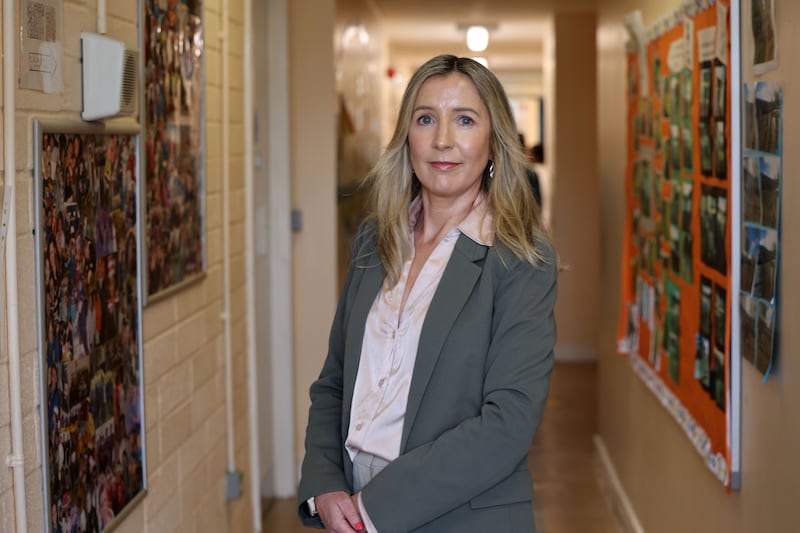
    Órla Hanahoe says many children struggled coming back to school with such a break in routine. Photograph: Alan Betson
    Órla Hanahoe says many children struggled coming back to school with such a break in routine. Photograph: Alan Betson

    This is despite efforts being made by his parents and teachers to try to support him as best they can, Devine says.

    “What those findings highlight is the wraparound supports that are needed for all people who are involved in working with children in poverty,” she says.

    The role of schools as frontline service providers in these areas is apparent in the research, as is their growing struggle to cope with the level of need they encounter post-pandemic.

    Some changes have already been made since the study ended.

    Firstly, the NCCA has used the findings of the research to inform the new primary school curriculum, which was launched last year.

    The voices of children from this report have been used to create a curriculum that is more responsive to their experiences by including more playful learning, better inclusion and updated guidance on assessment, the NCCA says.

    Secondly, an enhanced Deis scheme called Deis Plus was announced last year. This provides extra support to about 120 schools across the country identified as having the highest risk of educational disadvantage and poverty among its students.

    However, Devine says these supports need to be expanded across the communities which these schools serve, and they also need to reach the poorer children in non-Deis schools who are not benefiting from extra resources.

    “We know that we have about one-fifth of our child population who are in poverty, and they are not just concentrated within Deis schools,” she says.

    “Primary schooling is a window in time for children, and if you can provide the kind of support for children and their families who are under stress, that does impact on their capacity to cope with school, and the earlier you can provide that intervention, the better.”

    For Shay, his mother told researchers at the end of the study period that he was struggling to settle into secondary school, and the transition was proving challenging for him.

    “I have a few Shays in every class, and that’s why we’ve always been advocating for more teachers, more SET (Special Education Teachers), because what these children need is to be able to connect with an adult, who when they see that they’re dysregulated or upset, take them out, do a little bit of work with them, one on one, give them the attention and find what they like,” Hanahoe says.

    “We’re trying to raise good citizens here. If investment is made in schools like ours, society will see the benefits, because if children are engaged and connected with school, they’re less likely to be involved in antisocial behaviour. They’re gonna have higher self-esteem. You would like to think they are less likely to engage in drugs.

    “But early investment is key, and will benefit the whole of society.”


    Source link

    Related Posts

    Andy Burnham’s Britain appears to be moving towards reality. What would it look like? – The Irish Times
    Ireland

    Andy Burnham’s Britain appears to be moving towards reality. What would it look like? – The Irish Times

    July 1, 2026
    Next Post
    Want a global pause on the development of artificial intelligence

    Want a global pause on the development of artificial intelligence

    POPULAR NEWS

    Presidential Council approves number of decisions despite Deputy Head Al-Koni’s objections

    Presidential Council approves number of decisions despite Deputy Head Al-Koni’s objections

    July 1, 2026
    Offshoring: how the World Bank wants to boost Morocco’s competitiveness

    Offshoring: how the World Bank wants to boost Morocco’s competitiveness

    July 1, 2026
    I. Ruginienė after the shootings in the city of Štade: Lithuania is together with Germany

    I. Ruginienė after the shootings in the city of Štade: Lithuania is together with Germany

    July 1, 2026
    Young people are addicted to “Live” for the purpose of profit

    Young people are addicted to “Live” for the purpose of profit

    July 1, 2026
    Al-Riyadh newspaper | The Shura Council demands controls on age verification and restrictions on the use of social media platforms

    Al-Riyadh newspaper | The Shura Council demands controls on age verification and restrictions on the use of social media platforms

    July 1, 2026

    EDITOR'S PICK

    The prime minister ordered to build a modern and self-reliant institute in space research

    The prime minister ordered to build a modern and self-reliant institute in space research

    July 1, 2026
    Azzaman daily newspaper Azzaman newspaper – an independent international daily Arabic newspaper

    Azzaman daily newspaper Azzaman newspaper – an independent international daily Arabic newspaper

    July 1, 2026
    Accès restreint – Le Monde

    Accès restreint – Le Monde

    July 1, 2026
    Pope Leo

    Pope Leo

    July 1, 2026

    Recent Posts

    • A study carried out in Austria reveals that women are more vulnerable than men in the event of a traffic accident
    • PlayStation: Sony announces the end of the production of physical discs for new games | steaming | Japan | United States r
    • John Roberts fought for decades to overturn Humphrey’s Executor
    • Some 59,000 buildings affected by earthquakes in Venezuela, according to NASA’s preliminary assessment

      © 2026 Agentially - Navigating shifting sovereignties and global risk .

      Welcome Back!

      Login to your account below

      Forgotten Password?

      Retrieve your password

      Please enter your username or email address to reset your password.

      Log In
      No Result
      View All Result
      • HOME
      • AMERICAS
        • Argentina
        • Brazil
        • Canada
        • Chile
        • Colombia
        • Costa Rica
        • Cuba
        • Dominican Republic
        • Ecuador
        • El Salvador
        • Greenland
        • Guatemala
        • Honduras
        • Mexico
        • Nicaragua
        • Panama
        • Paraguay
        • Peru
        • United States
        • Uruguay
        • Venezuela
      • ASIA-PACIFIC
        • Australia
        • Brunei Darussalam
        • Cambodia
        • China
        • Federated States of Micronesia
        • Fiji
        • Indonesia
        • Japan
        • Kiribati
        • Laos
        • Malaysia
        • Marshall Islands
        • Mongolia
        • Myanmar
        • Nauru
        • New Zealand
        • North Korea
        • Palau
        • Papua New Guinea
        • Philippines
        • Samoa
        • Singapore
        • Solomon Islands
        • South Korea
        • Taiwan
        • Thailand
        • Timor-Leste
        • Tonga
        • Tuvalu
        • Vanuatu
        • Vietnam
      • CARICOM
        • CARICOM – Non-English
          • Haiti
          • Suriname
        • CARICOM Associates
          • Anguilla
          • Bermuda
          • British-Virgin-Islands
          • Cayman-Islands
          • Curacao
          • Turks-and-Caicos
        • CARICOM English
          • Antigua and Barbuda
          • Barbados
          • Belize
          • Dominica
          • Grenada
          • Guyana
          • Jamaica
          • Montserrat
          • Saint Kitts and Nevis
          • Saint Lucia
          • Saint Vincent and the Grenadines
          • The Bahamas
          • Trinidad and Tobago
      • EURASIA
        • Armenia
        • Azerbaijan
        • Balarus
        • Georgia
        • Kazakhstan
        • Kyrgyzstan
        • Moldova
        • Russia
        • Tajikistan
        • Turkmenistan
        • Ukraine
        • Uzbekistan
      • EUROPE
        • Albania
        • Andorra
        • Austria
        • Bosnia and Herzegovina
        • Bulgaria
        • Croatia
        • Cyprus
        • Czech Republic
        • Denmark
        • Estonia
        • Finland
        • France
        • Germany
        • Greece
        • Holy See
        • Hungary
        • Iceland
        • Ireland
        • Italy
        • Kosovo
        • Latvia
        • Liechtenstein
        • Lithuania
        • Luxembourg
        • Malta
        • Monaco
        • Montenegro
        • Netherlands
        • North Macedonia
        • Norway
        • Poland
        • Portugal
        • Romania
        • San Marino
        • Serbia
        • Slovakia
        • Slovenia
        • Spain
        • Sweden
        • Switzerland
        • United Kingdom
      • MIDDLE EAST AND NORTH AFRICA
        • Algeria
        • Bahrain
        • Egypt
        • Iran
        • Iraq
        • Israel
        • Jordan
        • Kuwait
        • Lebanon
        • Lybia
        • Morocco
        • Oman
        • Palestinian Territories
        • Qatar
        • Saudi Arabia
        • Syria
        • Tunisia
        • Turkey
        • United Arab Emirates
        • Western Sahara
        • Yemen
      • SOUTH ASIA
        • Afghanistan
        • Bangladesh
        • Bhutan
        • India
        • Maldives
        • Nepal
        • Pakistan
        • Sri Lanka
      • SUB-SAHARAN AFRICA
        • Angola
        • Benin
        • Botswana
        • Burkina Faso
        • Burundi
        • Cabo Verde
        • Cameroon
        • Central African Republic
        • Chad
        • Comoros
        • Cote d’Ivoire
        • Democratic Republic of the Congo
        • Djibouti
        • Equatorial Guinea
        • Eritrea
        • Eswatini
        • Ethiopia
        • Gabon
        • Gambia
        • Ghana
        • Guinea
        • Guinea Bissau
        • Kenya
        • Lesotho
        • Liberia
        • Madagascar
        • Malawi
        • Mali
        • Mauritania
        • Mauritius
        • Mozambique
        • Namibia
        • Niger
        • Nigeria
        • Republic of the Congo
        • Rwanda
        • Sao Tome and Principe
        • Senegal
        • Seychelles
        • Sierra Leone
        • Somalia
        • South Africa
        • South Sudan
        • Sudan
        • Tanzania
        • Togo
        • Uganda
        • Zambia
        • Zimbabwe

      © 2026 Agentially - Navigating shifting sovereignties and global risk .

      This website uses cookies. By continuing to use this website you are giving consent to cookies being used. Visit our Privacy and Cookie Policy.