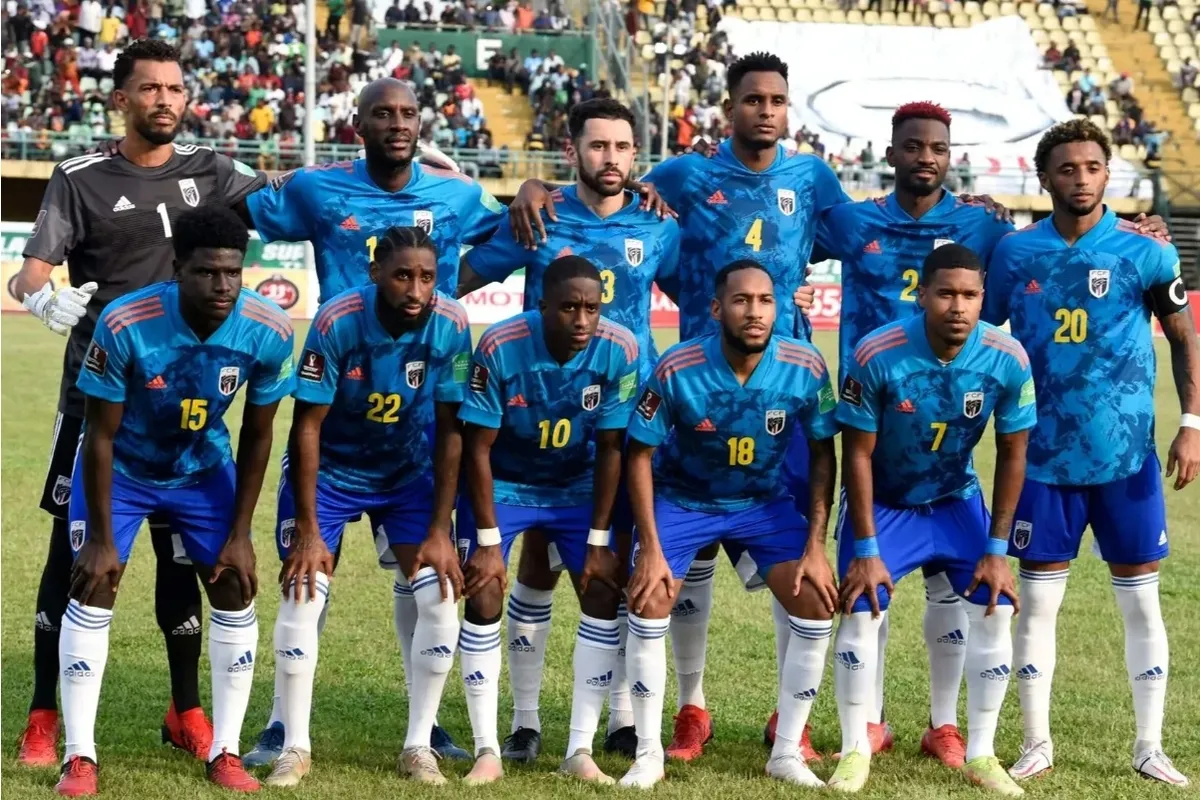
After Cape Verde’s stunning start to the tournament, with two valuable draws against Spain and Uruguay, Copley Sport managers believe that this partnership was more than a coincidence and that their fates have brought them together.
Copley Sports, an American sportswear manufacturing company, chose Serbia as the first national team under its contract in 2025 and hoped to be seen in the World Cup through this team. But with the failure of Serbia to advance to the tournament, this company had to look for another option.
At the same time, Cape Verde, a small archipelago country with an area of about 1,500 square miles, qualified for the World Cup for the first time. Copley Sports contacted the Football Federation of this country and only a few months later, the two parties signed a cooperation agreement.
For George Altris, the Lebanese-born owner of the New York-based company, the partnership was ideal; Two little-known names who were both making their first World Cup debuts and each had a story to tell about faith, effort and belonging. “It’s a dream,” Altris said. Something that seemed impossible to believe.”
He was confident that this story will attract the attention of football fans around the world. However, even the most optimistic people could not foresee such a scenario. Cape Verde stopped not one, but two former world champions at the start of the World Cup.
First, this team stopped Spain with a goalless draw by presenting a coherent and defensive performance. Vozinia, the 40-year-old goalkeeper of this team, said after the match: “A person tries his whole life to experience moments like this.”
A few days later, Cape Verde made its second surprise with a 2-2 draw against Uruguay, and now with a goalless draw against Saudi Arabia and their promotion from the group stage, it became one of the most important stories of the World Cup. This event was also a great success for Copley Sports. “We’re a small brand that’s partnered with a small team, and now we’re both building a big story,” Altrice said.
These results have drawn widespread attention to the Copley Sports brand, and the company managers hope that this trend will continue. The story of Cape Verde and Copley Sport is an example of the fact that in football, size and fame are not always decisive. This small African team has proven with its performances that with faith, planning and effort, you can stand up to the biggest football powers in the world and turn dreams into reality. For Cape Verde fans as well as the Copley Sport brand, this is just the beginning of an inspiring journey; A path that shows that nothing is impossible in football.
Nothing is impossible
Cape Verde is now the third country with the least population in the history of the World Cup, which is going to the elimination stage. Bobista, the head coach of Cape Verde, said in the press conference after the match with Saudi Arabia: “We are here to show that a country may be small, it may be facing many financial problems, but if it is flexible, able to endure hardships and work with discipline, it is able to compete shoulder to shoulder with the biggest teams and players who are at the highest level of football and with different financial means.” We dedicate this success to the continent of Africa and the people of our country. In my opinion, in sports and especially football, everything depends on organization, courage and determination. When you step onto the pitch, many of the differences disappear. It doesn’t matter how big your opponent is in world football; On the field, many national teams are on equal footing. We wanted to show that not only in football, but in other aspects of life, no matter what challenges you face; Whether financial problems or any other obstacles, great achievements can be achieved. All you have to do is have a dream and follow it with all your heart.”
From a Lebanese immigrant to a World Cup wonder kit partner
The success was beyond what Cape Verde’s clothing manufacturing partner had expected. But for George Altrees, a man who came to the United States on a student visa in the 1980s, built a career in an industry with no experience, and later entered the world of sportswear through the role of a “soccer dad,” it’s exactly the kind of story he believes no one can tell better than them.
Altris was born in Magdaliya, a small village in northern Lebanon with a population of about a thousand people. He grew up in a family of six. His father was a hard worker who, in his own words, “did everything he could to keep a roof over our heads, so we could eat and study.”
He spent his childhood days between studying and playing football in dirt fields. With the start of the Lebanese civil war in 1975, his family moved to the mountainous areas to find safety. Eight years later, Altris went to Beirut to continue his studies, and then after receiving a student visa, he went to America to study software engineering.
After arriving in the United States, he started working in the warehouse of a company; where he was responsible for loading and unloading trucks. He gradually got promoted, became interested in the industry and eventually started a hair accessory company with his brother from the basement of a house in Brooklyn.
That company, which was called GMA Accessories, later became Copley of New York; A company that operates in the field of production and distribution of clothing and fashion accessories.
Altris says about his professional path: “This opportunity came, I got into this work and then I fell in love with it. “When something comes in front of you, it’s better to love it and do your best to make the most of it.”
When her son started playing football, Altris was looking for a suitable club for him. Finally, in 2011, he founded the Cedar Stars club in New Jersey. He was looking for a specific shade of green for the team’s jerseys, but no manufacturer could supply it to his liking. For this reason, he decided to use the supply chain of Kapali company. He asked his wife to design the clothes and finally only 24 clothes were produced for the team. This small project was the starting point of the birth of Copley Sports brand.
What started as a grassroots soccer team and club has grown dramatically. In 2026 alone, more than 450,000 young footballers will be playing in Copley Sports uniforms. The company now has 14 product lines for various sports, including lacrosse, field hockey, volleyball and basketball, and works with more than 500 grassroots soccer clubs. George Altris then expanded the company’s activities to a professional level. In 2013, he bought the Wilmington Hammerheads club in the USL and took over the provision of the team’s uniforms. Today, Copley Sports works with 130 professional teams as well as federations such as USA Lacrosse and USA Field Hockey. “I never planned for this business to get this big,” Altris says with a laugh.
However, his deep passion for football, his children’s participation in the sport, as well as having a dedicated supply chain paved the way for the company’s growth. “I always say be passionate about what you do and love it,” he says. “If you have a great idea, you have to become obsessed with it and do whatever it takes to make it happen.”
In this way, Copley Sports opened its way to the World Cup; A tournament in which more than three-quarters of the teams present are equipped by the three giants of the sportswear industry, namely Nike, Adidas and Puma.
Cape Verde’s blue shirt is designed with a triangular pattern that is inspired by the flight paths between the islands of this country; A design that the company introduced with the slogan connected through rhythm to symbolize the connection between the Cape Verde Islands.
Copley had only a few months to design and produce the uniforms of the Cape Verde national team for the World Cup. “We are still a relatively small brand in the sports world,” Altris said before the tournament. This project is very attractive, unique and different. We hope that both Keyword will be successful and so will we. After that, we will see how we can use this opportunity to be a role model for other dreamers.”
But even he could not have predicted what happened in Cape Verde’s first-ever World Cup match on June 15 in Atlanta. Cape Verde fans, wearing blue and yellow clothes, conquered the stadium and supported their team with great enthusiasm; A scene Altris says she will never forget.