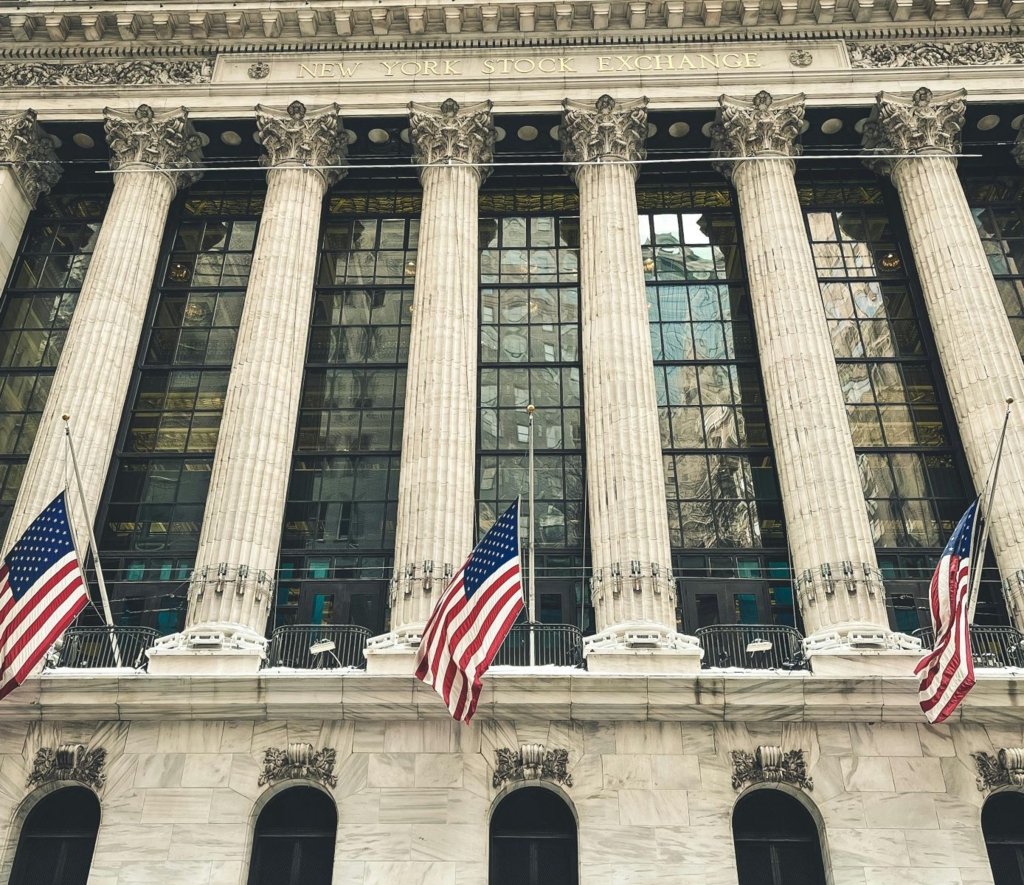
An unexpected development occurred on Monday, June 22, 2026, on the New York Stock Exchange, where the “AI bubble” burst, and one firm lost just under $400 billion in market value in a single day. Thus, after its fulminant debut, SpaceX, the company his Elon Muskrecords a spectacular decline.
Shares of SpaceX closed down 16.4% at $154.60 on Monday, remaining 31.5% below the high reached after the initial public offering of 86 billions of dollars of the group, on June 11. Shares were initially listed at $135, according to the Financial Times.
The actions of the group of artificial intelligence and Elon Musk’s rockets fell more than 16% on a new rise in US bond yields. The sharp reversal in the value of SpaceX shares comes as US government bond yields have risen sharply on expectations that the Federal Reserve will need to raise interest rates in the coming months to tame inflation.
Higher yields on ultra-low-risk Treasuries are caustic for high-value tech groups like SpaceX, which trade at more than 100 times last year’s earnings.
SpaceX’s $400 billion drop in market capitalization on Monday ranks as the second-biggest one-day loss of any company, according to a Bloomberg data analysis. SpaceX ended the session with a market capitalization of $2.03 trillion, down from an intraday peak of $2.7 trillion on June 16.
How quickly market sentiment has changed is clear from the evolution of the stock market capitalization. At its peak on June 16, SpaceX was valued at about $2.7 trillion — when the stock hit an all-time high of $225.64. A week later, the company’s value is only around $2.03 trillion. In just seven days, nearly $700 billion of market value has evaporated, writes Trending Topics.
“Everyone who wanted to buy SpaceX bought in the early days and it looks like they’re basically done,” said Mike O’Rourke of Jones Trading. The broader technology sector was also hurt on Monday, with the Nasdaq Composite down 1.3%. The stocks of major technology companies, incl GoogleAmazon and Broadcom, fell more than 4%.
Fed Chairman Kevin Warsh vowed last week to tame the surge in inflation sparked by the president’s war Donald Trump with Iran, while his colleagues at the US central bank presented an unexpectedly dubious set of projections. Nine of the 18 Fed officials who presented estimates expect higher rates by the end of this year. No member expected a rate hike until March.
The biggest drop on the stock market was that of Nvidia
Markets are now betting the central bank will raise rates as early as September, according to Monday’s trading in federal funds futures. Yields on two-year Treasury bonds, which are particularly sensitive to monetary policy expectations, rose 0.05 percentage points on Monday to 4.23%, the highest level in a year.
Higher rates also push up the price of debt issuance. SpaceX plans to raise up to $20 billion in a bond sale as early as this week to repay a $20 billion loan taken out in March when Musk merged his debt-laden artificial intelligence start-up xAI and social media platform X with the rocket company.
SpaceX’s massive valuation is based on the assumption that its artificial intelligence division — which posted a $6.4 billion loss in 2025 — has a total target market of $26.5 trillion.
On Monday, SpaceX agreed to provide computing resources at its Colossus 2 data center to the start-up Reflection AI, the latest in a series of deals Musk has struck with other groups involved in the artificial intelligence investment boom.
SpaceX struck similar deals with Anthropic and Google parent Alphabet in May and early June, respectively, mimicking the business model of CoreWeave, which leases computing capacity to tech companies building their own artificial intelligence models. Grok, the chatbot provided by xAI, has so far proven less popular than OpenAI’s ChatGPT, Google’s Gemini, and Anthropic’s Claude.
According to data published by Bloomberg, SpaceX’s $400 billion drop in market value represents the second largest decline in the history of the New York Stock Exchange. The biggest decline was that of Nvidia on January 27, 2025, when it lost almost 600 billion dollars.