With an average age of 44 years teaching staff and with normal schools that barely represent 2.8% of national enrollment higher educationMexico faces the challenge of guaranteeing the generational change in classrooms over the next decade.
In this context, specialists warn of the need to strengthen the training of new teachers before the challenges that faces the national educational system.
The situation is more visible in areas such as mathematics, science and English, where organizations such as the UNESCO and the OECD have reported challenges in ensuring enough specialized teachers, particularly in rural and indigenous communities and in areas with greater educational lags.
Although enrollment in normal schools showed a gradual recovery in recent years, growth has been moderate. According to figures from the SEP and the ANUIESthe number of normal school students went from around 108 thousand students in it 2015-2016 cycle about 115 thousand in 2024after several years of stagnation and falls in different entities of the country.
According to the analysis The decrease in enrollment in normal schools: an overview, based on SEP statistics, entities such as TlaxcalaCoahuila, Tamaulipas and Tabasco registered drops of more than 60% in normalista enrollmentwhile Oaxaca, Colima, Campeche and Nayarit reported reductions of close to half of their students in recent years.
Experts assure that if this trend continues, Mexico could face greater difficulties to fill teaching vacancies in basic education and upper halfparticularly in marginalized areas, where historically there is less availability of teachers and higher levels of educational lag.
Read also ARMA Study: Rocha, CNTE and the World Cup dominate May coverage
UNESCO states that the world will face a deficit of 44 million teachers by 2030a scenario that could have a greater impact on countries with educational gaps and difficulties in attracting new profiles to the teaching profession, such as Mexico.
Meanwhile, UNICEF points out that it is “urgent to strengthen the capacities of teachers, both those who currently teach and those who are in training,” in the face of the challenges faced by the Mexican educational system, especially in indigenous, rural and highly marginalized schools.
For Erik Avilesgeneral director of Mexicans First chapter Michoacánthe problem already has visible effects in the most vulnerable regions. He states that the shortage of young teachers and specialized programs mainly hits rural, indigenous and highly marginalized communities, where saturated groups, multigrade schemes and a lack of specialists in mathematics, science and English persist.

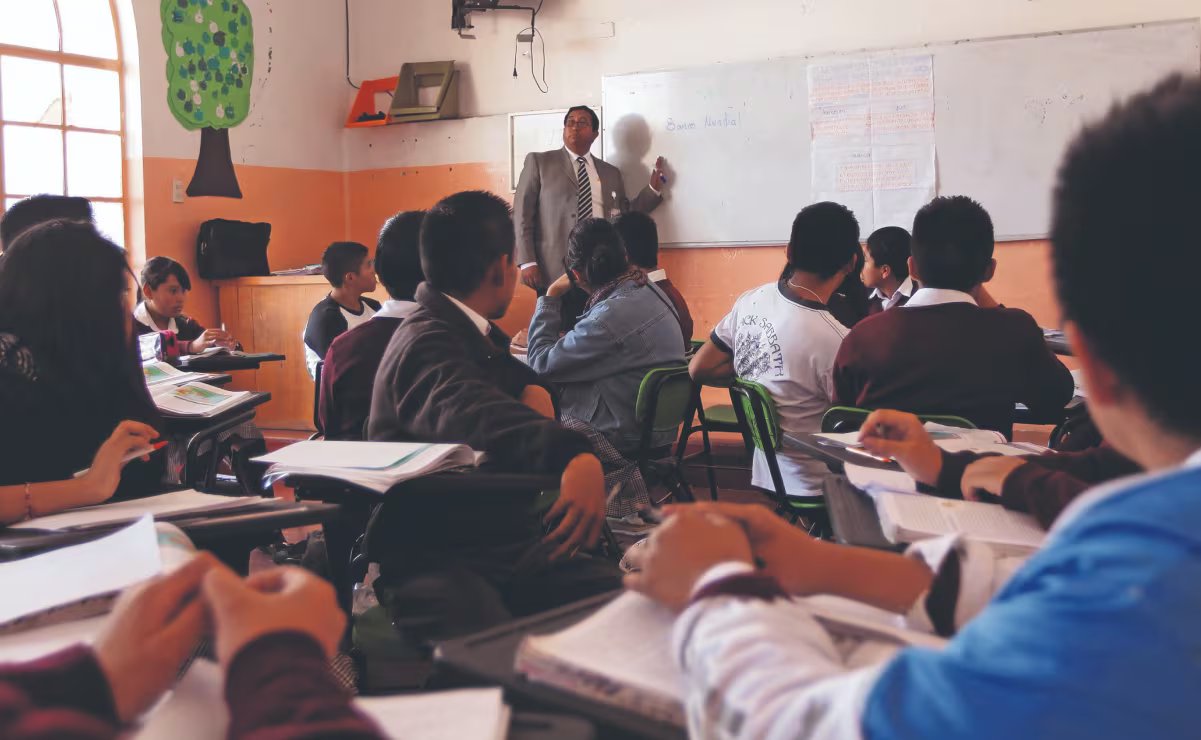
It is urgent to strengthen the capacities of teachers, especially in indigenous and rural schools: UNICEF. Photo: Archive/EL UNIVERSAL
Note that the phenomenon occurs in a context of persistent educational lag. Based on figures from the INEA, it indicates that 27.5 million people over 15 years of age are behind in education, which is equivalent to 27% of the population in that age range.
According to their estimates, by 2030 the Teachers’ pensions could absorb 41% of the educational budget and reach around 600 billion pesos. Meanwhile, per-student spending on infrastructure and teacher training would remain limited.
Avilés also projects a wave of retirements that could exceed 600 thousand teachers over the next decade. He warns that, if normalista enrollment does not grow rapidly, many vacancies could be covered through extraordinary mechanisms or emerging hiring.
Also note a unequal distribution of specialized teachers. The shortage, he affirms, is concentrated in technical subjects and in regions with less capacity to attract normal school graduates. Among the most affected sectors are preschools, indigenous primary schools and rural telesecondary schools, where there is a lack of specialists in Englisharts, physical education and technologies.
He maintains that the aging of the teaching profession is the result of a sustained decline in normalista enrollment for more than a decade. Considers that the global teacher deficit reported by UNESCO will have repercussions for Mexico and warns that the declines recorded in entities such as Tlaxcala, Coahuila, Tamaulipas and Tabasco reflect challenges that could be felt in classrooms in the coming years.
The specialist in educational issues, Fernando Ruizagrees that the challenge goes beyond simply replacing teachers who retire. In his opinion, the discussion also involves the quality of initial training and the institutional design that regulates the entry, assignment and permanence of teachers. He explains that the aging of the teaching staff occurs at the same time that enrollment in normal schools decreases and difficulties persist in attracting specialized profiles in mathematics, science and English.
However, he emphasizes that the problem is not limited to the number of teachers available, but also to their territorial distribution.
While urban areas have greater possibilities for attracting and retaining teachers, rural, indigenous and marginalized communities face greater difficulty in filling vacancies and reducing staff turnover, he points out.
He adds that the needs are not homogeneous between educational levels either. Although the highest concentration of teachers is in primary school, there are greater difficulties in finding specialized profiles in preschool and secondary school.
Read also Sheinbaum awards Rita Cetina scholarship in Aguascalientes; IMSS Hemodialysis Clinic delivery
He comments that the generational change depends on budgetary and institutional factors, among them the creation of placesthe administrative hiring processes and the financial capacity of states to incorporate new profiles.
He also observes that part of the teaching profession has extended their stay in service for economic reasons and labora situation that modifies the projections of generational replacement.
He adds that the analysis must incorporate the demographic changes that the country is experiencing. The gradual decrease in the number of girls, boys and adolescents implies that the challenge is to train more teachers and guarantee relevant profiles, strengthen territorial distribution and improve quality.
He asserts that the debate must encompass the education system’s ability to place adequate teachers in the regions where they are most needed.

Join our channel EL UNIVERSAL is now on Whatsapp! From your mobile device, find out about the most relevant news of the day, opinion articles, entertainment, trends and more.