An underwater trip revealed a vast cemetary of whales. And there’s more to it than just bones, reports CNN.
Scientists who recently guided a submersible to a remote site in the southeastern Indian Ocean have identified one of the largest and deepest whale graveyards, containing hundreds of fossils, including one representing a previously unknown species. But not all is dead in this deep-sea necropolis.
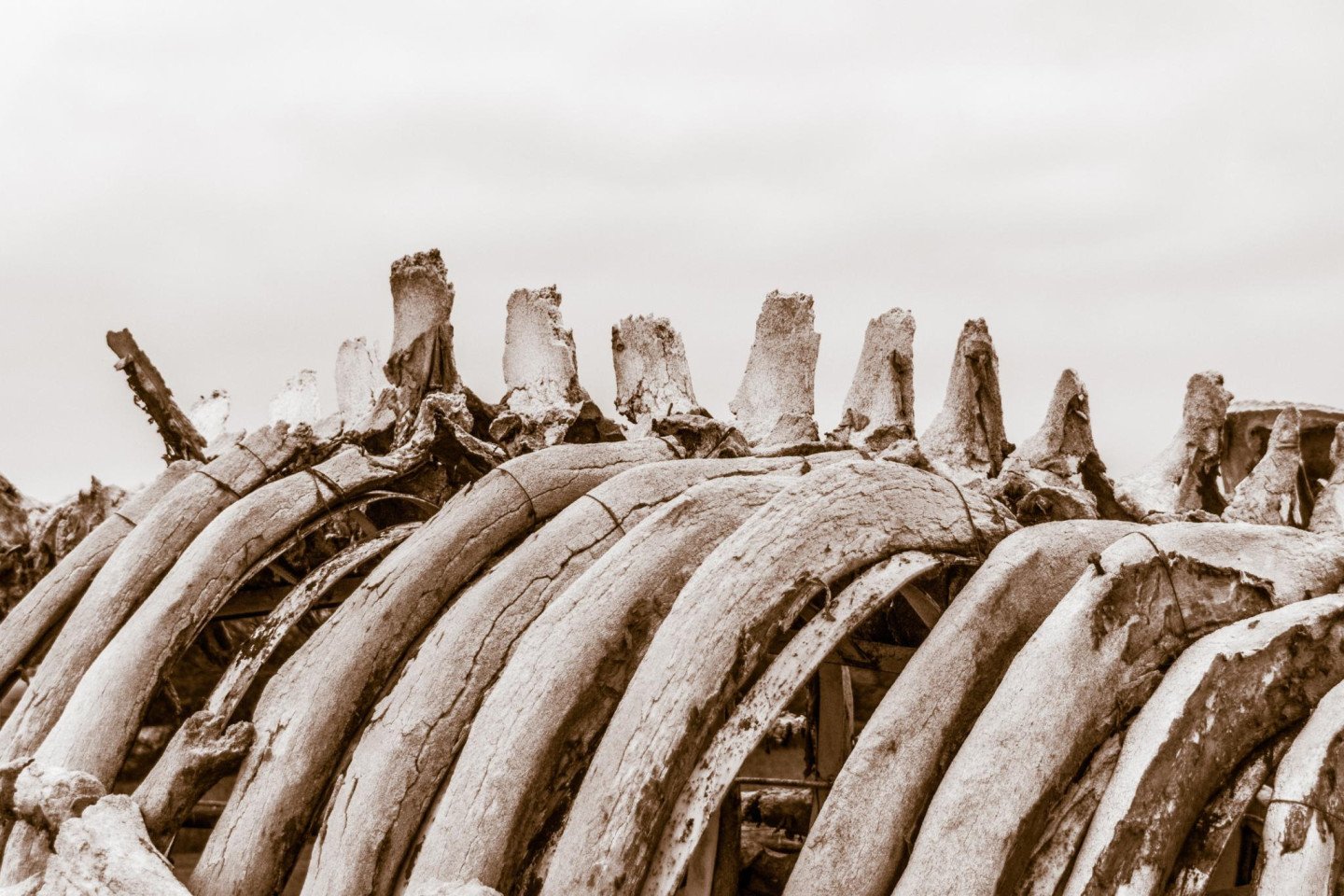
Tens of thousands of feet below the surface, dead or dying whales have floated to the vast cemetery, their bones intermingled for some 746 miles (1,200 kilometers). Alongside the oldest bones are modern skeletons, suggesting whale remains have been accumulating continuously at the site for at least five million years, based on the age of the fossils, researchers reported Wednesday in the journal Nature.
Most of the remains belong to beaked whales, whose skulls taper to slender snouts like dolphins. These whales dive deep and spend little time near the surface, so they are rarely seen and very little is known about their habits.
The researchers observed some sunken whale carcasses in the cemetery that were young enough to still have carnivores attached to them; these corpses feed a diverse community of deep-sea life, including bone-eating worms, snails, long-armed brittle stars, and clams that survive by using chemical energy to produce food. Many of these species may also be new to science, the study authors reported.
Paleontologists found the cemetery in the Diamantina Fault Zone, an area of sea ridges and trenches southwest of Australia. It was formed 30 to 40 million years ago during the breakup of the Australian and Antarctic continents and reaches a depth of about 15,000 to 23,000 feet (5,000 to 7,000 meters) below sea level.
“Although this is truly a huge whale graveyard, it is extremely difficult to reach because of the great depth,” said study co-author Peng Zhou, a researcher at the Institute of Deep Sea Science and Engineering (IDSSE) at the Chinese Academy of Sciences in Beijing.
The most scientists were surprised the density of the fossils and the continuity of their distribution across the site, with some sites having about 760 remains per square kilometer — “much more than anything previously documented” from similar sites, Zhou said.
It is estimated that the remains of over 10 million whales lie on the ocean floor of this trench.
As staggering as that number may seem, he added, there could be even more bones buried beneath the seabed sediments.
The researchers conducted 32 dives between February and March 2023 and found 485 whale fossil deposits. Scientists identified one of the modern carcasses as a small banded whale, or Balaenoptera acutorostrata, which was about 3 meters long. The remains of another modern species, Andrew’s beaked whale, scientifically known as Mesoplodon bowdoini, were found near fossils of the extinct genus Pterocetus. The oldest fossils belonging to Pterocetus benguelae were 5.3 million years old.
Both the extinct Pterocetus genus and living species, such as Mesoplodon bowdoini, have been discovered, preserved together in one region 1,200 kilometers long.
“This area serves as a habitat or migration corridor for cetaceans,” Song told CNN in an email. Beaked whales dive deep, but when they go beyond 3,000 meters, they can reach their limit, “increasing the risk of fatal exhaustion or decompression sickness.”
Another unexpected find at the site was a partial skull belonging to a previously unknown species, which scientists named Pterocetus diamantinae. Although the age of the fossil is not yet known, “its discovery helps to document the evolutionary history of the group and shows that by the time these fossils were deposited, highly specialized beaked whales had already evolved,” said study co-author Giovanni Bianucci, associate professor in the Department of Earth Sciences at the University of Pisa.