After seven months in the red, the “little pocket” that remains in the home after paying the fixed expenses once again showed a slight recovery, despite the fact that it is still below what it was before the libertarians arrived at Casa Rosada since this improvement did not cover all social segments. It is not for nothing that the discomfort of many Argentines who say they cannot make ends meet or who have credit debts continues to rise in the surveys.
The progress towards next year’s elections, after a “complicated” first quarter, now pushes the Government to want to play its cards deep with the numbers linked to the pocket, especially to give real embodiment to the prediction made by the Minister of Economy, Luis Caputo, about the next 18 months in the country. The official predicted weeks ago that they will be “the best that Argentina has seen in recent decades.”
In this framework, the Government commissioned work that may sound controversial in the face of social discontent. According to official data processed by the Ministry of Labor, in the last four presidential administrations, only two managed to increase the purchasing power of the average salary in the first 29 months. One of them, the one that showed the greatest expansion, would be that of Javier Milei.
In relation to the economy of the “square meter”, already last month, Hernán Lacunza’s consulting firm Empiria had anticipated with very preliminary data that disposable income in households would begin to improve from April. Indeed, it grew 0.7% in the month, they confirmed this Thursday there THE NATION. In Equilibra, the firm led by Martín Rapetti, they calculated that, after seven months of decline, disposable income increased 0.8%.
Beyond the change in trend, which still remains to be seen if it will be sustainable or not, it is worth remembering that for both consultancies, the “little pocket” left in the home after paying fixed expenses is still below the 2023 level.
“After seven consecutive months of decline, in April the registered Disposable Income grew 0.8% monthly, but fell 1% year-on-year (yoy). With this record, “It remains 14.5% below the average level of January-September 2023, prior to the presidential transition,” Rapetti’s team wrote in a report.
According to Equilibra’s private technicians, one nuance is important. The improvement was not for everyone. In fact, looking at the different groups, growth this month is concentrated in formal private employees (+1.6% monthly and +1.5% yoy), since the rest suffered a further worsening of their disposable income: retirees who do not receive the minimum (-0.2% monthly and -3.5% ai), minimum retirements with a bonus (-0.7% monthly and -9.2% ai) and public employees (-1.1% monthly and -6.6% ai).
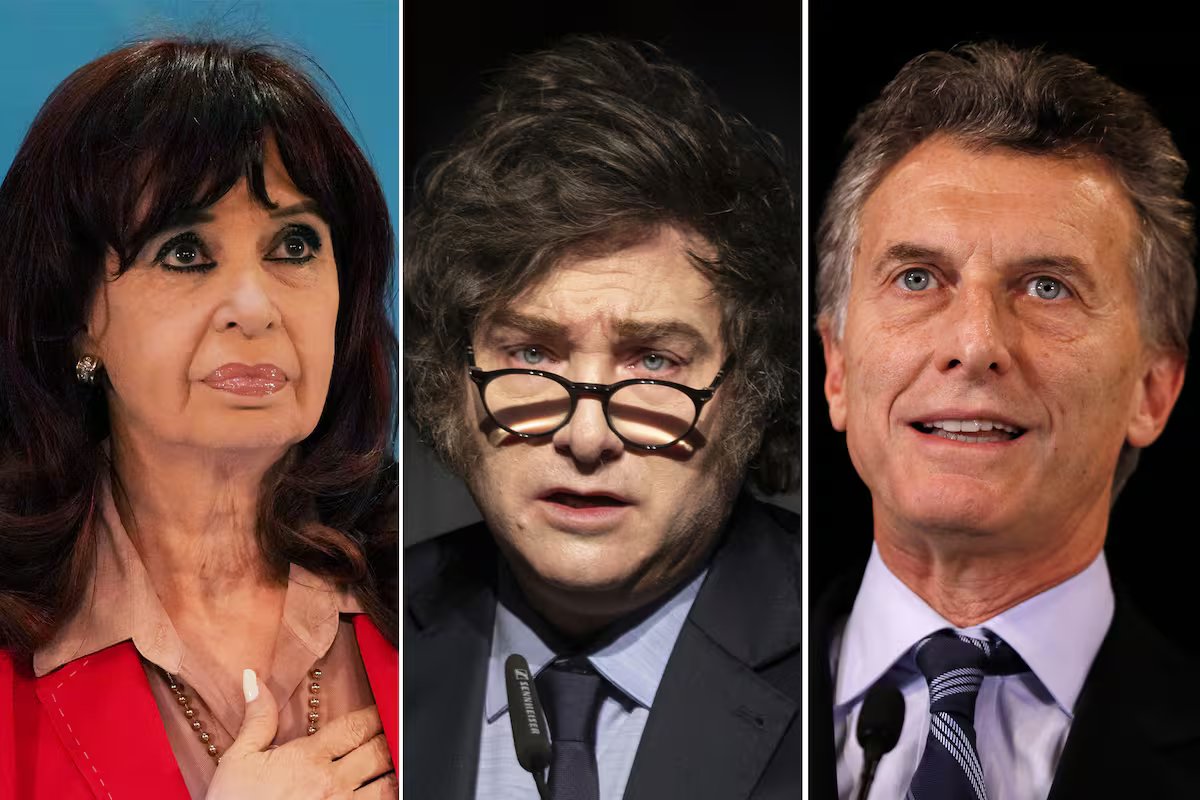
Milei against Alberto, Cristina and Macri
After the good news with the April wage index – it grew after seven months above inflation – the Government entered fully into the fight with the numbers that affect the pocketbook. For case, THE NATION accessed a ranking of the recovery of purchasing power during the last four presidential administrations in which only two winners appear: Milei and Cristina Kirchner. The libertarian, of course, came first in the official race.
The Ministry of Labor prepared a report with data from the Argentine Integrated Pension System (SIPA) taking as its axis the level of the average gross salary of registered salaried employment in the private sector, at constant and seasonally adjusted values in the first 29 months of each of those presidencies (Cristina Kirchner, Mauricio Macri, Alberto Fernández and Javier Milei). “Of the four efforts evaluated, that of President Mauricio Macri is the one with the worst performance,” began: “The real salary was always below the value prior to the beginning of her government and, in the 29th month, it was 2.9% lower than that level. In the administration of Cristina Kirchner, although the real salary exceeds the initial value in several months at the beginning, this process became unsustainable and from month 19 a strongly negative trend began that led the salary value in the 29th month to register a value slightly below the level prior to the beginning of the administration. (-0.2%)“.
“During the presidency of Alberto Fernández, the real salary remained below the initial value for many months and then began a recovery phase, although in the 29th month it only increased by 1.2% in relation to the level prior to the first month of administration. Taking into account the historical context, the real salary dynamics in Javier Milei’s management are the most positive of all those evaluated. Starting in the 13th month, the real salary remained 3% above the value observed in November 2023; Even in the 29th month, the purchasing power of the salary increased to be 4.3% above the initial value,” concluded the document from Sandra Pettovello’s portfolio.
For the Government, the SIPA data are the most complete. Others, also officials, still show a lag in salaries. For example, according to data from Indec’s Permanent Household Survey (EPH) on income distribution, precisely the real income of employed and salaried workers remained stagnant at real values in the third quarter of 2025. “That means that they were stopped at a level that is 16% lower than a decade ago,” said an expert who preferred the off the record. Looking at the Indec salary index, according to Iaraf, compared to November 2023, registered private salaries are 3.5% lower and those in the public sector are 17.2% lower (36.4% national and 9.2% provincial).