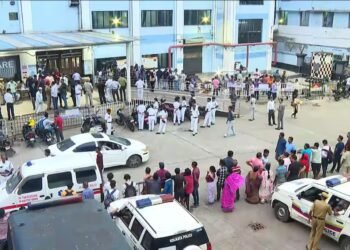
A discussion meeting and rally was held at Kutupalong Registered Rohingya Camp in Ukhia on World Refugee Day. The program was organized on Saturday (June 20) by various non-governmental organizations (NGOs) and the Rohingya community.
In the morning a rally circumambulated the various roads of the camp. Later, hundreds of Rohingya men and women participated in the discussion meeting organized at the community center. At that time, additional in-charge of registered camp Habibur Rahman, Rohingya community leader Majed Abdullah and various community representatives and NGO workers were present.
The participants in the discussion meeting called on the international community and the United Nations to take effective initiatives by highlighting the demand for safe, voluntary and dignified repatriation. Similarly, on the occasion of World Refugee Day, rallies, discussions and awareness programs have been held in various Rohingya camps in Ukhia and Teknaf.
Rohingya community leaders say that repatriation has not started after a long period of displacement, causing anxiety and uncertainty. Therefore, they demanded to ensure a safe environment and civil rights in Myanmar and arrange quick repatriation.
Meanwhile, on June 20 World Refugee Day, one of the biggest refugee crisis in the world, the uncertain future of more than 1.4 million Rohingya refugees in Bangladesh came to the fore. In 2017, the Rohingyas who fled the military operation in Myanmar’s Rakhine state stayed in 33 refugee camps in Ukhia and Teknaf of Cox’s Bazar for almost 9 years, but effective repatriation has not yet started. They spend their days waiting for safe, voluntary and dignified return to their country.
Currently, Rohingya lives are made more difficult by limited facilities in refugee camps, lack of education and employment, and restrictions on movement. Rohingya leaders say they want to return to their homeland with citizenship recognition, security and basic rights guaranteed in Myanmar. They feel that camp life is not a long-term solution even if they get shelter with the help of the Bangladesh government.
Meanwhile, this prolonged crisis is having a multi-dimensional impact on the local population. According to local representatives and political leaders, the negative pressure of the Rohingya crisis on employment, environment, law and order and social stability is increasing. Concerns have also increased among locals about the population balance, labor market and security situation in the Ukhia-Teknaf region. It is alleged that various criminal gangs have become active using the large number of young Rohingya as employment and education opportunities are limited. Internal conflicts, target killings and drug smuggling among various armed groups including Arsa, RSO have long been a cause of concern. However, as a result of the government’s strict surveillance and law enforcement operations, the number of killings in the camp has decreased significantly in the last few years, according to related sources.
BD per day/KHT