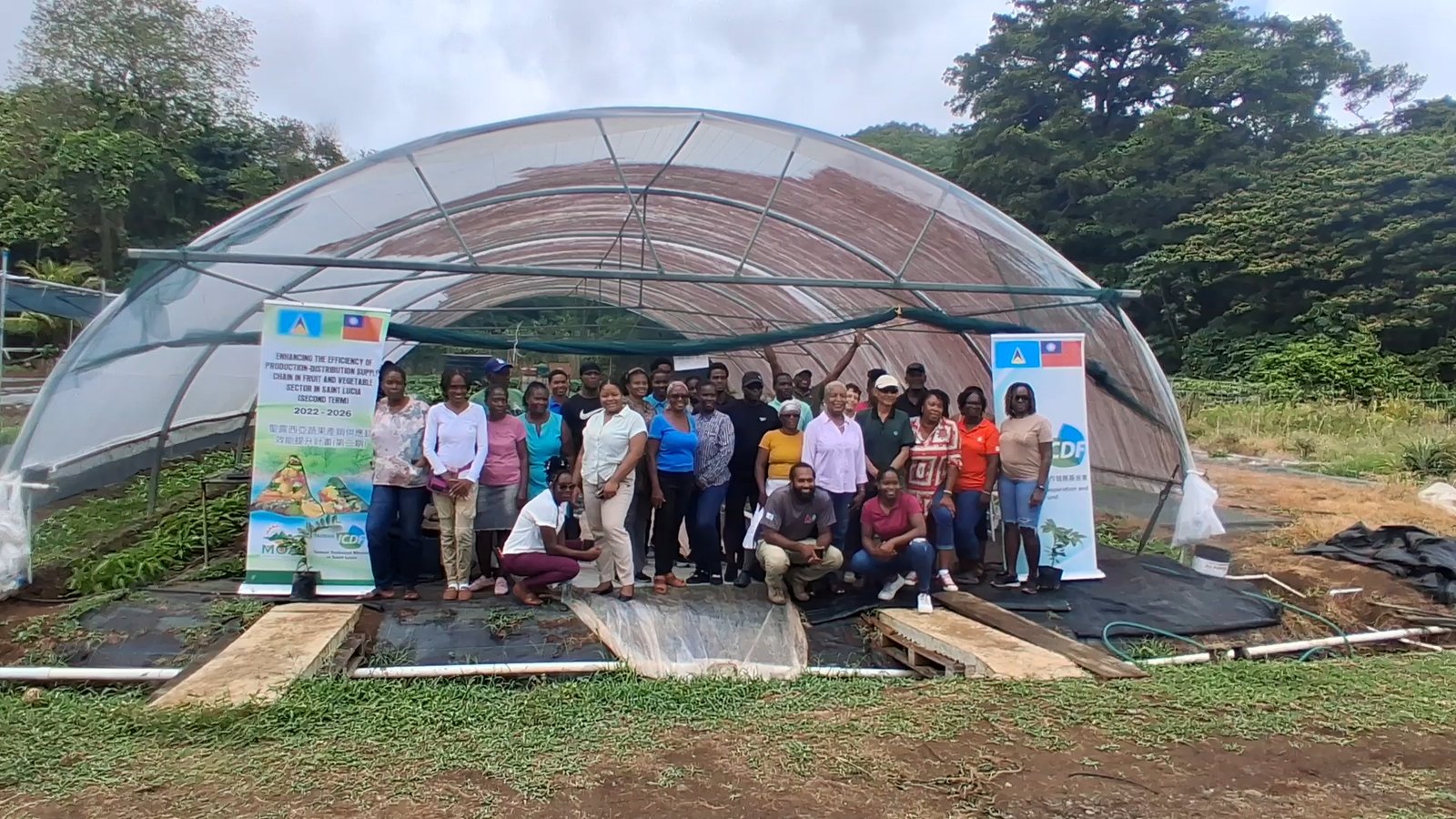
Saint Lucia farmers have been equipped with new skills to boost fruit production and reduce the country’s reliance on imported food, through a hands-on workshop on advanced guava grafting techniques supported by Taiwan.
The training formed part of the Seven Crops Project, an agricultural initiative aimed at lowering Saint Lucia’s food import bill by strengthening local production and introducing crop varieties with greater commercial potential.
The project’s first phase focused on seven priority crops – watermelon, lettuce, cabbage, tomatoes, pineapple, honeydew, cantaloupe and bell pepper. Its second phase expands the focus, aiming to diversify production further and increase the availability of locally grown produce for both consumers and commercial buyers.
The guava grafting workshop introduced farmers to a fresh consumption guava variety sourced from Taiwan, which offers a longer shelf life and greater market appeal compared to traditional local varieties that are primarily used for processing.
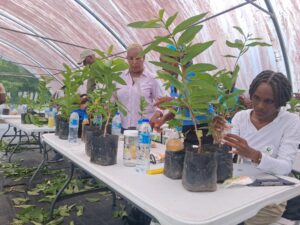
“From our different discussions with the buyers, such as the hotels, the different supermarket chains and so on in Saint Lucia, we saw the need to improve the variety of crops offered at the supermarkets. So we’re looking at a different type of guava…. This is not a processing guava, this is a guava that is perfect for eating. It’s a guava, from what we have seen so far – because we’ve had it on the farm in an experimental way – that can have a longer shelf life,” said Seven Crops Project Coordinator Adeline Eudovic.
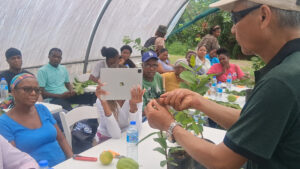
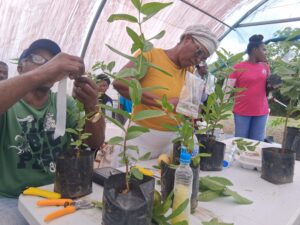
During the workshop, farmers received practical, hands-on training in grafting techniques designed to improve fruit quality, increase yields, and strengthen resistance to pests and diseases. Those skills can also be applied to other tree crops, including mangoes and other similar fruit varieties.
Officials say the initiative is part of wider efforts to strengthen agricultural resilience by building technical capacity among farmers, diversifying production, and improving food security.
Any third-party or user posts, comments, replies, and third-party entries published on the St. Lucia Times website (https://stluciatimes.com) in no way convey the thoughts, sentiments or intents of St. Lucia Times, the author of any said article or post, the website, or the business. St. Lucia Times is not responsible or liable for, and does not endorse, any comments or replies posted by users and third parties, and especially the content therein and whether it is accurate.
St. Lucia Times reserves the right to remove, screen, edit, or reinstate content posted by third parties on this website or any other online platform owned by St. Lucia Times (this includes the said user posts, comments, replies, and third-party entries) at our sole discretion for any reason or no reason, and without notice to you, or any user. For example, we may remove a comment or reply if we believe it violates any part of the St. Lucia Criminal Code, particularly section 313 which pertains to the offence of Libel. Except as required by law, we have no obligation to retain or provide you with copies of any content you as a user may post, or any other post or reply made by any third-party on this website or any other online platform owned by St. Lucia Times. All third-parties and users agree that this is a public forum, and we do not guarantee any confidentiality with respect to any content you as a user may post, or any other post or reply made by any third-party on this website. Any posts made and information disclosed by you is at your own risk.