In an election closely followed by polarization and a minimal difference between the candidates, whatInternational observers consolidated themselves as key actors to validate the electoral process. For this reason, the conclusions of the observation missions were one of the most anticipated statements following the results.
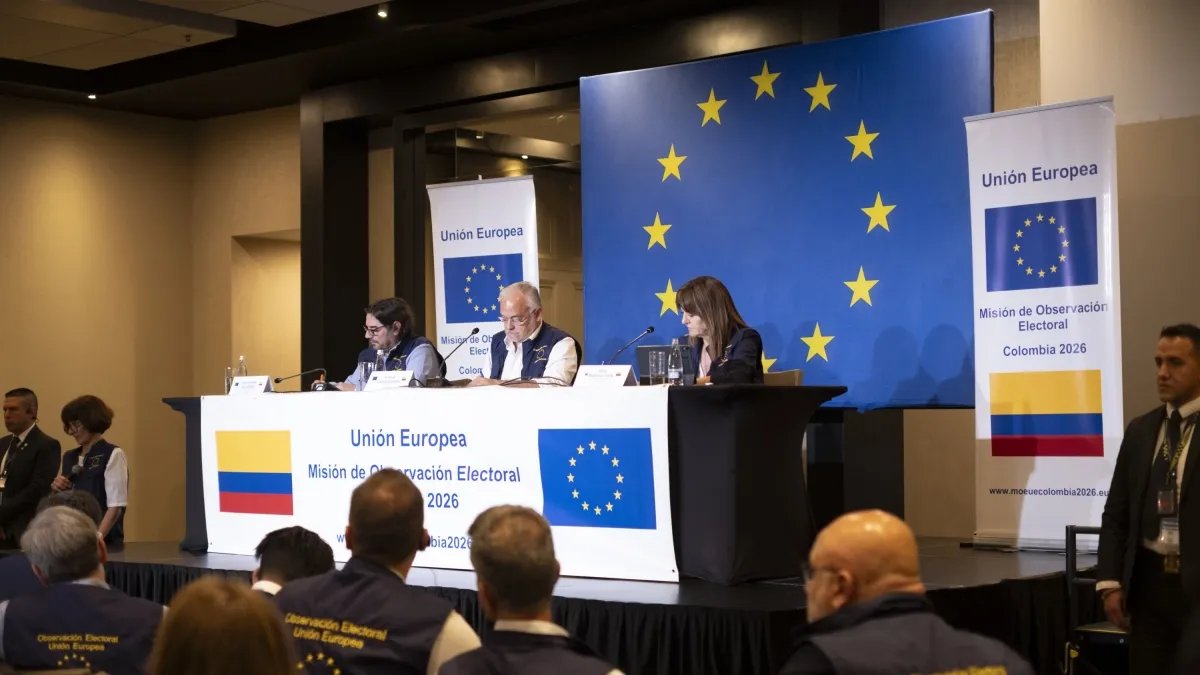
This Tuesday, May 23, the European Union Electoral Observation Mission (EU EOM) presented his preliminary statement and highlighted that the elections took place in a peaceful and orderly manner, despite the security challenges that persisted in several regions of the country.
In his statement, heThe mission evaluated key aspects of the electoral process, among them the development of the campaign, the role of social networks, the circulation of disinformation, the operation of electoral software, media coverage and campaign financing.
The candidates will go to the second round. Photo:Private file
‘The second round campaign was very polarized and took place mainly on the Internet’
The EU EOM dedicated much of its statement to analyze the political environment of the campaigncharacterized by a strong confrontation between the two candidates. According to observers, the public debate was marked by crossed judicial complaints, accusations without evidence about alleged vote buying and growing political tensionto.
For the mission, Social networks were consolidated as the main scene of electoral mobilization, but also as a space where a debate predominated “more conflictive and polarized.”
“The second round campaign was characterized by heightened polarization and confrontational rhetoric. Both parties resorted massively to social networks to reach the electorate. The political debate became increasingly judicialized, with criminal complaints between candidates and lawsuits over the political use of national symbols.”
READ ALSO

‘The results management system is reliable and effective, and complies with international standards of transparency, integrity and traceability’
One of the most controversial issues during the campaign was criticism of the electoral administration system and, in particular, the software used for results processing. The questions even came from President Petro.
However, the EU EOM rsupported the work of the National Registry and highlighted the audits and tests carried out before the elections. Observers positively valued the openness of the source code for review by campaign experts and noted that the system complies with international transparency standards.
“The Registry Office carried out technical and stress tests of this system, which the EU EOM evaluated positively, and the code The source of the software used was again exposed for review by the candidates’ experts. An international audit of the electoral process, commissioned by the Registry, issued a positive assessment of the results management software.”
This is how the scrutiny process progresses in Corferias, Bogotá. Photo:MAURICIO MORENO- TIME
‘Disinformation, intimidation and vandalism increased during the campaign period’
The mission identified asignificant increase in misinformation during the second presidential round. According to the report, social networks were marked by circulation of false information, hate speech and the unprecedented use of artificial intelligence tools and content manipulated through deepfakes.
Observers also noted that the narrative of possible electoral fraud was present for much of the campaign and contributed to increasing political tension.
“Media coverage reflected the increase in verbal attacks between the candidates, in a context of persistent use of denigrating language and attempts at disinformation by both sides.”
READ ALSO

‘Coverage of the campaign reflected polarization and a clear asymmetry between state and private media’
In its evaluation of news coverage, the EU EOM concluded that lthe private media, that concentrate the largest audience, They gave similar spaces to both candidates and maintained predominantly neutral coverage.
However, observers identified differences in the public mediawhere They found greater exposure of the candidate Cepeda. They also noted that President Petro continued to promote his administration’s achievements during the campaign, despite the restrictions established by electoral legislation.
“The coverage of the campaign reflected polarization and a clear asymmetry between the state media and the private ones. The monitoring of the EU EOM revealed that the private media, which have the largest audience share, They dedicated similar broadcast time in their news to De la Espriella and Cepeda, with mostly neutral coverage.”.
Assessment of the European Union observers Photo:Private file
“The shortcomings in the transparency mechanisms on campaign financing that the EU EOM observers identified during the first round persisted in the second”
Campaign financing was another aspect that raised concern among European observers. The mission noted that deficiencies persist in the transparency and control mechanisms of the resources used by the campaigns.especially in the digital sphere.
According to the report, the lack of detailed information makes it difficult to expense traceability executed in the territories and limits the supervision of political advertising on the internet.
“Given the importance that online campaigns have acquired, andControlling spending on digital campaign products and online advertising has become crucial. However, the current legal and institutional framework remains, to a large extent, insufficient to carry out this task, especially given the extraterritoriality in which the platforms operate.”
The preliminary statement of the EU EOM concluded that, despite the high polarization and challenges identified during the campaign, The second presidential round took place in an organized manner and with sufficient guarantees for Colombianswhile recognizing the work of the electoral authorities in managing the process.
Natalia Peláez Sabogal
School of Multimedia Journalism EL TIEMPO
Justice Editorial
Learn more news:
READ ALSO