Energy security is one of the world’s top priorities, as governments grapple with the closure of the Strait of Hormuz, before its eventual reopening, the accelerating shift toward clean energy, and the growing demand for energy from artificial intelligence data centers.
This problem is particularly significant for Asia and the Pacific, given that both regions rely heavily on imported fuel.
Here lies Australia’s role as a regional superpower in the field of energy. It is rich in both renewable resources and fossil fuels, and it can form a new energy security alliance with the aim of stabilizing regional markets in the long term.
In the near term, this means ensuring LNG supplies, but in the longer term, green exports, such as renewable fuels and battery metals, could form the cornerstone of Australia’s energy relationship with Asia.
The war in Iran sparked a major crisis in fossil fuel supplies, after Iran closed the Strait of Hormuz, as Asia lost 80% of its oil supplies and 27% of its natural gas supplies. The repercussions on the Pacific countries were great, as these island countries depend heavily on imports of diesel and food.
Asia-Pacific governments are looking for reliable partners to ensure energy security, and the two global powers, the United States and China, are competing to expand their energy exports in the region, but in very different ways.
China’s response to the Iranian conflict was to redouble its efforts in the field of electricity and increase its oil reserves, and Beijing is working aggressively to expand its exports of electric cars, solar panels, batteries, and other green technology exports to eliminate any external competition.
Meanwhile, the United States is adopting an “energy dominance” strategy, and is focusing on producing abundant amounts of oil and gas domestically. Washington believes that this will provide affordable energy, win the artificial intelligence race against China thanks to cheap energy, and expand energy exports to strengthen ties with allies.
Australia risks becoming a “passive spectator” without a clear strategy for energy exports.
The risk is double, and its role as an exporter of coal and liquefied natural gas may decline, as Asian countries search for other sources to fill the supply gap, and Australia may miss the opportunity to develop its clean energy exports.
What should this strategy be? Practically, it will involve working with allies such as the United States and Japan to build a regional energy security alliance.
This alliance will focus on meeting the region’s immediate energy needs, and Australia can play a pivotal role in the region’s transition to clean energy. The recent joint statement by members of the Quadripartite Dialogue is a strong start.
Any such alliance cannot be limited to securing fossil fuel supplies for the region, but must take the transition to clean energy into account in its design.
Ideally, this alliance should include the entire energy supply chain, meaning base metals, natural gas, diesel, hydrogen, batteries, data centres, and even emerging products such as low-carbon fertilisers.
In fact, Australia is poised to take the lead, as it is the only reliable source of bulk LNG in the Asia-Pacific region.
The main competitors face challenges in meeting the region’s needs. Russian gas is subject to severe sanctions, and American gas export terminals are concentrated on the Gulf Coast, which adds an additional 10 days to the transportation time to reach Asia, compared to shipments from Darwin in Australia.
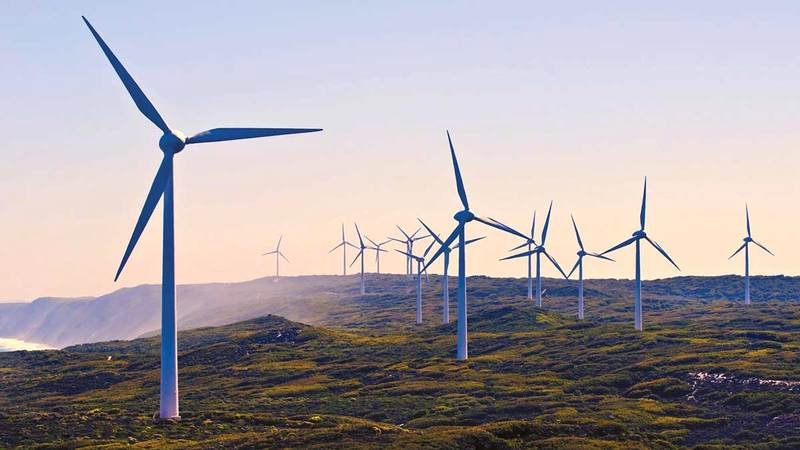
Australia also has some of the world’s richest clean energy resources, including minerals critical to batteries and renewable energy.
The United States and Canada will play an important role as major producers of liquefied natural gas and oil. Japan will provide financing and shipping infrastructure that many smaller Southeast Asian countries lack. The United States and Japan can also contribute to the production of electric vehicles, batteries, and clean technologies to drive the region’s transformation.
Despite the Trump administration’s negative stance toward wind and solar energy, battery production in the United States is expected to increase five-fold.
Such an alliance would give Indo-Pacific countries, such as the Philippines, Thailand and India, certainty that Australia and its allies will not cut off fossil fuel supplies prematurely.
This is a practical solution, as Australia seeks to achieve carbon neutrality by 2050, many Asian countries aspire to achieve this by 2060 or 2070.
These countries may need supplies of fossil fuels beyond the year 2050. Do we prefer that these supplies come from Australia or from Russia?
The Iranian war showed that the world is not yet ready to abandon fossil fuels. Despite rapid transitions towards renewable energy sources and clean transportation, there will still be years to come in which gas and oil will remain essential elements.
As the region’s most reliable source of LNG, Australia is well positioned to establish itself in the Indo-Pacific energy sector over the long term, with its clean energy exports on the rise. Seizing this opportunity requires a cohesive strategy, partnering with like-minded allies, and addressing domestic challenges. About “Asia Times”
• As the most reliable source of LNG in the region, Australia is well positioned to establish itself in the Indo-Pacific energy sector over the long term.