In this bulletin:
1. PACIFIC — Pacific must move faster on financial inclusion, Marshall Islands President Heine tells Ministers
2. SOL — Solomons sirens call for climate action
3. PNG — East New Britain province ready to host ABG consultation
4. FIJI — Nation facing global cartels: Fiji Foreign Miister Ditoka
5. TONGA — Review calls for stronger laws to tackle Tonga’s NCD crisis
6. PACIFIC — Decades of ocean governance reform highlighted at regional summit
7. UN — New Security Council resolution upholds accountability for attacks against peacekeepers
8. PACNEWS BIZ — Slow PNG economic growth blamed on corruption, poor decisions
9. PACNEWS BIZ — Fijian Competition and Consumer Commission flags renewable energy delay risk
10. PACNEWS BIZ — Solomon Islands National University & Pasifiki HR sign deal to boost graduate employment
11. PACNEWS IN FOCUS — The aftermath of logging’s broken promises: Can carbon trading save Makira’s last forests?
12. PACNEWS DIGEST — How Fiji’s water pipeline ran out of road
13. PACNEWS DIGEST — Meet the finalists for the 2026 Commonwealth Youth Awards
PAC – FEMM MEET: PACNEWS PACNEWS 2: Wed 24 Jun 2026
Pacific must move faster on financial inclusion, Marshall Islands President Heine tells Ministers
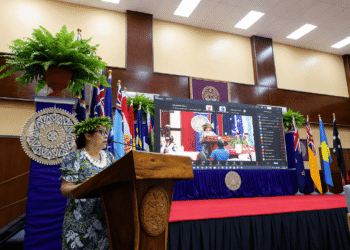
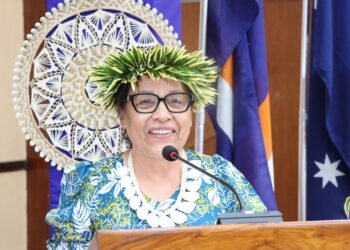
MAJURO, 24 JUNE 2026 (PACNEWS)— Marshall Islands President Dr Hilda Heine has challenged Pacific finance ministers to accelerate efforts to improve financial inclusion, saying advances in connectivity and digital technology have created new opportunities to overcome long-standing barriers facing Pacific economies.
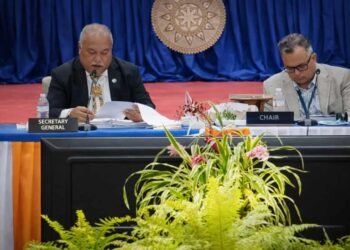
Opening the Forum Economic Ministers’ Meeting (FEMM) in Majuro Tuesday, Heine said the theme, Economic and Financial Inclusion in the Pacific, reflected both the challenges and opportunities confronting the region.
“This year, financial inclusion is more within reach than it has ever been, not because the challenge has grown smaller, but because our collective capacity to meet it has grown stronger,” she said.
Heine said many Pacific economies, including the Marshall Islands, remain fragmented, with people, businesses and public services spread across vast distances and often disconnected from global financial systems.
“Like many Pacific economies, ours is fragmented and does not operate at scale.
Our people, our businesses, and our public services are scattered across vast distances and, too often, cut off from the broader financial systems that much of the world takes for granted,” she explained.
She said the loss of correspondent banking relationships had deepened financial isolation across the region.
“After 2001, the world rightly moved to protect the global financial system. Laws such as the United States’ Bank Secrecy Act and the Patriot Act tightened the rules on how money moves across borders. We do not dispute the purpose; the integrity of the system protects all of us. But for small Pacific states, the consequences were severe.”
“The correspondent banking relationships – the very links that connect a small economy to the global one — were cut. Across our region, they fell by roughly sixty percent in a decade, twice the global rate,” President Heine told Ministers.
President Heine said compliance requirements designed to protect the financial system had become barriers for Pacific communities.
“Across our islands, we have faced a hard truth: the same compliance burden designed to keep the system safe had become a barrier that kept our people out of it. Distance was already pushing financial services beyond reach.
De-risking pushed them further still,” she said.
The Marshall Islands President said the situation had changed significantly with improvements in connectivity and payment technologies.
“Approaches that were impossible ten years ago are possible today. Connectivity has transformed. New low-earth-orbit satellite networks, such as Starlink, now reach households on the most remote atolls, closing the ‘last meter’ between a citizen and a functional financial service.”
“The cost of moving money has collapsed; modern digital rails can settle a payment in seconds, for a fraction of a cent, on a basic mobile phone,” she said.
President Heine said international standards and regulatory frameworks now provide opportunities for small states to participate safely in digital financial systems.
“And, just as importantly, the world has learned how to do this safely. Over the past decade, shared standards and best practices have emerged for providing oversight and ensuring compliance while using digital assets. This time, the requirements do not shut us out. With the right regulatory framework, even a small nation can meet them,.” she explained.
She said financial inclusion was no longer a question of feasibility.
“We can now turn toward bringing the economies of the Pacific closer: closer to one another, and closer to the wider world. That is the heart of why I am hopeful. Financial inclusion is no longer a question of whether it is possible. It is a question of which paths we choose, and how quickly and carefully we walk them,” the President said.
Heine said the Marshall Islands had already begun exploring digital solutions and would share more details during the meeting.
“In the Marshall Islands, we have not waited. We have explored digital approaches — built to international standards, with proper oversight.” she stated.
President Heine stressed that regional cooperation would be essential to addressing economic and financial isolation.
“But no single nation can solve this alone, nor should any of us try. Ours is one path. Many of you are advancing other paths — in mobile money, in digital identity, in national payment systems and regional settlement,” she said.
Heine said the meeting agenda addressed the major economic challenges facing the Pacific, including pressures on essential services, disruptions in key sectors and growing vulnerabilities in communities.
“My hope for this week is simple: that you bring forward the ideas already taking shape across our islands; that you speak candidly about what has worked and what has not; and that you leave Majuro more aligned – governments, regulators, banks, partners and private sectors together – to carry this work forward with clarity and purpose,” she emphasised.
She said financial exclusion was a regional challenge that required a regional response and urged immediate action.
“Because what I have described is not a Marshall Islands problem. It is a Pacific problem. It is one that the Forum Economic Ministers must rightfully challenge.”
“The tyranny of distance, the retreat of the banks, the exclusion of our people — these challenges are shared by every nation represented here. And so the opportunity is shared as well. A Pacific-wide problem is a Pacific-wide opportunity,” President Heine.
“We can not afford the luxury of delay. So I challenge each of us to shift from intentions to immediate results required to protect and advance our people today,” President Heine said…..PACNEWS
SOL – CLIMATE CHANGE: ISLAND SUN PACNEWS 2: Wed 24 Jun 2026
Solomons sirens call for climate action
HONIARA, 24 JUNE 2026 (ISLAND SUN)—Rising from the sea around Isabel Province, a new sculpture by British artist, Jason deCaires Taylor, was installed last week.
The live-size sculpture, called ‘Solomon Siren,’ depicts the story of climate activist, Gladys Habu Bartlett, whose ancestral land on Kale Island has gradually disappeared beneath the sea, the statement said.
Over the past two decades, rising sea levels have inundated the island, forcing her family to relocate.
In recent years, Gladys has highlighted the plight of Kale to demonstrate the world’s complacency towards the threat faced by many small island states in the Pacific, the UK High Commission in Honiara said in a statement.
A new assessment by the UN indicates that global sea levels are increasing at twice the rate of a decade ago.
The sculpture of stainless steel and concrete depicts a life-size figure of Gladys, her head resting against a tree stump, the statement said.
The figure represents all women in the community, reflecting on the loss of their lands to the sea. At high tide, the sea submerges a large part of the figure.
The body of the figure is inscribed with a series of dates that mark Kale Island’s fate: 2006, when rising sea waters became alarming; 2016, when scientists confirmed the complete loss of Kale; and 2026, the year the sculpture was installed, the statement said.
“The sculpture will serve as a memorial to the vanished island of Kale,” said artist Taylor.
Taylor, who is based in London, is an award-winning sculptor who is widely regarded as the founder of underwater art.
He has constructed sculptures in seas all over the world, including in the Caribbean and Indian Ocean.
Through his works, he aims to draw attention to the fragility of the maritime environment and the communities in these regions.
Former Prime Minister, Jeremiah Manele, whose constituency is in Isabel, and British High Commissioner Paul Turner opened the event last Thursday with Gladys Bartlett cutting the ribbon.
Turner told the community that the UK will continue to be a voice for Pacific Island states on climate action, the UK High Commission statement said.
He said that ‘Solomon Siren’ is yet another wake-up call for climate-change deniers to understand the impact of rising sea-levels on people’s lives.
The timing is perfect just before the COP Summit.
The official opening was attended by landowners of Kale and the provincial community who marked the poignant event with songs and prayers.
As everyone departed, the Solomon Siren stood alone against the incoming tide, as it will for many years to come….PACNEWS
PNG – INDEPENDENCE STRUGGLE: THE NATIONAL PACNEWS 2: Wed 24 Jun 2026
East New Britain province ready to host ABG consultation
KOKOPO, 24 JUNE 2026 (THE NATIONAL)—The East New Britain provincial administration has announced preparations are afoot to host nationwide consultations led by the Parliamentary Bipartisan Committee on the Bougainville referendum and parliament ratification process.
Between June and July 2026, the committee will meet with communities and local leaders across East New Britain and other provinces to gather views on the referendum outcome and its ratification by the National Parliament.
ENB administrator Levi Mano said that the role of the provincial and district administrations will be limited to organising venues, coordinating schedules with districts and local level governments, and ensuring public safety during the meetings.
“We will not participate in the substance of the discussions.
“All questions, views, and submissions will be received directly by the Parliamentary Bipartisan Committee,” he said. The committee, which operates independently, will lead the consultations, record feedback, and report to Parliament.
Citizens, community leaders, churches, women, youth, and stakeholders are strongly encouraged to attend and share their perspectives on this important national issue.
Mano urged residents to cooperate with the committee and use the platform constructively.
Specific dates, times, and venues for each district will be released soon by the provincial administration.
Meanwhile, Bougainville president Ishmael Toroama, accompanied by vice president Ezekiel Masatt, visited ENB on Saturday to lead consultations under the Melanesian Framework.
The discussions with national government officials were on the Melanesian Framework, a guiding document designed to conclude the 2001 Bougainville Peace Agreement.
This process remains vital following Bougainville’s 2019 referendum, in which 97.7 percent of voters supported independence.
The framework now serves as the roadmap for charting Bougainville’s political future while reinforcing regional stability.
Governor Michael Marum and his provincial government hosted the visiting leaders, highlighting the enduring bonds between the two island provinces.
President Toroama expressed deep gratitude to the people and leadership of East New Britain, affirming that their partnership would remain strong into the future.
The Autonomous Bougainville Government (ABG) delegation paid a courtesy call yesterday to the governor and provincial administrator’s offices, further strengthening cooperation as both sides prepare for the next phase of consultations….PACNEWS
FIJI – DRUGS FIGHT: FIJI TIMES PACNEWS 2: Wed 24 Jun 2026
Nation facing global cartels: Fiji Foreign Miister Ditoka
SUVA, 24 JUNE 2026 (FIJI TIMES)—The criminal organisations Fiji faces are not village-level operators, says Minister for Foreign Affairs Sakiasi Ditoka.
Ditoka said some commentators seemed to think that policing Fiji’s borders was as simple as sending out patrol boats and waiting for the drug traffickers to appear.
“Fiji sits in the middle of a vast ocean network connecting Asia, the Americas, Australia and New Zealand,” he said.
“The same routes that facilitate legitimate trade and movement are also being exploited by sophisticated transnational criminal networks.
“We are responsible for monitoring more than 1.2 million square kilometres of ocean.
“The criminal organisations we face are not village-level operators. They are well-funded international cartels with access to enormous financial resources, logistics networks spanning continents, advanced communications and local accomplices prepared to do their bidding.”
He said this challenge was not created overnight.
“Years of institutional weakness, compromised systems, inadequate resources and failures across multiple agencies created vulnerabilities that organised crime was quick to exploit.
“Some of those responsible have long since moved on.
“Others now speak from the sidelines as though the problem appeared yesterday.
“Rebuilding capability takes time. It requires stronger intelligence, better regional co-operation, improved maritime surveillance, upgraded technology, professional law enforcement agencies and, most importantly, an alert and engaged public.”
Ditoka said the discoveries of packets believed to be illicit drugs in the Lau Group illustrated this perfectly.
“Those packages were not discovered by aircraft, ships or satellites.
“They were found by ordinary citizens. Members of our communities saw something unusual, acted responsibly, and informed the authorities.
“That is exactly what we need because the truth is that every Fijian is now part of this fight.
“We are all frontliners.
“Our families, our churches, our workplaces, our homes, our villages, our communities, our towns and our cities are the forward edge of the battle area,” he said.
He added the criminal forces Fiji was fighting against were powerful.
“The cartels and their local minions possess vast resources, international connections and have demonstrated a willingness to deploy their worst against our people.
“But they should understand one thing.
“We will not surrender.
“We are defending our children. We are defending our families. We are defending our communities. We are defending our homeland,” he said….PACNEWS
TONGA – HEALTH: TALANOAOTONGA PACNEWS 2: Wed 24 Jun 2026
Review calls for stronger laws to tackle Tonga’s NCD crisis
NUKU’ALOFA, 24 JUNE 2026 (TALANOAOTONGA)—A review of Tonga’s non-communicable disease (NCD) legislation has identified gaps in laws governing alcohol, unhealthy foods, breastfeeding promotion and health-related taxes, with recommendations aimed at strengthening public health protections across the kingdom.
The review, commissioned by the Tonga Health Promotion Foundation (TongaHealth) in 2024 with support from the Australian Government, assessed whether Tonga’s legal framework aligns with the Pacific Legislative Framework endorsed by Pacific health ministers in 2021.
The findings were released by TongaHealth this week.
The report found Tonga has made progress in areas such as alcohol licensing and taxes on alcohol and sugary drinks.
However, it highlighted the absence of laws restricting alcohol advertising and sponsorship, limited alcohol labelling requirements, and gaps in protections for young people. It also recommended stronger enforcement and governance measures.
In the food sector, reviewers found there are no specific laws restricting the marketing of unhealthy foods and sugar-sweetened beverages to children.
Tonga also lacks regulations setting maximum levels for salt, sugar and trans fats in food products.
The report noted challenges including overlapping responsibilities among government agencies and limited testing facilities.
The review further found Tonga has no dedicated legislation regulating the marketing and promotion of breastmilk substitutes.
Recommendations include incorporating international standards into food regulations and encouraging breastfeeding-friendly workplaces and public spaces.
For NCD-related taxes, the review concluded that existing measures generally align with regional objectives but suggested regular reviews and greater investment of tax revenues into public health programmes.
Tonga continues to face one of the Pacific’s highest burdens of NCDs, including diabetes, heart disease and obesity, making prevention a major national health priority…..PACNEWS
PAC – OCEAN SUMMIT: TALANOAOTONGA PACNEWS 2: Wed 24 Jun 2026
Decades of ocean governance reform highlighted at regional summit
CAIRNS, 24 JUNE 2026 (TALANOAOTONGA)—The Tonga Government has presented a decade of ocean governance reforms at the Australia–Pacific Ocean Business Leaders Summit, highlighting efforts to strengthen the sustainable management of the Kingdom’s entire ocean territory.
Speaking at the summit, held on 11–12 June, Chief Executive Officer of the Ministry of Meteorology, Energy, Information, Disaster Management, Environment, Climate Change and Communications (MEIDECC), Sione ‘Akauola, outlined Tonga’s progress in coordinating ocean management through Ocean7, a national mechanism established by Cabinet in 2015.
Ocean7 was created to bring together government ministries and agencies involved in ocean-related issues, allowing for more coordinated policy development, planning and decision-making.
‘Akauola highlighted the recently enacted Ocean Management Act 2025 and the development of a National Ocean Policy as key milestones in Tonga’s long-term approach to ocean stewardship.
“The ocean is not what separates us, it is what binds us,” he said, emphasising the close partnership between Tonga and Australia on marine governance issues.
Tonga also welcomed Australia’s announcement of new measures to improve national ocean governance, including the creation of a cross-sector advisory group and a National Ocean Steering Committee. Australia’s Minister for the Environment and Water, Senator Murray Watt, said the reforms would help ensure governance arrangements keep pace with emerging challenges and opportunities.
During a panel discussion on sustainable ocean management, Senior Advisor for Integrated Ocean Governance Dr Fononga Vainga Mangisi-Mafile’o said Tonga’s experience had helped inform regional discussions since the inaugural summit in Sydney in 2024.
She said Tonga’s next phase of work would focus on the Ecosystem Valuation Assessment Framework, designed to improve understanding of ecological, cultural, social and economic values to support transparent and balanced decision-making.
The summit was convened by Ocean Decade Australia and regional partners, bringing together government, business and ocean experts from across the Pacific and Australia….PACNEWS
UN – PEACEKEEPERS: UN NEWS CENTRE PACNEWS 2: Wed 24 Jun 2026
New Security Council resolution upholds accountability for attacks against peacekeepers
NEW YORK, 24 JUNE 2026 (UN NEWS CENTRE)—The United Nations Security Council unanimously adopted a resolution on Tuesday that calls for accountability for crimes committed against UN peacekeepers.
Resolution 2823 (2026) calls upon all relevant stakeholders to cooperate with the UN to facilitate the identification, investigation and prosecution of perpetrators without delay.
The text was put forward by Denmark and Pakistan, two of the Council’s non-permanent members, and supported by more than 150 countries.
Ambassador Asim Iftikhar Ahmad of Pakistan introduced the draft on behalf of the two co-sponsors.
He recalled that nearly 4,500 UN blue helmets have lost their lives in the line of duty, including 183 from Pakistan.
He noted that the text builds on two previous resolutions which strengthened the Council’s engagement on the safety and security of peacekeepers.
Across several missions, attacks against peacekeepers have increased in number and sophistication, he said. Moreover, peacekeepers are being targeted, often with little accountability.
“When peacekeepers are killed or injured as a result of attacks while performing mandates authorised by this Council, then the Council must remain seized on what happens next: whether facts are established, whether investigations are being pursued, whether perpetrators have been identified and whether justice is done,” he said.
“Impunity for such crimes cannot be allowed to fester. There must be accountability.”
The resolution requests the UN Secretary-General to ensure that in the event of future attacks, peacekeeping operations will promptly establish clear factual records of the incidents and make them available for investigations by host countries.
It calls for all relevant States and other relevant actors to cooperate fully with such investigations.
The Secretary-General is requested to designate a senior focal point on accountability for crimes against peacekeepers, including to bolster coordination and capacity to address these issues.
The UN chief is further requested to submit an annual report to the Council on the status of cases related to killing or acts of violence, with the first due within 120 days.
The unanimous support for the resolution “sends a strong and important message”, Ambassador Christina Markus Lassen of Denmark said after the vote.
To the more than 50,000 personnel currently serving at UN peacekeeping missions across the globe, it says that the Security Council “stands firmly behind them”, she said.
For troop- and police-contributing countries, “it sends a message of reassurance that in the event of any crime against the peacekeepers, this Council and the United Nations systems is ready, willing and able to step in,” she added.
And for perpetrators, “it sends a firm message that the international community is watching, that crimes will not go unpunished and that accountability and justice will be pursued and will be upheld.” ….PACNEWS
PACNEWS BIZ
PNG – ANTI CORRUPTION: THE NATIONAL PACNEWS BIZ: Wed 24 Jun 2026
Slow PNG economic growth blamed on corruption, poor decisions
PORT MORESBY, 24 JUNE 2026 (THE NATIONAL)—Corruption and poor decision-making are slowing Papua New Guinea’s economic growth, says Independent Commission Against Corruption (ICAC) deputy commissioner Don Sawong.
Speaking at the Icac Commissioners Regional Breakfast in Lae last week, Sawong, a retired judge, told provincial administrators and senior public servants that PNG had enough resources to grow its economy, but weak governance continued to slow development.
“PNG is not a poor country,” he said.
“We are a resource-rich nation with extraordinary natural wealth, including minerals, petroleum, fisheries, forestry, and agricultural potential.”
He said many people still lacked basic services despite the country’s wealth.
“The challenge we face is not simply scarcity, but conversion, our ability to convert national resources into real, visible and sustained benefits for our people.”
Sawong said corruption affected the economy by delaying projects and reducing the quality of public services.
He pointed to health centres without medicines, schools lacking learning materials, poor roads stopping farmers from reaching markets, and government-funded projects that remained unfinished.
“And so, the question becomes very simple, but also very confronting: if the country has resources, if budgets are allocated, if development plans exist, then why are many of our people still waiting for basic services?”
He said corruption often started with small decisions made inside government offices.
“When we say a hospital was never built, or a bridge collapsed prematurely, or medicines never reached the clinic, corruption rarely begins in those dramatic moments; it begins quietly, gradually, and individually, in offices like yours.”
Sawong said public servants played a key role in making sure public money was used properly and development projects reached the people.
“Integrity is not something we can separate from decision-making; it is the decision itself.’
He urged officials to resist pressure and always follow the law.
“Pressure is real, but pressure is not protection. Rank is real, but rank is not protection. Instructions are real, but instructions are not protection. Only integrity protects you,” Sawong said…..PACNEWS
FIJI – RENEWABLE ENERGY: FBC NEWS/FIJI SUN) PACNEWS BIZ: Wed 24 Jun 2026
Fijian Competition and Consumer Commission flags renewable energy delay risk
SUVA, 24 JUNE 2026 (FBC NEWS/FIJI SUN)—The Fijian Competition and Consumer Commission(FCCC) is warning that Fiji’s slow shift to renewable energy is leaving the power sector exposed to global fuel price shocks.
In its submission to the Parliamentary Standing Committee on Economic Affairs, the FCCC stated that its analysis shows no major renewable energy investment in recent years, despite commitments to expand clean energy.
The Commission notes that reliance on thermal generation has pushed fuel costs higher between 2020 and 2024. This has increased Energy Fiji Limited’s exposure to global fuel price volatility.
FCCC Manager Economic Regulation Avneet Singh said instability in the Middle East shows how quickly global events can lift electricity generation costs in Fiji.
He also raised concerns over the use of emergency diesel generation.
“Independent analysis illustrates that EFL has not made any major investments in renewable energies. As such, the utility continues to be exposed to fuel cost volatility noted in the international market. This has been prevalent in the financial year 2023-24 and currently into the financial year 2026, whereby wars in the Middle East have impacted the fuel prices in Fiji.”
Consumers, Singh added, are bearing costs that should be reduced through better planning and investment decisions.
Committee Member Premila Kumar also questioned delays in renewable energy projects. She called for stronger oversight to ensure commitments are delivered as actual infrastructure, not just policy.
The FCCC said faster investment in renewable energy was critical.
It said this will strengthen energy security, cut dependence on imported fuel, and help stabilise electricity prices.
Meanwhile, the Standing Committee on Economic Affairs has criticised Energy Fiji Limited (EFL) over what it says is a lack of transparency in the company’s reporting, pointing to millions of dollars in unspent budgets over the past seven years and insufficient detail to support tariff increase applications.
During a committee hearing Tuesday, Deputy Chairperson Premila Kumar said EFL’s annual reports did not provide enough information on renewable energy projects or the reasons behind requests for higher electricity tariffs.
“After reading your reports, I found that the story you are telling now is not reflected in your annual reports,” Kumar said.
“For example, the payment of dividends in 2023 after the company incurred a loss.
“There is no way it qualifies to say the dividend was worked out in 2022. How can you blame everyone else when people point a finger at you?”
Kumar also highlighted a pattern of underspending by the company.
Figures presented to the committee showed EFL had unspent capital budgets of $42.6 million (US$21.3 million) in 2019, $52.5 million (US$26.25 million) in 2020, $100 million(US$50 million) in 2021, $101 million(US$50.5 million) in 2022, $55 million(US$27.5 million) in 2023 and $81 million(US$40.5 million) in 2024.
She said EFL’s unspent budget increased to $151.85 million(US$75.92 million) last year.
“So you can understand where the public is coming from and why FCCC is very cautious when approving tariff increases,” she said.
Kumar said there appeared to be a disconnect between EFL’s reporting and its actual performance.
She called for future annual reports to include clear key performance indicators (KPIs), project budgets, timelines and delivery targets to provide a more accurate assessment of the company’s operations.
“This is why there is often backlash against your tariff applications because you are not clearly demonstrating why higher tariffs are needed,” she said.
EFL chief executive officer Gibson Fatiaki welcomed the criticism and said the issues raised had already been addressed in submissions made to the Fiji Competition and Consumer Commission (FCCC).
“As part of our tariff submissions to FCCC, we have provided details of the projects, timelines and costs that support the tariff increase application,” Fatiaki said.
“We will incorporate that information into the 2026 annual report, which will be released later this year. The point has been noted,” he said….PACNEWS
SOL – EMPLOYMENT: ISLAND SUN PACNEWS BIZ: Wed 24 Jun 2026
Solomon Islands National University & Pasifiki HR sign deal to boost graduate employment
HONIARA, 24 JUNE 2026 (ISLAND SUN)—The Solomon Islands National University (SINU) and Pasifiki HR have signed a new partnership agreement that aims to improve employment opportunities for students and graduates across the country.
The strategic partnership was formalised through a recent signing of a Memorandum of Understanding (MOU) between SINU Acting Vice-Chancellor, Associate Professor Eric Katovai and Pasifiki HR Director Caleb Pollard.
Speaking during the signing ceremony, Associate Professor Katovai said the partnership comes at an important time as the university continues to produce increasing numbers of graduates each year.
The three-year agreement is designed to enhance student employability, strengthen workforce readiness and build stronger links between higher education and industry.
Under the partnership, both organisations will work together to create internship opportunities, establish graduate recruitment pathways, provide career readiness training and share information on labour market trends and employment opportunities.
“While opportunities exist, connecting our students and graduates to those opportunities can often be a challenge. This partnership provides a more structured way of supporting our students as they transition from education into employment,” Associate Professor Katovai said.
He said the collaboration will help bridge the gap between education and the labour market and create greater awareness of career opportunities available to students and graduates.
Associate Professor Katovai also thanks Pasifiki HR for taking the initiative to engage with the university and expressed confidence that the partnership will strengthen industry linkages.
Pollard said the agreement reflects the company’s commitment to help Solomon Islanders secure meaningful employment.
“Education is important, but the real question is what it leads to. Our goal is to ensure that education translates into meaningful opportunities, purposeful careers, and sustainable employment for our graduates,” Mr Pollard said.
He said Pasifiki HR is determined to move beyond traditional job advertising by creating structured pathways that directly connect employers with qualified graduates and emerging talent.
“We want to create stronger links between education and industry so that young people can move confidently from the classroom into the workforce and contribute meaningfully to the country’s development,” Pollard said.
The partnership will also include CV writing workshops, interview skills training, job creation initiatives and collaborative research on labour market trends and workforce development in Solomon Islands….PACNEWS
PACNEWS In Focus
The views expressed in PACNEWS are those of agencies contributing articles and do not necessarily those of PINA and/or PACNEWS
The aftermath of logging’s broken promises: Can carbon trading save Makira’s last forests?
By Georgina Maka’a & Ronald Toito’ona
HONIARA, 24 JUNE 2026 (INDEPTH SOLOMONS)—Once called Solomon Islands’ least developed province, the logging industry was sold as the catalyst for change for Makira-Ulawa province.
Instead, with 75 percent of loggable trees already harvested, the industry has left a legacy of unfulfilled promises.
For decades, Makira-Ulawa has been forgotten by developers, except for those looking to extract its timber.
Today, the graveyards of rusty machinery left behind by loggers now become monuments to unfulfilled promises.
A recent visit to the Bauro region of Makira Island by In-depth Solomons uncovered a grim reality.
While the logs are nearly gone, the promised clinics, schools, churches and prosperity never arrived.
As the province faces total forest depletion, this special report uncovers the permanent impacts on village life and the new hope found in carbon trading.
What’s Left? Nothing
When the logging machines fall silent and the foreign workers depart, what remains for the people of Bauro in Central Makira is one big question.
For Dominic Taro, a 73-year-old elder from Manihuki Village in central Bauro, the answer is heartbreaking.
“There’s nothing left behind. Nothing,” Taro told In-depth Solomons.
Taro has seen six different companies operate in his area since the 1980s.
“I have not seen any changes logging brought to our communities. They have not helped us to build clinics, schools, or facilities,” he added.
He told In-depth Solomons that the math of logging rarely favors the local land owners or even the villagers.
While millions of dollars in timber leave the shores, Taro recalls the highest royalty share he ever received was a mere SBD$1,000(US$123).
At the time, this amount was not enough to build a permanent home, let alone starting a small income generating business.
Dominic Taro, 73, of Manihuki Village has lived to see six different companies operate in his area since the 1980s.
Rosina Aramo of Kaonasugu echoes this, noting that in 2018, a company promised to rebuild a local church in her community.
“Today, years after they left, not a single nail has been driven,” she said.
Nigel Usumae, a local farmer, said logging companies have promised to do water supply, building schools and clinics, but nothing has happened.
“I think they are promising these things as part of negotiation to enter into the areas,” said Usumae, who returned to Makira in the early 2000s after spending his younger days in Honiara.
However, logging has both good and bad impacts. It all depends on how trustees come up with ideas to use the royalties to generate sustainable activities.
These were the words of Julie Kabea, a landowner trustee of one of the tribes in Central Makira, who uses logging royalty to purchase a vehicle that provides transportation to generate income for people in her tribe and ensure her tribe has timber to build better homes for their families.
“For our group as a trustee, management is important. One positive impact that logging has had on our communities, especially our tribe, is that we make sure logs are milled so families can build their permanent homes.”
“Like for my tribe, we invest our royalty to purchase a vehicle to provide transportation so we can have money for our people in need,” Kabea says.
Life Before and After
Logging in Solomon Islands has depleted the forests.
Even if some trees remain, it’s the secondary trees that are now being logged, Central Bank of Solomon Islands (CBSI) Governor Dr Luke Forau told local media in a recent press conference.
He says there are no longer any virgin forests left, so most loggers are now moving into the mining sector.
However, Forau says logging still remains in the top two in terms of foreign exchange coming into the country.
Forau adds that now mining is picking up, the governance around it needs to be strengthened so it does not go the same way as logging.
There were a lot of issues encountered, and the government didn’t really benefit in terms of economic return from the forestry sector.
“We would have benefited more had we managed the sector well.”
Before logging arrived, communities lived off the land and sea in a delicate balance. When logging enters, there is a brief, artificial surge of cash.
Christopher Marenga, from Hao Village, calls it “money shock”.
“For some, it was their first time to see huge sums of money. They misused it, thinking logging would stay forever,” Marenga explains.
But the ‘after’ is a bitter pill to swallow, he said with a laugh.
“When the companies left, they were dropping back to ground zero. Some even to -10.
He added those who didn’t invest their royalties in small businesses like cocoa or copra now find themselves without money and without the forest resources they once relied on.
“The garden lands that once sustained them are no longer productive due to topsoil erosion and climate-driven changes in the soil,” Marenga said.
The physical destruction of the land has turned daily survival into a struggle for mothers and farmers.
The once-clear streams and fertile gardens have been replaced by silt and rusted machinery.
Human Trafficking and Cultural Decay
Perhaps the most sensitive and under-reported impact is the social cost to the province’s youth.
Chief Robert Ngiriapu of the Manihuki community speaks candidly about an old issue that continues to haunt the industry – the exploitation of young girls.
“Our youths today, especially girls, were influenced… where girls want to marry Asians, I think because of the money,” Chief Ngiriapu observes.
He notes that these arrangements often break custom and cause deep divisions within families.
“This is about the systemic luring of vulnerable people with small amounts of cash to stay silent about rights violations. This is not just about marriage,” the Chief said.
According to Ngiriapu, in some areas within the Bauro district, companies have had to implement strict ‘no contact’ rules to prevent these issues.
“But I have seen babies with mixed local and Asian parentage here. This indicates that the rules often come too late,” Chris said.
Environmental Ruin: A Mother’s Toll
While men often dominate the logging negotiations, women like Rosina Aramo bear the daily struggle of the aftermath.
“Logging is not good because it spoils our land,” Aramo says.
“It spoils the ground, causes landslides, and spoils the water sources. We end up drinking dirty water.”
In Makira, women are the resource owners because of the matrilineal system practised there.
Joyce Murray, one of the resource owners of Star Harbour, says that when it comes to signing off on logging agreements or royalties, you hardly see women taking the lead.
For those living in low-lying coastal areas, this is compounded by the loss of biodiversity and the destruction of mangroves, which once protected the shore from rising tides.
“I did not favor logging. Instead of making us good, it is total destruction. Experiences like flooded rivers and streams, I think logging is not the best thing for the country,” Kaonasugu resident, Usumae added.
Carbon Trading: A New Phenomenon for a Sustainable Future?
With Premier Stanley Siapu estimating that 75% of the province’s loggable trees already gone, the province is at the crossroads.
The Premier is now pushing for a drastic shift toward reforestation and conservation.
“Logging leaves you with nothing, but conservation protects our future,” Siapu says, pointing to the success of the Yato Protected Area, which was officially launched in Kirakira, on Friday 27th March 2026.
A new hope is emerging in the form of carbon trading.
This scheme, spearheaded by NGOs, allows communities to receive income for not cutting down their trees.
Usumae told In-depth Solomons that he believes this is the breakthrough Makira needs.
“Carbon trading is the best thing. You take money but you also preserve your forest. You benefit but don’t destroy your areas,” Usumae says.
Murray agrees!
She believed carbon trading is the way forward for women because “it’s a community thing where everyone will benefit.”
However, while resource owners think this is the way forward for forest conservation in Makira, Deputy Commissioner of Forests Gideon Solo, who is also the Head of Forest Management and Technical Division, says there is still a long way to go.
“…..this is in terms of making sure that relevant policies, regulations and legislative frameworks are in place to strengthen what we are doing (Carbon Trading). I think that is the direction.
“At the same time, at the provincial level too. We must work together to ensure that there are right ordinances to help support the work,” Solo told In-depth Solomons……PACNEWS
* This story was produced with funding support from PACMAS (Pacific Media Assistance Scheme), an Australian Government aid programme designed to strengthen and support a diverse, independent, and professional media sector across the Pacific.
PACNEWS DIGEST
The views expressed in PACNEWS are those of agencies contributing articles and do not necessarily those of PINA and/or PACNEWS
How Fiji’s water pipeline ran out of road
Parts of the country remain without clean reliable water, exposing the gap between national ambition and infrastructure delivery.
By Mary Watson-Burton
YAQARA, 24 JUNE 2026 (THE INTERPRETER)—Fiji Water is one of the world’s best‑known premium water brands. Bottled in the Yaqara Valley, it sells from Auckland to New York as a symbol of purity and remoteness. Fiji has built a similar image: beauty, warmth, and postcard happiness. The tourism pitch and the water brand reinforce each other. In the global imagination, Fiji is a place where clean water flows, and mostly it does.
However, in reality pockets of Fiji have been waiting for reliable clean water for more than a decade. Not because water isn’t there – Fiji receives extraordinary levels of rainfall, and Taveuni, the Garden Island, receives more than most. But rainfall and water infrastructure are different things, and the gap between them is where the community of Vuna sits.
Earlier this month, Abi Sapra, an entrepreneur and environmentalist from Vuna in southern Taveuni, posted on Facebook (Opens in new window). His family has lived on the island for more than 150 years. “I have lived my entire life in Taveuni,” he wrote, “and one thing that has remained constant is the lack of meaningful development. Many parts of Taveuni are still waiting for basic infrastructure and essential services that should have been delivered years ago.” He had tried the formal channels: letters written, reports submitted, officials met, evidence provided. The situation has not shifted.
Vuna is not an impossible case, but it is an infrastructure challenge. Southern Taveuni sits at the end of the island’s single road, the terrain – a volcanic ridge dropping to a narrow coastal strip – making every project more expensive and complex. A recent Fiji Sun report (Opens in new window) confirmed more than 4,200 residents in the south have been without reliable water for over a decade. The government knows of this situation, and a pipeline from Salialevu to the south has been announced and re-announced for more than 10 years, on the back of previous attempts to deliver a solution.
In 2014, the Water Authority of Fiji built a $3 million (US$1.5 million) desalination plant at Navaca to address the shortage. Within a year, the government declared it not feasible – diesel-powered, too costly to run. Today it sits unused, a metaphor for development projects that are optimistic but not fully costed or having a contingency plan.
The lesson is not that infrastructure in remote places is impossible. It is that the plan for sustaining it needs to be as comprehensive as the plan to build it, and this applies equally to government agencies and international development organisations working across the Pacific.
Part of what makes these problems persist is that the communities most affected have the least capacity to influence the decisions that shape their lives. Sapra noted that when the Constitutional Review Commission held consultations, many residents in the south didn’t know the meetings were happening until they had already begun. The infrastructure gap and the participation gap compound each other. When communities are not in the room at the design stage, whether that room belongs to government or an NGO, projects are more likely to be built for a community than built with one.
Clean, accessible water is a human right, recognised by the United Nations in 2010 and embedded in Sustainable Development Goal 6, which commits signatories to water and sanitation for all by 2030. Inclusion, in any meaningful sense, begins with delivery of basic human rights. Fiji has demonstrated both its intent and capability to deliver on tough health challenges. In October 2025, the World Health Organisation validated Fiji for eliminating trachoma, the world’s leading infectious cause of blindness, making it the 26th country to reach that milestone. Eliminating trachoma required sustained investment in clean water, hygiene programmes, and community-level health education. It is a genuine triumph, and it shows what is possible when investment is sustained, community-grounded, and designed to reach the people who need it most. The question Vuna asks is whether that model extends all the way to their end of the road.
Taveuni is a place of extraordinary biodiversity and deep cultural continuity, and development on the island must work with that reality rather than against it. But remoteness cannot become a justification for delay. Vuna is part of Fiji’s national system, and its residents should not still be waiting for services that are standard elsewhere. Five generations of the Sapra family have lived at the southern end of the island, yet reliable clean water has never reached them.
For Fiji, and for development partners across the region, Vuna is a reminder that the real test of inclusion and equity lies in whether essential services reach communities at the literal and figurative end of the road. How Fiji resolves the long‑running water challenges in southern Taveuni will signal not only its capacity to deliver for its own citizens, but also the credibility of broader regional ambitions for equitable, community‑grounded development….PACNEWS
Mary Watson‑Burton is a values and systems‑design specialist who previously led Grants and Partnerships at the Global Centre for Social Justice and Advocacy Leadership, an initiative of Edmund Rice Community Services.
PACNEWS DIGEST
The views expressed in PACNEWS are those of agencies contributing articles and do not necessarily those of PINA and/or PACNEWS
Meet the finalists for the 2026 Commonwealth Youth Awards
LONDON, 24 JUNE 2026 (COMSEC)—Twenty young people are in the running for the 2026 Commonwealth Youth Awards in recognition of their efforts to advance the Sustainable Development Goals (SDGs) in their communities.
Those shortlisted include social entrepreneurs, journalists, environmental advocates, writers, innovators and human rights activists from all five regions of the Commonwealth.
They were shortlisted from 977 entries received last year. The regional winners, along with the recipient of the new Patsy Robertson Award for Outstanding Communications Skills, will be announced during a ceremony hosted by the Commonwealth Secretariat on 25 June 2026.
One of the regional winners will be named the 2026 Commonwealth Young Person of the Year.
Meet the regional finalists
Commonwealth Youth Awards 2026 Africa finalists
Sylvester Weekes
Country: Sierra Leone
Area of work: SDG 13: Climate action
Sylvester Weekes is the founder of Operation 232, a non-profit advancing climate action and empowering women and youth in Sierra Leone through community awareness and climate education. Under his leadership, Operation 232 has recycled over 500 tonnes of plastic, created over 100 green jobs, reduced waste-related illnesses by 50 percent, and increased environmental participation by 80 percent through inclusive circular economy solutions.
Nduku Louis Tebi
Country: Cameroon
Area of work: SDG 16: Peace, justice and strong institutions
Nduku Louis Tebi, founder of Xhuma Africa, is a peacebuilder from Cameroon who transformed his 2018 kidnapping trauma into a mission for peace. He has facilitated capacity-building for over 9,600 youths, and currently mentors more than 2,850 others. Xhuma Africa blends peace, civic and environmental education, training ‘Peace Weavers’ to lead non-violent conflict transformation and foster sustainable development.
Shifra Ainomugisha
Country: Uganda
Area of work: SDG 2: Zero Hunger
Shifra Ainomugisha is the founder and CEO of Solafam Uganda Ltd, a woman-led climate enterprise delivering solar powered cold storage, irrigation and AI to improve farm productivity and reduce food loss. Since 2022, Solafam has reached over 1,500 smallholder farmers, cut post-harvest losses by 30 percent and increased household incomes by 28 percent, building economic and climate resilience for women and youth in Uganda.
Stephen Ogweno
Country: Kenya
Area of work: SDG 3: Good health and well-being
Stephen Ogweno is a multi-award-winning global public health expert and founder of Stowelink Foundation and Lifesten Health, which advances Non-Communicable Disease (NCD) prevention through education, technology and storytelling. His initiatives operate in 10 African countries, reaching over five million people and training more than 10,000 youth advocates.
Asia
Geet
Country: India
Area of work: SDG 4: Quality education
Geet is a student researcher, social entrepreneur and founder of Next Nebula, which makes space science accessible to students regardless of geography or background. Since 2024, she has empowered over 20,000 students across several countries through free space camps, events and workshops with industry experts, and a gamified learning app. Her flagship Aakash Patra programme, in partnership with Blue Origin’s ‘Club for the Future’, enables underserved students to send their dreams and ideas into space.
Tina Afiqah
Country: Brunei Darussalam
Area of work: SDG 10: Reduced inequalities
Tina Afiqah is an author, social entrepreneur and founder of Parabelle Studios, a storytelling company that empowers underrepresented voices through culturally grounded content. With degrees in counselling and creative expressive therapies, Tina has facilitated workshops across South-east Asia on trauma healing, identity and youth empowerment. She is also a Women of the Future Southeast Asia 2023 award-winner.
Ahmed Fahmi
Country: Bangladesh
Area of work: SDG 13: Climate action
Ahmed Fahmi is a Bangladeshi youth leader specialising in climate resilience and community development. He serves as Executive Director of Give Bangladesh Foundation and co-ordinates Project Oxygen, a nationwide volunteer initiative restoring coastal ecosystems and supporting vulnerable communities. His work has planted over 153,600 trees and improved livelihoods, water access, health outcomes and disaster response support for over 500,000 people.
Bushra Mahnoor
Country: Pakistan
Area of work: SDG 5: Gender equality
Bushra Mahnoor is a period rights activist advancing Pakistan’s menstrual justice movement. After the 2022 floods, she founded Mahwari Justice to address period poverty in humanitarian settings, reaching over 175,000 people to date. Her work links period education with policy change, including mobilising more than 10,000 signatures to demand tax removal on period products.
Caribbean
Nahjae Nunes
Country: Jamaica
Area of work: SDG 10: Reduced inequalities
Nahjae Nunes is an international development policy practitioner reducing inequality by embedding children and youth evidence in public decision-making. He helped negotiate several United Nations General Assembly resolutions adopted by 193 states, and co-chaired the Commonwealth Heads of Government M 2024 Youth Taskforce that produced the Apia Youth Declaration. At UNICEF, he has authored flagship publications on child poverty and supports several Commonwealth countries on social development.
Ishmael Nicholson
Country: Belize
Area of work: SDG 17: Partnerships for the goals
Ishmael Nicholson, a founder of RISE Belize, serves as a uniter for youth organisations, inspiring them to become agents of change. He successfully led advocacy efforts to initiate the update of the National Youth Policy in collaboration with the Ministry of Tourism, Youth, Sports and Diaspora Relations. This partnership model empowers all Belizean youth to shift from being policy recipients to becoming legislative architects.
Moesha Allen
Country: Jamaica
Area of work: SDG 16: Peace, justice and strong institutions
Corporal Moesha Allen is a member of the Jamaica Constabulary Force, serving as Sub-Officer in Charge of the St Andrew South Community Safety and Security Unit. Driven by youth empowerment, peacebuilding and community co-operation, she founded Helping Youths Pursue Excellence (HYPE). The initiative reaches more than 10,000 youths through mentorship, literacy programmes, behaviour modification, Police Youth Clubs and the Safe School Programme.
Kaveer Phillip
Country: Trinidad and Tobago
Area of work: SDG 13: Climate action
Kaveer Phillip is the founder of The Carbon Sync, a non-profit based in Trinidad and Tobago focused on increasing awareness of nature-based solutions through tree planting. It has planted over 450 trees and directly educated and benefitted more than 4,000 people. As a decarbonisation professional, Kaveer has led work on carbon dioxide removal technology, electric vehicles, recycling and climate finance that has positively impacted communities, companies and entire countries.
Europe/Canada
Maddy Nicholl
Country: United Kingdom
Area of work: SDG 16: Peace, justice and strong institutions
Maddy Nicholl is President of the University of Southampton Global Legal Clinic, which delivers free legal services to vulnerable communities while training the next generation of socially responsible lawyers. Under her leadership, the Clinic has expanded to over 200 student members, launched pioneering access-to-justice initiatives and earned national recognition for exceptional pro bono impact.
Justin Huang
Country: Canada
Area of work: SDG 6: Clean water and sanitation
Justin Huang is the founder of Action4Water and co-founder of the International Youth Environmental Challenge (IYEC). His work focuses on water and environmental conservation, including the development of AI-driven, data-informed tools leveraging open-source data for water quality monitoring. Through IYEC, he has engaged young people from 38 countries across six continents in youth-led work on local environmental issues.
Yasmine Abdu
Country: United Kingdom
Area of work: SDG 12: Responsible consumption, production
Yasmine Abdu is the founder and CEO of CarbonTrac, an AI-powered platform embedding carbon and nutrition insights into supermarket loyalty apps to drive low-impact grocery choices. Since 2024, her work has reached over one million people across more than 25 countries. CarbonTrac is on a mission to cut UK emissions by 5 percent by 2030, helping millions to make healthier and more sustainable food choices through everyday behaviour change.
Arielle Neely
Country: United Kingdom, Turks and Caicos
Area of work: SDG 8: Decent work and economic growth
Arielle Neely is the Career Advancement and Programme Co-ordinator for the Turks and Caicos National Internship and Apprenticeship Programme (NIAP). Launched in 2022 as a strategic labour development initiative, NIAP equips students with the skills and experience needed for workforce success. Through partnerships with over 80 employers, NIAP has placed more than 300 students in field-aligned positions, with 60 percent of apprentices securing permanent employment.
Pacific
Phillie Marai
Country: Papua New Guinea
Area of work: SDG 16: Peace, justice and strong institutions
Phillie Julai Marai is a passionate leader committed to transformational leadership, youth empowerment and women’s inclusion across Papua New Guinea and the Pacific. As National Co-ordinator for Senisim PNG with PNG Tribal Foundation and John Maxwell Leadership Foundation, she drives values-based leadership. She also serves in education, research, sports governance and youth development roles, advancing good governance and servant leadership.
Aileen Zuhukepe
Country: Papua New Guinea
Area of work: SDG 3: Good health and well-being
Aileen Zuhukepe founded Project Impact, a voluntary breast ultrasound screening programme serving rural women in her province of Papua New Guinea. Run collaboratively with colleagues and local health workers, the initiative has benefited more than 500 women across three of the province’s 11 districts. She is currently training to become a medical doctor, driven by her passion for oncology and addressing breast cancer among rural women in Papua New Guinea.
Maverick Peter Seda
Country: Solomon Island
Area of work: SDG 16: Peace, justice and strong institutions
Maverick Peter Seda is a youth advocate from the Solomon Islands, working with the Malaita Provincial Youth Council, civil society organisations and youth groups nationwide. He believes that giving youth resources and space in decision-making drives real change. Maverick is part of Reverse The Trend, a youth initiative of the Nuclear Age Peace Foundation, and works with Empower Healthy Isles to raise malaria awareness through social media campaigns and podcasts, while valuing intergenerational dialogue for sustainable communities.
Wil Massara
Country: Australia
Area of work: SDG 16: Peace, justice and strong institutions
Wil Massara is the founder and CEO of Youth Leadership Academy Australia (YLAA), an initiative focused on empowering young people through leadership development and community-driven change. Since 2018, YLAA has impacted over 50,000 youth across 1,500 schools, promoting self-leadership and SDG-focused initiatives. Through his work, Wil exemplifies youth-led development, fostering peace, sustainability and positive societal change…PACNEWS