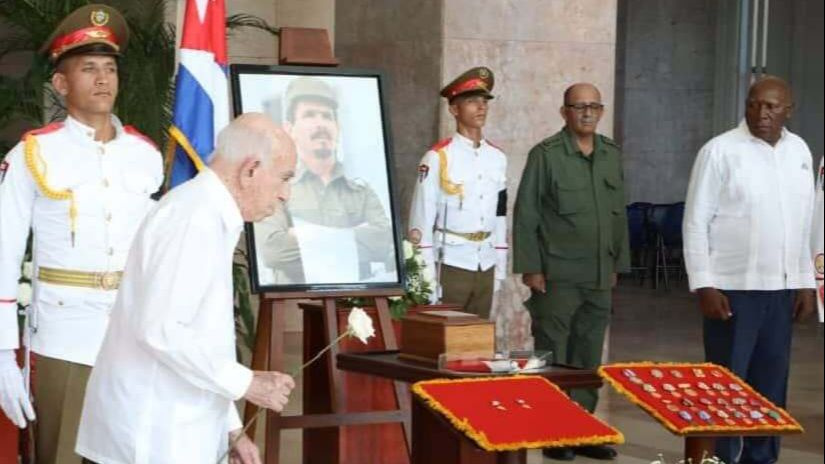
Madrid/Ramiro Valdés received this Tuesday in Havana the honors reserved for a commander of the Revolution, although measured with the caution applied to someone who is already beginning to interfere with the official story. Raúl Castro and Miguel Díaz-Canel led the first guard in front of the urn with his ashes, installed at the headquarters of the Ministry of the Armed Forces, while the mourning decreed for his death was limited to 18 hours and ended before his funeral concluded.
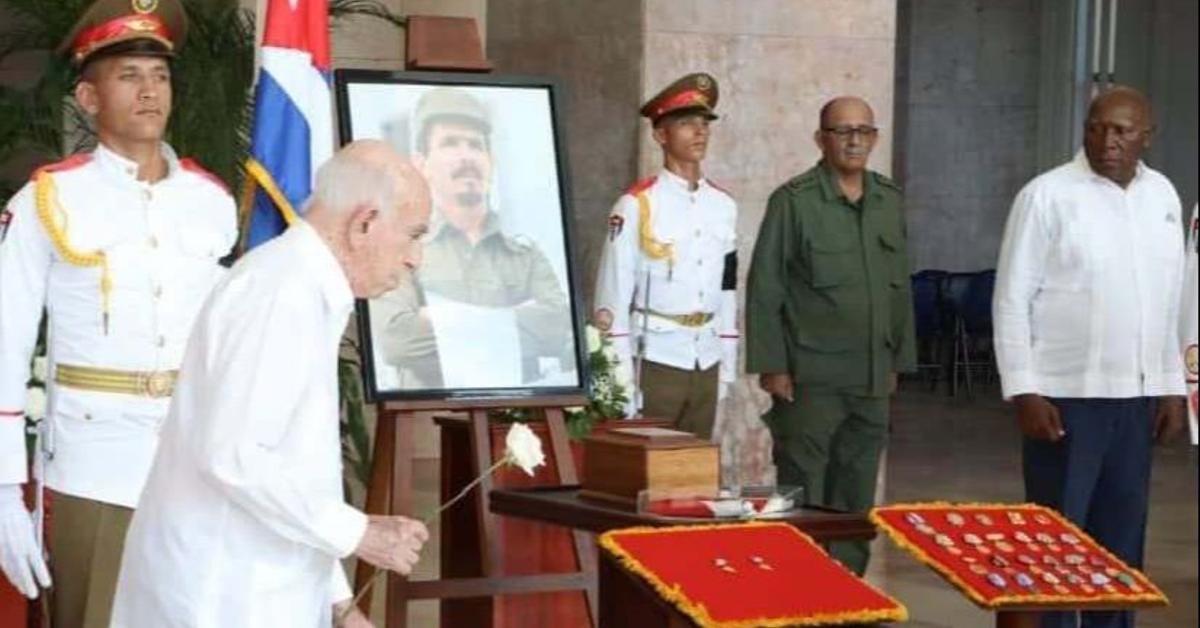
The tribute was held in the Granma room of the Sierra Maestra building, in front of the Plaza de la Revolución. Valdés’ decorations, his titles of Hero of the Republic and Hero of Labor, several crowns and the flag used in 1997 to transport the remains attributed to Che Guevara from Bolivia completed the scenery.
The first guard was made up of Raúl Castro, Díaz-Canel, the Minister of the Armed Forces, Álvaro López Miera, and the head of the Interior, Lázaro Alberto Álvarez Casas. Raúl, visibly aged and thin, later approached Valdés’ relatives, including his widow, Alicia Alonso Becerra.
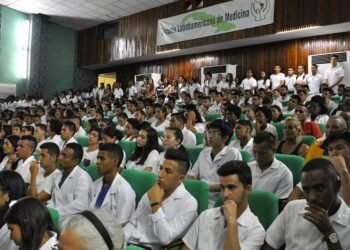
Although the official press presented the event as an expression of popular respect, the images showed an evident predominance of soldiers, officials, students and workers who attended in contingents organized by their institutions, rather than spontaneous attendance.
“One tries not to see in such gestures a change of era,” wrote Torres Corona, although he acknowledged having been infected with a “contumacious suspicion.”
The farewell had already begun with a stumble. The National Television News announced Valdés’ death as the third news item of its broadcast, after congratulating the Cuban parents and offering the report on the electrical system. The order even bothered Michel Torres Corona, host of the pro-government program Con Filo, who warned on his social networks about a possible “change of era.” “One tries not to see in such gestures a change of era,” he wrote, although he acknowledged having been infected with a “contumacious suspicion.”
It was no wonder. One of the most powerful men in the regime for six decades had lost the information competition against Father’s Day and the blackouts. The presidential decree also did not help to allay suspicions. Díaz-Canel declared official mourning from six in the morning until midnight on Tuesday. In total, 18 hours, despite the fact that Valdés died on Sunday and his ashes will not be buried until this Thursday in the Mausoleum of the Front of Las Villas, in Santa Clara. The flags were able to return to the top while the deceased was still awaiting burial.
The brevity has, however, a precedent among the commanders of the Revolution themselves. In 2009, Juan Almeida Bosque received just 12 hours of official mourning, from eight in the morning to eight at night. Valdés obtained six more hours, but less place. Almeida was honored at the José Martí Memorial, while the urn of his former companion was confined to a unit of the Armed Forces.
The comparison with Kim Jong-il is more uncomfortable. When the North Korean dictator died in 2011, Cuba kept the flags at half-mast for three days. Even Francisco Franco was honored for three days in 1975. The North Korean dictator and the Spanish leader, neither of whom landed in Granma or founded the Cuban State Security, deserved more hours of mourning than one of the men in charge of supporting the regime for six decades.
Raúl Castro shows obvious physical deterioration, but he walked without visible help and maintained ceremonial prominence
The Government limited itself to applying the formula frequently used for foreign leaders of secondary importance for Cuba. There was no national mourning, no general suspension of shows, no large gathering in the Plaza de la Revolución, nor a public speech by Raúl Castro.
The death of Valdés further reduces a historical generation that already practically fits into a guard of honor. Among its most recognizable figures are Raúl Castro, José Ramón Machado Ventura, Guillermo García Frías and Ramón Pardo Guerra, all distant to varying degrees from the visible management of the country.
Raúl turned 95 on June 3. Although he formally left the leadership of the Party in 2021, he continues to be presented as a “leader at the forefront of the Revolution” and retains an authority that no position in the current leadership seems to dispute. His appearances are few and carefully selected. In June he was seen at the event for the anniversary of the Ministry of the Interior and now at the tribute to Valdés.
On both occasions he showed obvious physical deterioration, but he walked without visible help and maintained ceremonial prominence. He remains the last symbolic arbiter of a system that insists on proclaiming continuity, although it needs to be displayed from time to time to demonstrate that the original source of legitimacy still breathes.
The situation of Guillermo García Frías is even more uncertain. He turned 98 in February and continues to officially appear as deputy and president of the Flora y Fauna Business Group.
José Ramón Machado Ventura is also 95 years old and will turn 96 in October. He participated in one of the last guards of honor before the Valdés urn. Since he left the second secretariat of the Party in 2021, his public presence is essentially limited to anniversaries, tributes and funerals. He no longer intervenes in daily administration or sets the political line. Its function is to remember that there is still someone capable of posing next to Raúl as human proof of a Revolution that has increasingly become a corpse.
The situation of Guillermo García Frías is even more uncertain. He turned 98 in February and continues to officially appear as deputy and president of the Flora y Fauna Business Group. However, he has barely appeared at public events for a long time. The propaganda remembered his birthday with portraits and historical materials, but he was not identified in the images of the tribute to Valdés. Versions circulate about a serious deterioration in his health, although they have not been officially confirmed. More than an active leader, García Frías is already an archive name.
Ramón Pardo Guerra, 89 years old according to the official record of the National Assembly, is the one who maintains a more specific executive responsibility. He continues to head the National Civil Defense General Staff and has appeared at meetings related to hurricanes and other emergencies. Their activity, however, is far from the center of political decisions. It intervenes when a cyclone approaches, evacuations are ordered or the recovery of a territory must be directed, but it does not regularly participate in the public definition of the economic or government strategy.
The regime claims to say goodbye to him as one of its great heroes, but announced it after the electrical report, granted him less mourning than Kim Jong-il and raised the flags before burying him.
Of the four, only Raúl retains an influence that exceeds protocol. Machado Ventura appears to remember the past; Guillermo García barely does it; and Pardo Guerra survives in a technical and limited area. None participates visibly in the general management of the country.
The so-called historical generation still occupies the first rows at some funerals, receives congratulations on special dates and retains titles, honorary positions and spaces in propaganda. But its practical authority is extinguished at the same rate as its members.
Valdés will be buried this Thursday in Santa Clara, when the official mourning has been over for more than a day. The regime claims to say goodbye to him as one of its great heroes, but announced it after the electric report, granted him less mourning than Kim Jong-il and raised the flags before burying him.
Michel Torres Corona may be right and it is a change of era. The historical generation still appears in photographs, but they decide less and less what happens outside the frame.