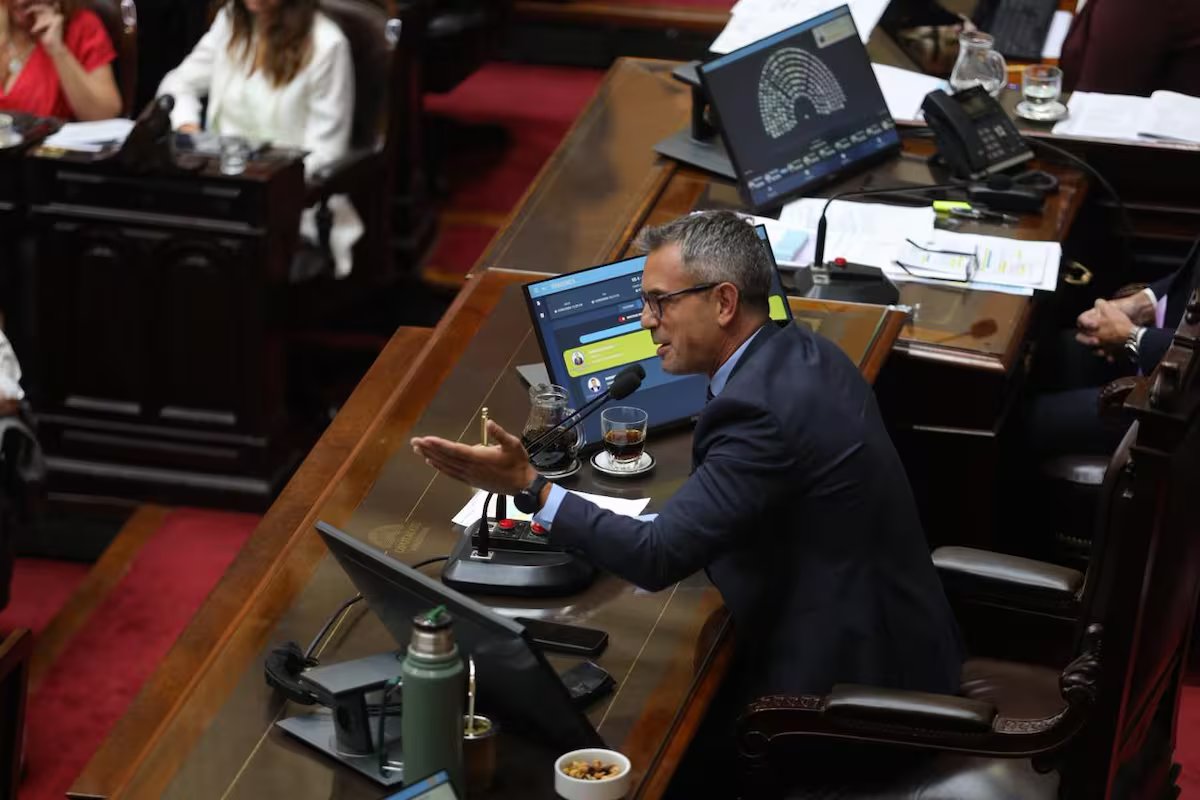
The Government will seek today to advance with two of its main economic bets: he agreement for pay US$171 million to the Bainbridge and Attestor fundstwo holdouts that still maintain litigation against Argentina, and the so-called “Super RIGI”a regime that offers tax, customs, exchange and regulatory benefits for investment projects greater than US$1 billion.
The special session It started around the hour with 129 deputies with the support of the same allies who yesterday gave a truce to the ruling party by preventing the debate to question Manuel Adorni. Pro, the UCR, the Integration and Development Movement (MID), part of the United Provinces and different provincial blocks – such as the Tucumans of Osvaldo Jaldo, the San Juan people close to Marcelo Orrego, the Salteños of Gustavo Sáenz, the Catamarqueños linked to Raúl Jalil – once again accompanied La Libertad Avanza (LLA) and guaranteed the quorum.
The debate will begin with the resignation of Adrian Ravierthe libertarian deputy who will take over as presidential spokesperson. The bullrichista will replace him Martin Matzkinwho served until today as Undersecretary of Federal Articulation of the Ministry of Security. Changes will be submitted to the venue for consideration. More than 12 hours of debate between exhibitions, tributes and questions of privilege.
In addition to the two economic projects, the Chamber will discuss a series of international conventions linked to double taxation and tax evasion with France, cooperation to discourage illegal fishing and social security agreements with Switzerland and San Marino.
The agreement with the holdouts It already has half a sanction from the Senate and the Government aspires to turn it into law today. The “Super RIGI”, on the other hand, begins its legislative journey in the Deputies and the ruling party seeks to grant it half a sanction to send it to the Upper House.
“Super RIGI”
The regime establishes a reduced rate of 15% on income tax, stability tax and exchange 30 years, exemptions of import and export duties, accelerated amortization of investments, reduction of employer contributions and a progressive release of currencies until reaching 100% from the third year of exports.
In addition, it enables investors to resort to international courts, such as the ICSID, the International Chamber of Commerce or the Permanent Court of Arbitration, in the event of disputes with the Argentine State. The text also provides that the rights granted under the regime will be considered “protected investments” within the framework of international treaties, which opens the door to possible claims regarding future regulatory modifications.
The scheme also limits the ability of provinces and municipalities to establish royalties or administrative fees on the adhered projects.
During the debate in committees, changes promoted by the allied blocs were incorporated. Among them, benefits for projects that carry out investments in research and developmentthe obligation to present integration plans local suppliers with a 20% contracting floor, an expansion of the objectives linked to technological development and the creation of a public registry of approved projects.
Some environmental and social requirements were also reinforced. Investors must prove that the initiatives will not compromise natural resources or essential infrastructureand a new cause for rejection was incorporated for projects with significant negative impacts in their area of influence.
Holdouts
The agreement with Bainbridge and Attestor contemplates the payment of US$171 million in exchange for closing pending litigation arising from the 2001 default, avoiding possible embargoes on Argentine assets and put an end to asset search processes (“discovery”) driven by creditors.
According to the Government, the transaction implies a reduction of more than 30% with respect to the amounts claimed and seeks to eliminate judicial risks on strategic assets of the Argentine State.