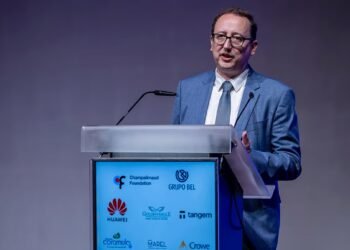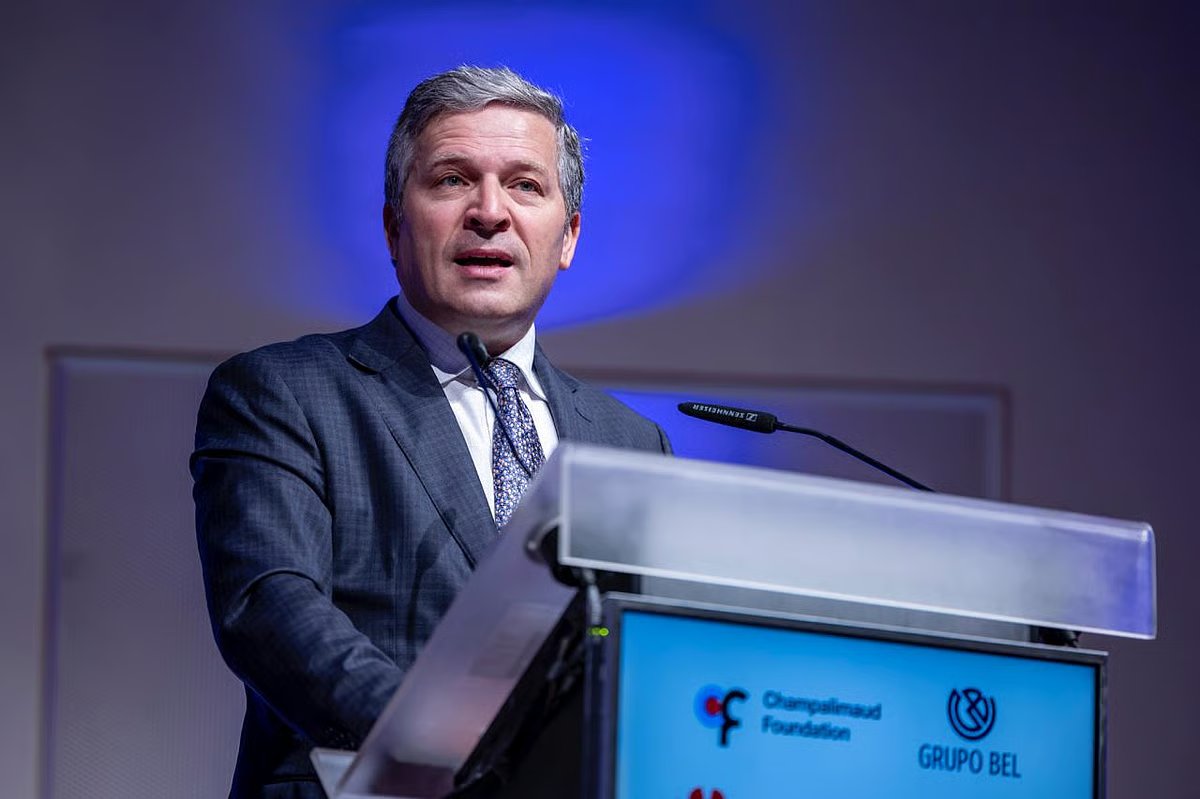
Marco Galinha, founder, president and CEO of Grupo BEL and main shareholder of Global Media Grouphighlighted this Monday morning the role of News Diary as a space for freedom, dialogue and critical thinking, at a time marked by geopolitical tensions, fragmentation of public debate and profound economic and social transformations.
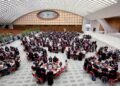
“There are days when a room is more than a room“, stated Marco Galinha at the opening of the DN Grand Conference, before an audience made up of dozens of institutional and diplomatic representatives. “Today, this room brings together people who think differently, who come from different places, who represent different interests — and who, even so, agreed to stop for a few hours to listen. In the times we live in, this is already a rare act”.
In a speech marked by references to the importance of understanding and diplomacy, the president of the BEL Group highlighted the symbolism of seeing delegations from dozens of countries represented in the same space, some from politically distant geographies or in contexts of international tension.
“Where there is dialogue, there is always a path to peace”he stated, arguing that plural debate and the ability to listen remain essential instruments in an increasingly polarized world.
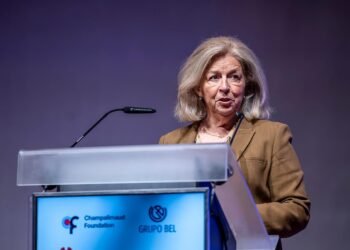
The conference takes place at the Champalimaud Foundation, an institution that Marco Galinha praised as “a place where science carried out in Portugal speaks equally to the world”thanking its president, Leonor Beleza, for the institutional hospitality.
When justifying the purpose of the initiative, Marco Galinha evoked the legacy of News Diaryfounded in 1864, remembering that “a newspaper that is more than a century and a half old is not just an archive of the country — it is a conscience”.
“He saw Portugal when Portugal doubted itself; he saw it change, fall, rise and open up to the world”, he stated, arguing that, faced with the noise and informational acceleration, the role of a historical newspaper must go through “help separate the essential from the accessory” and create conditions for a serious and informed debate.
The vision, moreover, follows public positions already taken by Marco Galinha on the role of the media. The businessman has repeatedly defended that investment in the media sector results from a personal conviction and a commitment to the country. “I came to the media with love for Portugal”he previously stated, maintaining that a strong democracy requires independent, demanding media bodies that are close to citizens.
Throughout the intervention, there was also space for a note of hope and collective responsibility. Quoting the philosopher Baruch Spinoza — for whom peace is not just the absence of war, but a virtue — and the writer Lev Tolstoy, Marco Galinha called for a culture of understanding in a time that, he said, “you need bridges more than walls”.
“Everyone remembered that everyone wants to change the world, but few think about changing themselves. Maybe that’s where peace begins. It’s an honor that this free newspaper can be, for one day, that common ground”he said.
“We don’t need to agree on everything; it would even be strange if we did. But perhaps we can leave here with something rarer: the desire to build a common language for problems that no longer fit in the trenches”he concluded.
Members of the Government participate in the conference, including Joaquim Miranda Sarmento, António Leitão Amaro and Gonçalo Saraiva Matias, as well as representatives of the diplomatic corps from nearly four dozen countries. The closing of the meeting was also marked by the President of the Republic.
The Great Conference of News Diary continues throughout the day with debates dedicated to the economy, innovation, health, competitiveness, geopolitics and the future of Portugal, bringing together some of the main national and international decision-makers.