Livestock smuggling on the border between Panama and Costa Rica has once again been placed at the center of the national debate, not only due to the recent seizures made by the National Customs Authority in the province of Chiriquí, but also due to the warnings from livestock unions and the legislative push to reform Law 104 of 2013 on livestock traceability.
The director of the National Customs Authority, Soraya Valdivieso, explained that in 2025 two relevant cases were registered in the western zone. In one of them, he said, 37 heads of cattle valued at $111,000 were retained, on which a financial penalty was imposed that was appealed and is currently being processed by the Appeals Commission.
In the second case, which involved 20 cattle, according to Vadivieso, the investigation continues and the authorities are looking for a municipal official who would have issued the corresponding collection guides.
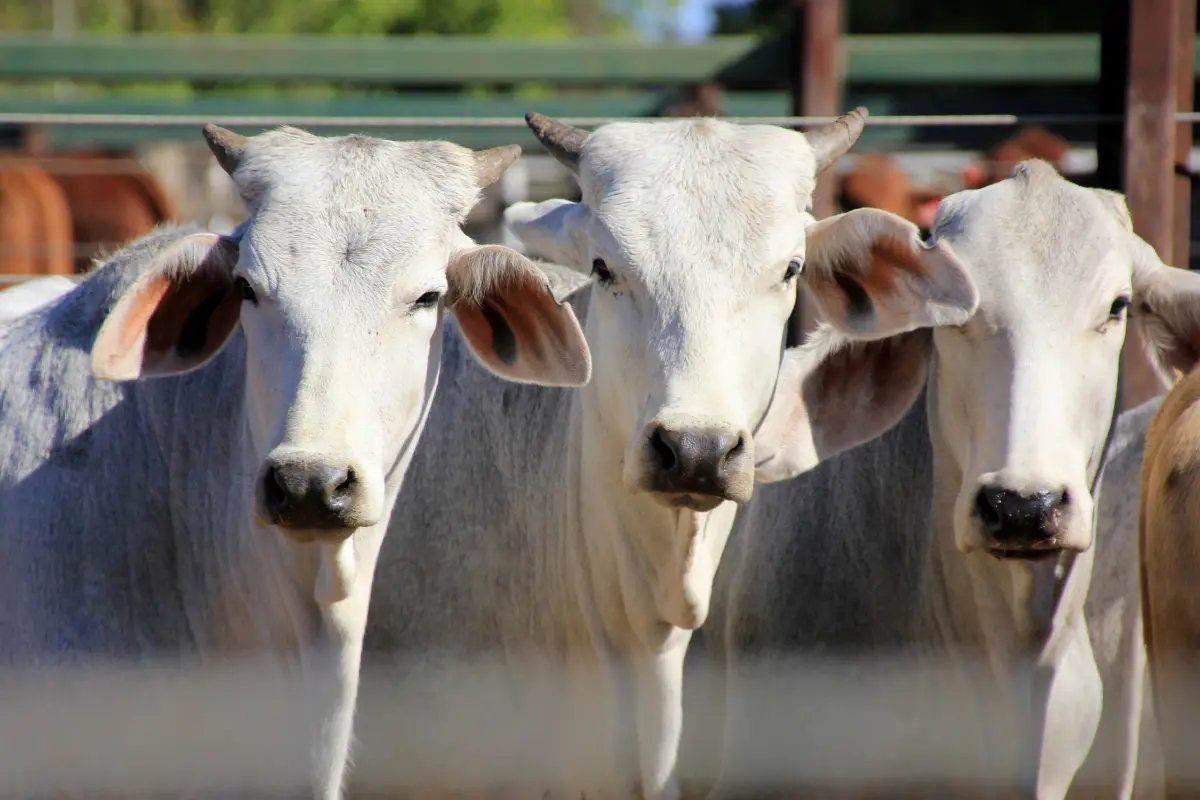
The Director of Customs explained that the practice of buying livestock at local auctions to transport it to the Highlands and later take it across the border to Costa Rica has been detected, in addition to the reimport of smuggled livestock from Costa Rican territory to Panama.
To guarantee animal health, the retained cattle are sent to the Institute of Agricultural Innovation of Panama (IDIAP), where analyzes are carried out to rule out diseases, and remain on farms of this entity while the investigations of the Directorate of Prevention and Customs Enforcement, known as the customs patrol, progress.
“The most sensitive routes identified by Customs are San Isidro and Cuervito, in Chiriquí, in addition to the Sixaola River in Bocas del Toro, where historically attempts at illicit cattle trafficking have been recorded,” Valdivieso reported.
The general secretary of the National Cattlemen’s Association (Anagan), Euclides Díaz, said that the main flow is the departure of Panamanian cattle to Costa Rica because prices are higher in that country.
“What we are sure of is that there is an exit of undocumented cattle to Costa Rica; that border is very porous,” said Díaz, while ruling out the possibility of a significant entry of Costa Rican cattle into Panama, since in the past this practice brought diseases and producers were chastened.
Díaz stressed that the situation reflects the urgency of moving forward in the implementation of bovine traceability, a system that in Costa Rica is already in full implementation while Panama remains stuck in a pending reform.
“Livestock farmers are willing to pay for the devices so that this is an effective national herd control system in terms of animal health and surveillance,” said the general secretary of Anagan, urging the authorities, especially Animal Health, to complete the reform of the traceability law and put it into practice effectively.
According to the leader, the lack of a modern control system is having negative consequences for the sector and limits the country’s ability to confront smuggling and guarantee the health of livestock.
In 2025, the Agricultural Affairs Commission approved in its first debate the bill that modifies Law 104 of 2013, which establishes the National Livestock Traceability Program. The document, presented by deputy Marcos Castillero, was analyzed in a subcommittee with the participation of various sectors, which provided a compendium of modifications. However, it has not made any further progress.
Castillero, at the time, stressed that the modification of Law 104 is not only a legislative procedure, but a prevailing need to safeguard the future of the agricultural sector and the health of the population.
During the debate, the head of the Livestock Traceability Department of the Ministry of Agricultural Development, Rommel Rosas, explained that the system is based on a platform that begins with the registration of the owner of the animals and the establishment, which allows any mobilization to be tracked. He added that the identification of cattle is carried out with a double device in both ears, which contains information about the cattle and its owner, as part of a comprehensive health and production control scheme.