For the demanding travelers willing to brave a direct flight between Sydney and London, Qantas Airways is designing a range of options and features within the cabin of specially configured planes, with the aim of reducing the inevitable fatigue.
The modified Airbus A350-1000 has more premium seats than regular economy seats, as the airline estimates that many passengers will be willing to pay more to make the nearly 20-hour journey more bearable. However, there is hope for those traveling in economy class, too: Qantas has created a dedicated wellness area inside plane cabins where passengers will soon be able to walk, stretch or even chat with fellow passengers. Of course, these areas will “cost” the company several rows of seats that will have to be removed.
The Australian airline recently unveiled plans for the new cabin configuration – a special order from Airbus which is building a fleet of twelve aircraft which will allow Qantas to break the existing boundaries of non-stop flights. It is a test of endurance not only for passengers but also for the company itself, which started planning this particular route about a decade ago and aspires to connect the two cities directly, starting in 2027.

“We studied the effects of long-haul travel on the human body and how jet lag affects the body,” Qantas chief executive Vanessa Hudson said at the presentation in Toulouse on 17 June. “We have clear data that we’ve built into services and the overall travel experience, which really makes a difference.”
The longest non-stop flight today is the Singapore – New York route, which takes about 19 hoursoperated by Singapore Airlines. Qantas’ specially configured planes will be able to fly up to three hours longer, thanks to an extra fuel tank and special cabin configuration, which has less capacity than a conventional A350-1000, which is Airbus’ largest passenger jet.
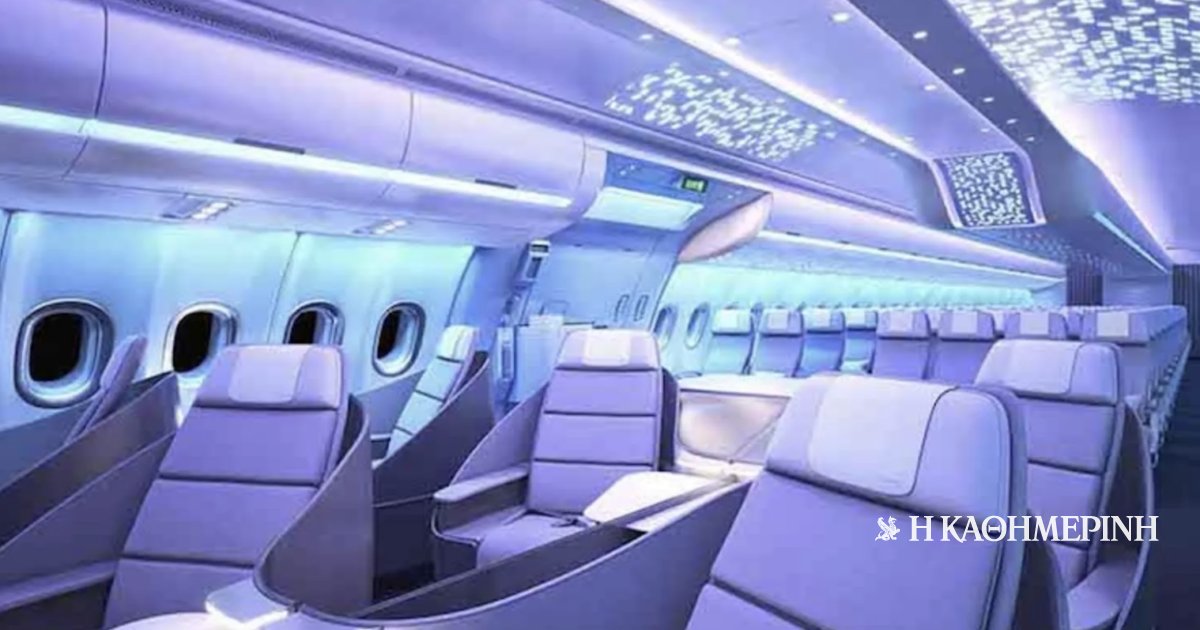
The lighting inside the cabin will change with a specific program to regulate the sleep cycle of the passengerssimulating sunset and sunrise. Meals will be served according to the time zone of the destination, while passengers will be given a detailed guide with stretching and movement exercises designed in collaboration with sleep experts from the University of Sydney.
The initiative is a continuation of Project Sunrise, which began in 2017 when Qantas challenged Airbus and Boeing to design an aircraft capable of flying Sydney to London non-stop.
Australia’s geographical “isolation” has historically been one of the main reasons that made direct air connections with Europe and the USA difficult. For decades, travelers took it for granted that a journey between London and eastern Australia was split into two legs. Qantas’ current flights to London stop in Singapore and take around 23 hours.
Technological advances in aircraft efficiency are now changing this equation. Airbus has modified the A350-1000 to cover the approximately 17,000 kilometers between Sydney and London. In the future, the aircraft will also be used for direct flights to New York.
Qantas’ drive to develop long-haul flights has not only focused on engineering. During a series of research flights, the company carried scientists, observers and volunteers who recorded everything from their sleep quality and hydration levels to their reaction times and level of alertness. “It’s not something we started recently,” Hudson noted.
The findings of these investigations had a substantial impact on cabin design. The wellness area, located between the premium economy and economy class cabins, has screens showing specific exercise programs and allows up to eight passengers to move at the same time.
The promise of a direct journey will allow Qantas to charge around 20% more for tickets. Total capacity will be around 238 seats – significantly fewer than those of a conventional A350-1000. The airline has ordered 12 aircraft of this type and the last delivery is scheduled for 2029.
About 40% of the seats are premium class cabins, including six first class suites, 52 business class seats and 40 premium economy seats.
For company executives the value of the service is obvious: less travel time and arrival at the destination without the wasted hours and inconvenience of a stopover. For tourists, the main advantage is avoiding the interruption of the journey in the middle of the journey.
However, flying such distances still presents challenges for airlines. Carrying the necessary amount of fuel for a route covering nearly half the globe increases operating costs and limits the ability to carry other cargo.
Qantas is betting that the convenience of flying non-stop will outweigh these limitations. The 105-year-old airline already operates some of the world’s longest flights, including Perth to London and Sydney to Dallas. In both cases, passengers have proven willing to pay a higher price in order to avoid layovers.
Source CNBC