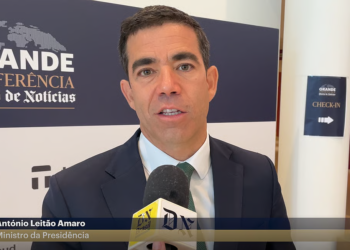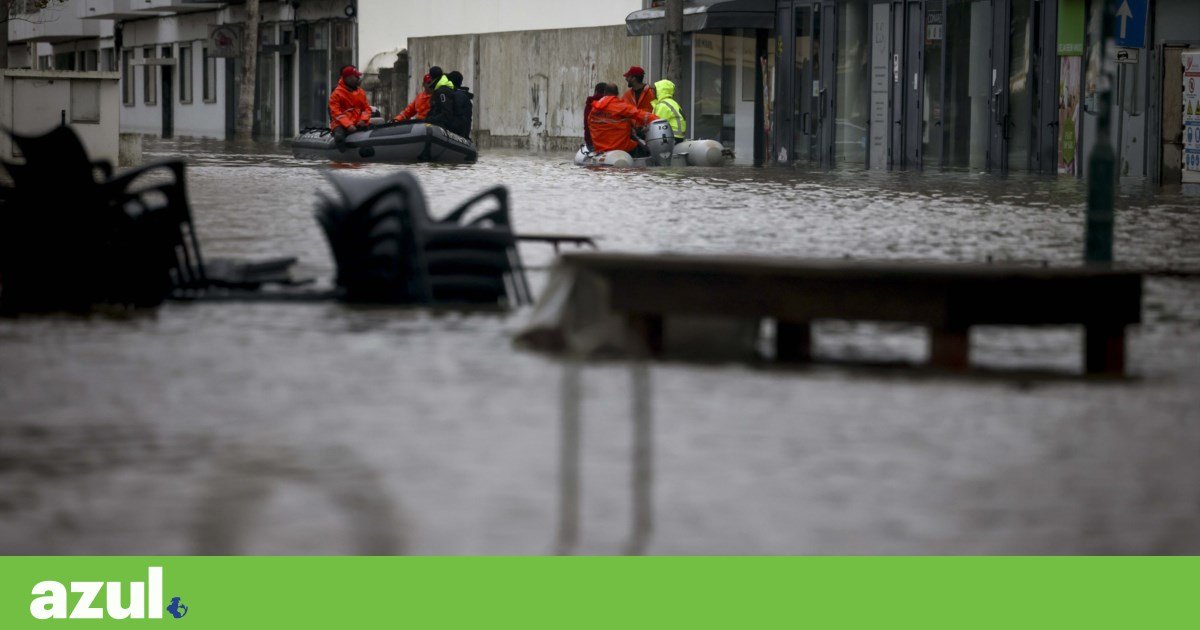
The Government approved this Thursday, in the Council of Ministers, the National Strategy for Adaptation to Climate Change (ENAAC 2030). In a press conference, the Minister of the Presidency, António Leitão Amaro, highlighted the importance of preparing the country for the effects of climate change, such as heat, droughts, fires or floods. The ENAAC will now be sent to Parliament.
António Leitão Amaro recalled that Portugal is “a particularly exposed country, marked on risk maps as one of the most vulnerable to the effects of climate change”. The phenomenon of climate change, noted the government official, “requires preventive measures from governments, mitigation of the effects and combating their own emissions and the human contribution” to the problem. However, he stressed that there is always “a dimension that occurs independently of the preventive response” — be it heat, drought, fires or floods.
THE Adaptation Strategy approved this Thursday, which was subject to public consultation between October and November last year, became part of the “Resilience” pillar of the Transformation, Recovery and Resilience Program (PTRR), aiming for an integrated policy of prevention and management of the main risks to which the country is exposed.
In the words of Leitão Amaro, it is “a national strategy that sets guidelines and general lines of action” for climate adaptation and “does not fix or define concrete investmentsIts effectiveness will therefore depend on the subsequent approval of specific action plans, legal instruments and the allocation of dedicated funding.
The approval of ENAAC 2030 had been announced the day before by the Prime Minister in the fortnightly debate in the Assembly of the Republic, in response to PAN spokesperson, Inês de Sousa Real, who accused the Government of keeping Portugal “on the bench” in the fight against climate change. The Prime Minister added that this decision continues a “strategy that combines water policy with forestry policy, with the policy of land development and planning”.
Public consultation
During the public consultation on ENAAC 2030Last year, entities such as the Economic and Social Council (CES) and the National Council for the Environment and Sustainable Development (CNADS) raised concerns centered on operational, financial, legislative and social justice failures.
The most transversal criticism concerns the lack of operationalization. The CES warned that an “excessively programmatic strategy runs the risk of generating regulatory uncertainty, a retraction in investment and social resistance, compromising the objectives themselves”.
The CNADS goes further and criticizes the fact that the financing mechanisms referred to in ENAAC “are mainly of the advertisement or subsidy type, with relatively limited amounts and which require complex and expensive management procedures”, warning that the introduction of “responsibility for risk management” cannot “mean the transfer of the burden from the State to the citizen without due financial and technical support”.
In spatial planning, the CES emphasizes that “dispersed and disordered construction, particularly at urban-rural, urban-forest interfaces and in ecologically sensitive areas, constitutes a structural factor in worsening climate vulnerability”. The Environment Council recommends that the integration of climate constraints into territorial management plans and programs be made mandatory.
In terms of social justice, the CNADS argues that public investment should prioritize thermal insulation “as a measure to protect health and comfort, with direct medium and long-term effects on savings for the public treasury”, in addition to recommending the improvement of public transport as “an essential priority”.
The CES emphasizes that climate change will cause “loss of productivity and income instability, disproportionately affecting workers with less contractual protection”, reaffirming that “there is no socially sustainable climate adaptation without labor protection”.
The CNADS also criticizes the fact that ENAAC 2030 is too focused on medium and long-term changes, neglecting “the management of climate risk associated with extreme situations”, such as flash floods and mega-fires, which are precisely the phenomena that most affect the country.