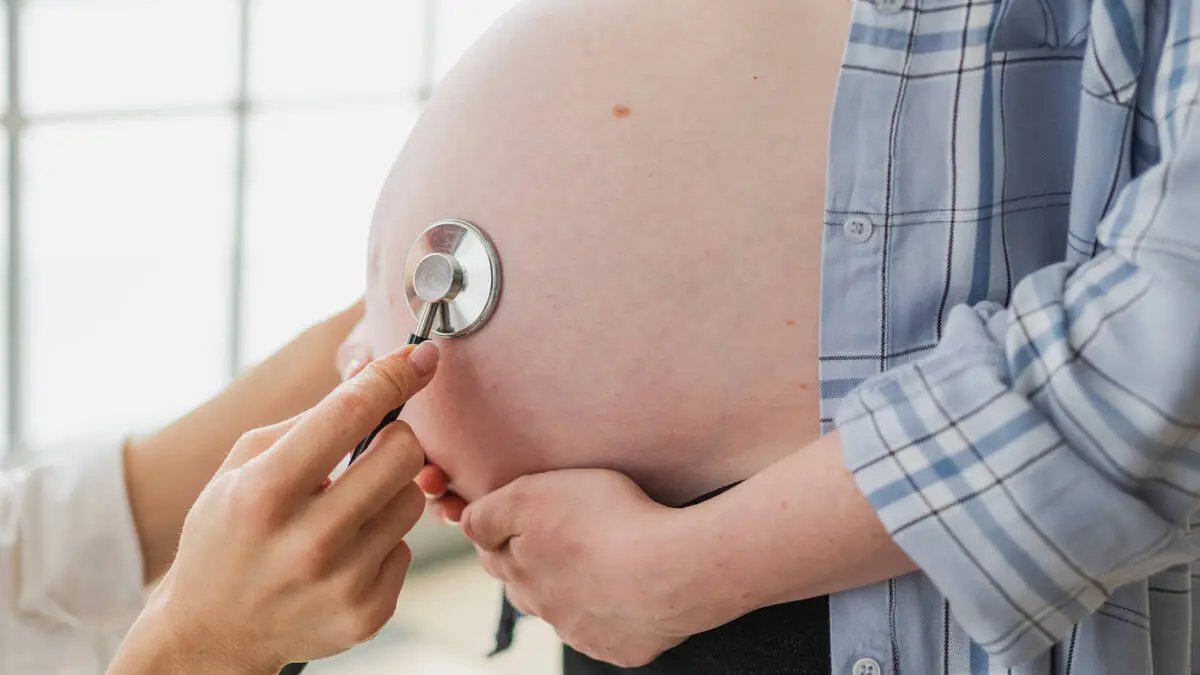
During the pandemic, women were more likely to be overweight and obese at the start of pregnancy, an Austria-wide study shows. The result: heavier babies and more difficult deliveries.

Weight gain during pregnancy remained the same at an average of 13 kilograms between the pandemic and pre-pandemic periods. Imago/Iuliia Zavalishina
Add the Press on Google as your preferred news source.
During the Covid-19 pandemic, women in Austria had a higher initial weight at the beginning of pregnancy and were more often overweight and obese. This resulted in heavier babies and more difficult deliveries. This is the result of the first Austria-wide study on this topic, which has now been published online in “BMC Public Health”.
“There is a lack of evidence as to whether the measures to contain Covid-19 have influenced the metabolic status of pregnant women. This study is the first to analyze changes in pre-pregnancy weight, body mass index (BMI), weight gain during pregnancy, the frequency of overweight and obese women at conception, and birth-related complications during the Covid-19 pandemic compared to before,” says the scientific paper, which was written by experts at the University Women’s Clinic in Vienna (MedUni Vienna/AKH) and Innsbruck epidemiologists (doi: 10.1186/s12889-026-28105-6).
The authors analyzed the birth register data of all obstetric hospital departments in Austria for the pandemic period between May and December 2020 with 30,806 women giving birth and compared them with the data from 162,463 pregnant women from the comparison periods from 2025 to 2019. The main results, according to the scientists: “The weight before pregnancy and the BMI were 64 kilograms and 23.03 (BMI; note) in cross section during the Covid-19 pandemic compared to 63 kilograms and 22.7 (BMI; note) in the pre-pandemic period.”
Weight gain during pregnancy remained the same in the comparison between the pandemic and pre-pandemic periods at an average of 13 kilograms (plus 4.8 on the BMI scale). However, the changes in initial weight were statistically significant in each case. The proportion of expectant mothers who were underweight fell from 5.95 percent before the pandemic to 5.38 percent during the pandemic period; Accordingly, the proportion of women of normal weight also fell from 62.96 percent to 61.55 percent.
The prevalence of obesity increased from 20.23 percent to 20.96 percent. Class I obesity (BMI between 30 and 34.9) increased from 7.44 percent to 8.11 percent during Covid-19, the incidence of class 2 (BMI 35 to 39.9) and class three (BMI 40 and above) obesity also increased (the former from 2.46 percent to 2.65 percent, the latter from 0.95 percent to 1.15 percent).
The weight development of the pregnant women was also reflected in changes in the newborns. The proportion of children with macrosomia, which means an increased birth weight, usually 4,000 grams or more, increased from 8.89 percent to 9.42 percent. This also led to the use of the suction cup being used statistically significantly more often (8.09 percent before the pandemic, 8.48 percent during Covid-19).
The scientists in their summary: “The measures to contain Covid-19 have worsened the metabolic status of pregnant women. To counteract this, targeted intervention programs must be implemented immediately as an integral part of the pandemic recovery plan.” (APA)