Friðjón Þórðarson, managing director of Qair in Iceland, regrets the level of complexity and the uncertainty that the majority of the Environment and Transport Committee of the Alþingi has proposed in a bill to amend the law on conservation and energy efficiency planning.
He expresses concern that the aim is to discriminate between energy options. “Landsvirkjun was the only energy producer that was called before the committee, and the result unfortunately bears the flavor of that.”
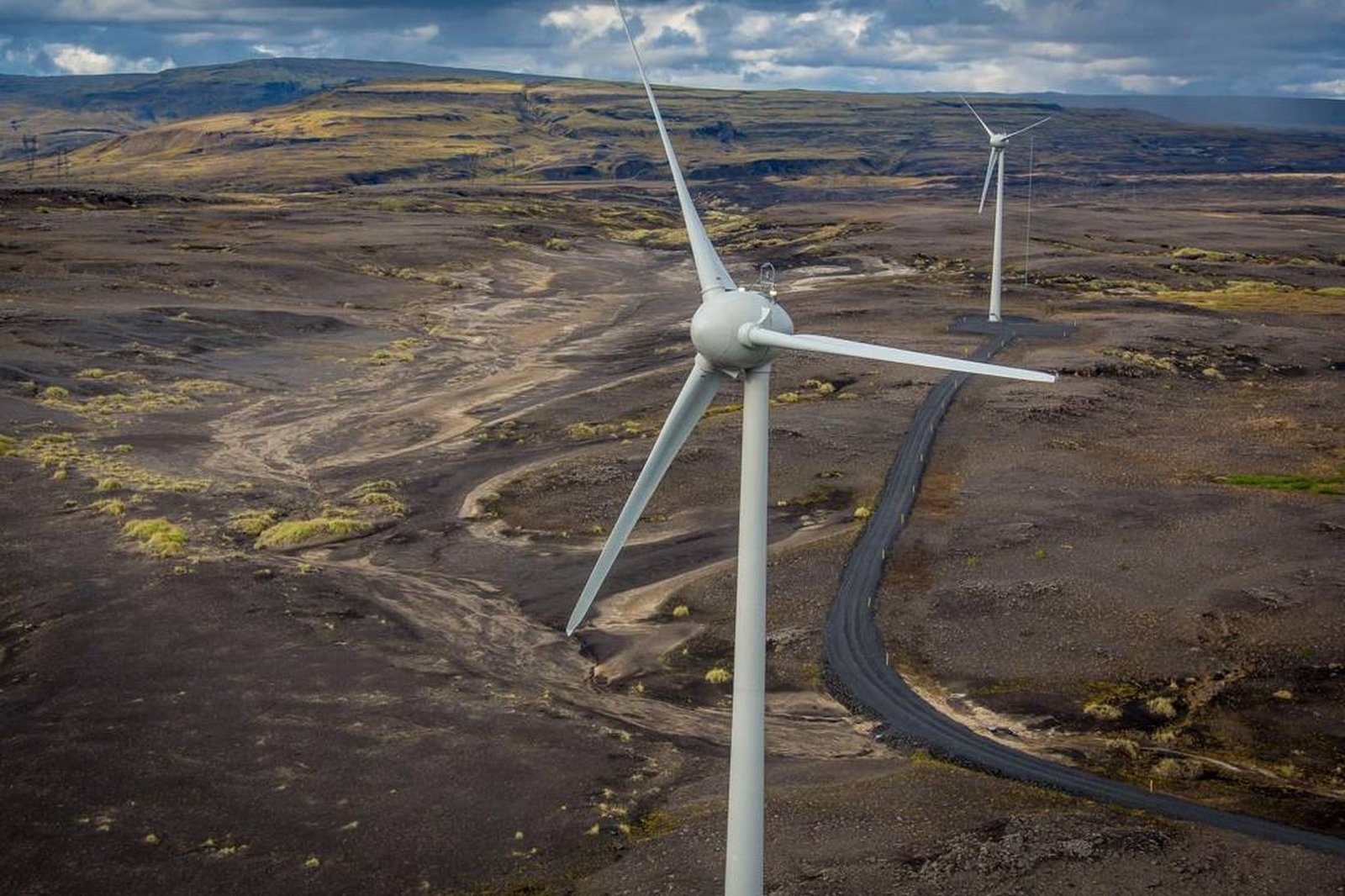
The majority of the committee has proposed to change the bill so that not only does a 10 MW wind farm have to go into a master plan, but also that a new height standard of 30 meters is introduced.
“This rules out anyone building one or two wind turbines next to their town or company based on how the framework plan has been implemented. Thirty meters is an absurd standard. Wind turbines that are supposed to generate some energy need to be over thirty meters. The size of the blades determines a lot about the power capacity of a wind turbine and they need to be at a certain distance from the ground,” says Friðjón.
Everything tied to Landsvirkjun?
He also sets out the committee’s condition that the regulations state that wind energy producers must demonstrate the availability of balancing energy in order to meet the flexible production of wind energy plants. “There is one company that has access to all reservoirs in the country and is in the process of offering compensatory energy as a sales product. Is it therefore necessary for us to negotiate with Landsvirkjun to have a chance of getting into the utilization category?”
Friðjón also draws attention to the fact that the criteria for balancing energy are not sufficiently defined. “Is it sufficient for us to demonstrate balancing energy with batteries so that they collect the energy when we generate a lot and then send energy into the distribution system when we generate less? Does this count as balancing? I don’t understand how they are going to have it.”
The best balance is to have a customer who can adapt their production to the energy production. Does that count as an equalization path? I cannot demonstrate in the framework planning process that we have such a client because we are so short on the road.”
Unclear conditions
It is also unclear what the majority of the committee means by wind farms having to be close to existing infrastructure. Friðjón points out that one of the company’s projects is about 35 kilometers as the crow flies from the nearest substation, but it is entirely unclear in his opinion whether 5 or 50 kilometers is closer to the committee’s mind. “It’s not good not to know what people are up to.”
Regarding bird life, which needs to be considered during the development of wind farms, terms and criteria need to be clear. The committee talks about internationally important bird areas that are not defined anywhere in the law, their meaning is unclear and there is no official mapping available. The same applies to uninhabited wilderness areas that are defined by law, although their mapping is not available.
Friðjón expresses disappointment with the changes, which he says are in opposition to the goals of the legal changes that were submitted to the committee. “Things are being complicated by not making them clear enough. This trip was taken in order to sharpen and clarify, but in the committee’s treatment it has completely failed.”