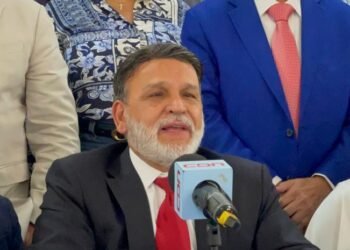
The communications manager of the High Cost Drug Program (PMAC), Leandro Feliz, explained that it is not that the institution does not want to meet the needs or address the complaints of people with chronic inflammatory bowel diseases of Colitis and Crohn’sbut it does not have the resources to incorporate them into the process.
“It’s not because Alto Costo doesn’t want to, but because he doesn’t have the resources,” said Feliz.
He highlighted that members of the program and the directors of the Foundation for Crohn’s Inflammatory Bowel Diseases and Ulcerative Colitis Northern Region (FUNDENICC) held a meeting where they explained the lack of budget provision.
“We see that as correct, that they sue and that they be included, because they are sick people; I think it is fair that they are cared for, but the Dominican Republic has a totally inequitable health system and the complete system does not cover most diseases,” commented Feliz.
“Nobody chooses the disease they have. The Dominican Republic system is an unfair system, very unfair, that should include everyone who is sick, whether or not they have insurance, contributory or subsidized, to cover the illness,” he added.
Feliz reiterated that “the solution is not in High Cost,” and that the institution remains waiting for the allocation of the next budget, which is RD$7.3 billion annually.
“It is the same as last year, therefore, what we have is a guarantee for everyone who is in the program, but thinking about including new people does not depend on High Cost, it has to have a budget to be able to sustain the medications that these people require,” he said.
He pointed out that currently High Cost, the Superintendency of Health and Occupational Risks (SISALRIL) and other actors in the system are working on a process to open a mechanism that allows more people to be incorporated into the program, but it is not yet available.
Likewise, he clarified that those protesting are not high-cost patients, as has been indicated, since none of the people registered in the program have stopped receiving their medications.
“They have their medications insured and their reserve is complete. There are no shortages with patients who are in the High Cost Program,” he said.
He explained that the people who today denounce the lack of medications to treat colitis and Crohn’s diseases, in Cibao, are not yet within the program.
“They are people with these pathologies, Dominicans, with the right to have solutions to their problems; we recognize it, but in the Dominican Republic system there are still no medications for them, to be able to incorporate them,” said Feliz.
waiting list
According to the Foundation for Crohn’s Inflammatory Bowel Diseases and Ulcerative Colitis Northern Region (FUNDENICC) they are more than 60 patients that from 2024 remain on waiting list to enter the High Cost Drug Program.
In addition, he highlighted that at least dozens of other patients are waiting for approval of a change in treatment because the medications they receive have lost effectiveness or are rejected by their bodies.
While they assure that at least 11 patients have lost the battle against these diseases.