Of Giada Aquilino
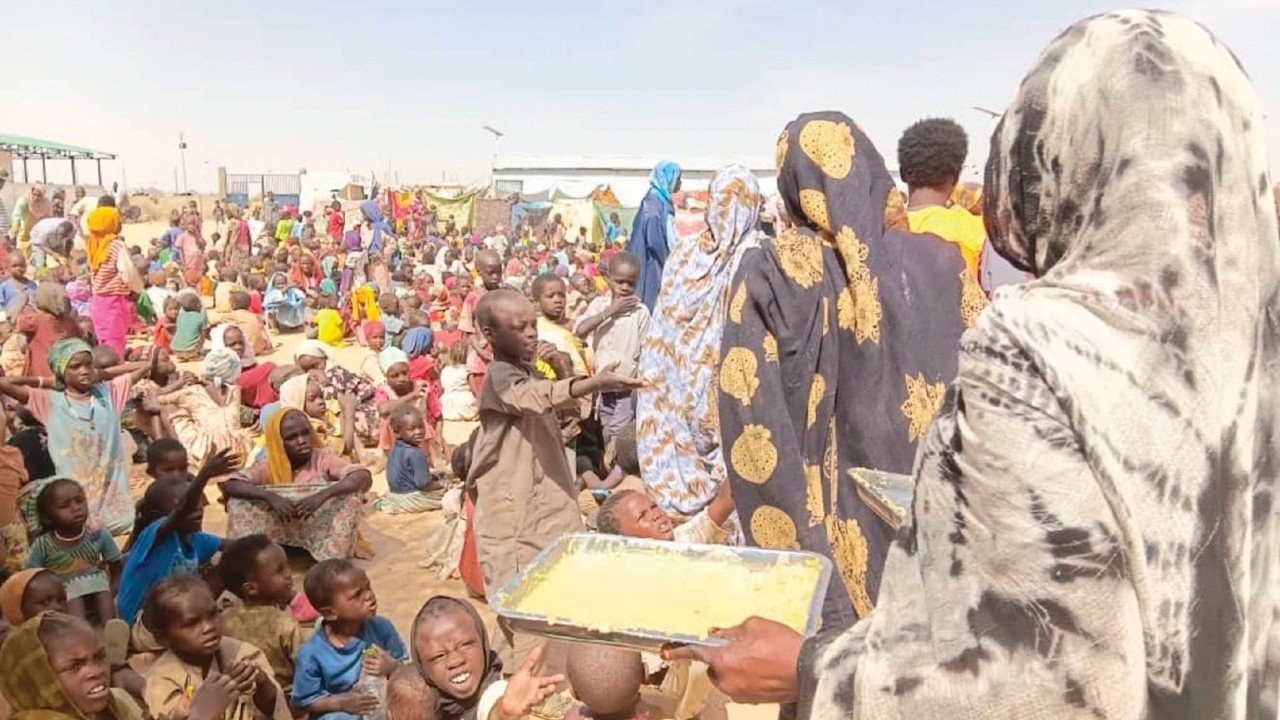
There is only one certainty in the humanitarian commitment alongside the approximately 2,000 Sudanese refugees currently hosted in the Tiné camp, in the central-eastern part of Chad, on the border with Sudan which has been at war for over three years: “If we were to interrupt our aid, there would be no one left to provide assistance, even just food, to these people”. Brother Fabio Mussi, PIME lay missionary, bursar of the apostolic vicariate of Mongo, in Chad, has long been following the projects of the local Caritas in the province of Wadi Fira, where the Tiné transit camp is located. «It is a structure created by the United Nations for initial reception, where – he explains – people are exclusively registered as asylum seekers, to then be re-localised in detention camps. But there are no realities of assistance.”
After the outbreak of the conflict in Sudan between the Khartoum army and the paramilitaries of the Rapid Support Forces (RSF), on 15 April 2023, the eastern provinces of Chad welcomed over 1.2 million people, the majority of them Sudanese, as well as previously expatriated Chadians. It is estimated that at least 15 million Sudanese have been forced to abandon their homes due to the war at home, in what the UN has defined as the worst displacement crisis in the world, as is worth remembering in particular today, Saturday 20 June, World Refugee Day. “Then there is a whole part of people who are not registered and fit into local realities without being regularly ‘recognised'”, observes the PIME missionary, referring to a humanitarian capacity put to the test in Chad, a country which, in the general context of reduction in international aid, hosts refugees from Central Africa, Nigeria, Cameroon and the Democratic Republic of Congo.
«It is above all the population of North Darfur who has fled Sudan and arrived in Tiné, especially since the great battle in the capital El Fasher», conquered by the paramilitaries last October, after a year of siege. “There were clashes and carnage and, in this escape, many sexual abuses against women were reported, as well as raids to take away money and everything these people had”, reports Brother Mussi. “What we were also able to notice, particularly in the months of January-February, is that many unaccompanied children arrived: their parents had been killed during the escape, so perhaps an older brother took care of the younger children.” Even in the border areas – Tiné is less than 5 km from the border with Sudan – there were also tensions due to “drones that fell in the area between April and March”. In Sudan alone in the first 5 months of this year, according to the United Nations, at least 1,000 civilians died in attacks by unmanned aerial vehicles.
In a climate of profound insecurity and in a territory where “there is no organization that intends to insert itself into such a context of precariousness”, since last January Caritas Mongo – with the support of Caritas Ambrosiana, the PIME Foundation and private donors – has been carrying out an emergency intervention: it has provided 250,000 meals in the Tiné camp, with a daily average of almost 1,900 beneficiaries. «We ensure a hot meal a day for everyone, rice, beans, pasta, dried meat, milk. We took over from a local association, which had organized itself to provide food assistance twice a week, involving 10 cooks”, half from the host community and half belonging to a group of refugees. At the same time, he adds, “we try to help people to have profitable future activities, for example by supporting women in creating vegetable gardens, again in the Wadi Fira region”.
When, according to the latest report from FAO and the World Food Program (WFP), the risk of famine in Sudan persists in 14 areas between Northern Darfur, Southern Darfur and Southern Kordofan, Caritas Mongo aims to continue its commitment in favor of Sudanese refugees in Tiné, “if possible until the end of December, then extending it to the whole of 2026, but we hope that at a certain point the urgency ends”. Yet, the PIME missionary notes with pain, “there are no concrete signs of a truce” in Sudan. «Let’s at least hope that the crisis doesn’t get worse. We, out of human and Christian solidarity, continue to work to guarantee dignity and hope to thousands of refugees, in a pre-desert area. Until a few days ago it was between 40 and 45 degrees. Now the dry season is ending and the rainy season is starting: we are reaching 35-38 degrees, so the situation could in some ways improve for people, who suffer less with these temperatures, but it could also become more complicated for travel.”