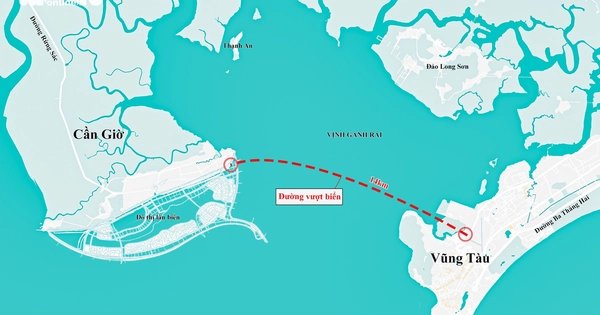
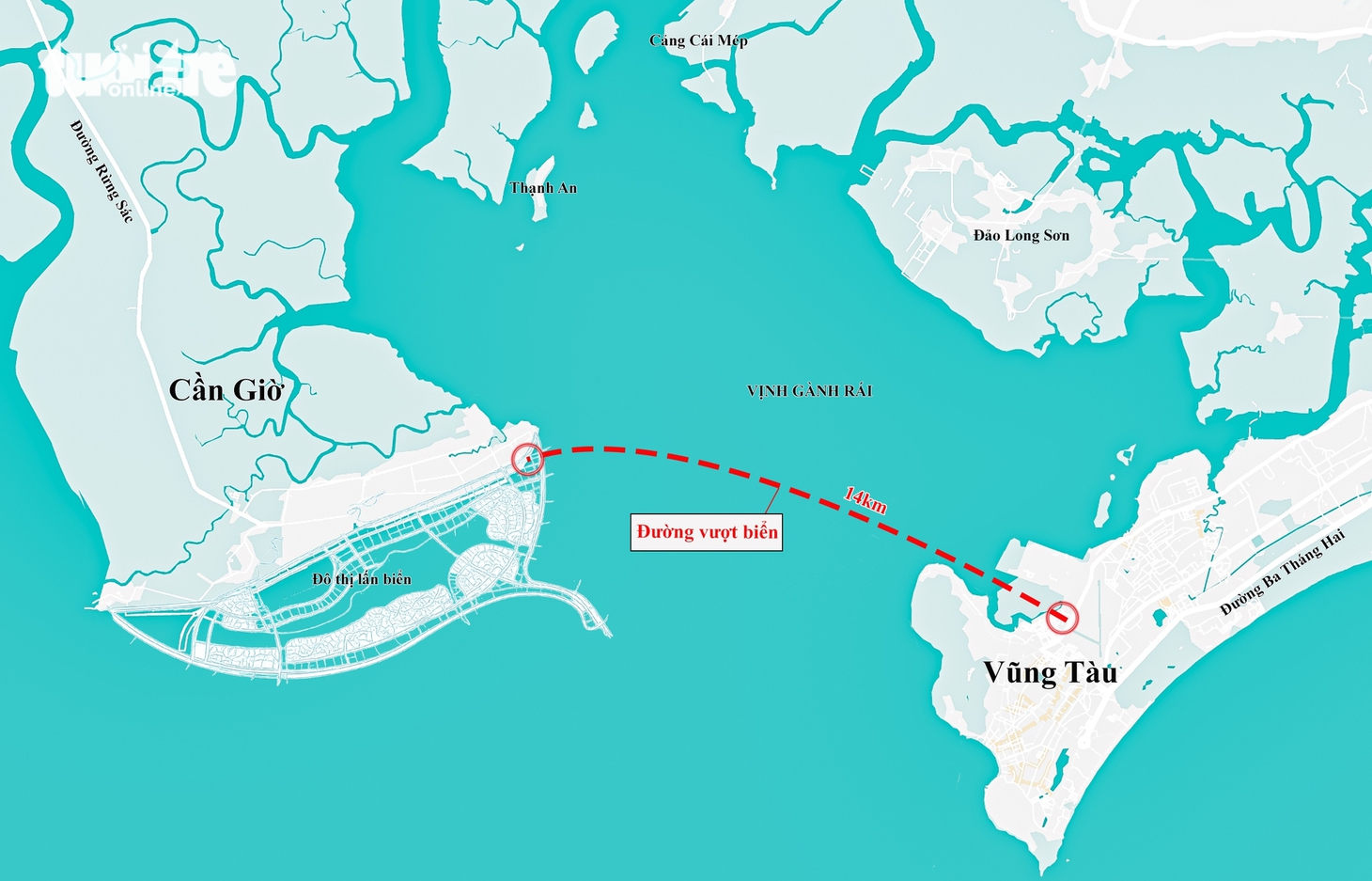
A rendering shows the proposed Can Gio–Vung Tau sea-crossing route, which is expected to help complete the coastal transport network in southern Vietnam. Photo: Chau Tuan / Tuoi Tre
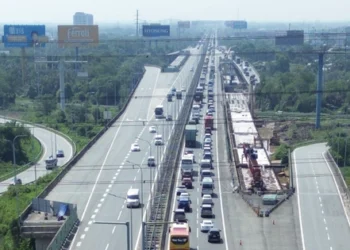
The city government said current links between central Ho Chi Minh City, Can Gio, and Vung Tau mainly rely on National Highways 1 and 51 and the Ho Chi Minh City–Long Thanh–Dau Giay Expressway, where congestion has become a persistent problem, particularly on routes serving Long Thanh.
Authorities said the project would create the only direct coastal corridor between Can Gio and Vung Tau, cutting travel time to about 10 minutes and serving as a strategic transport link connecting Ho Chi Minh City’s urban core with the southern coastal region.
The route is expected to support development of the Can Gio coastal tourism area, Long Son Industrial Park, and the Cai Mep–Thi Vai port complex, while boosting logistics, port-related industries, tourism, and the marine economy, according to project documents.
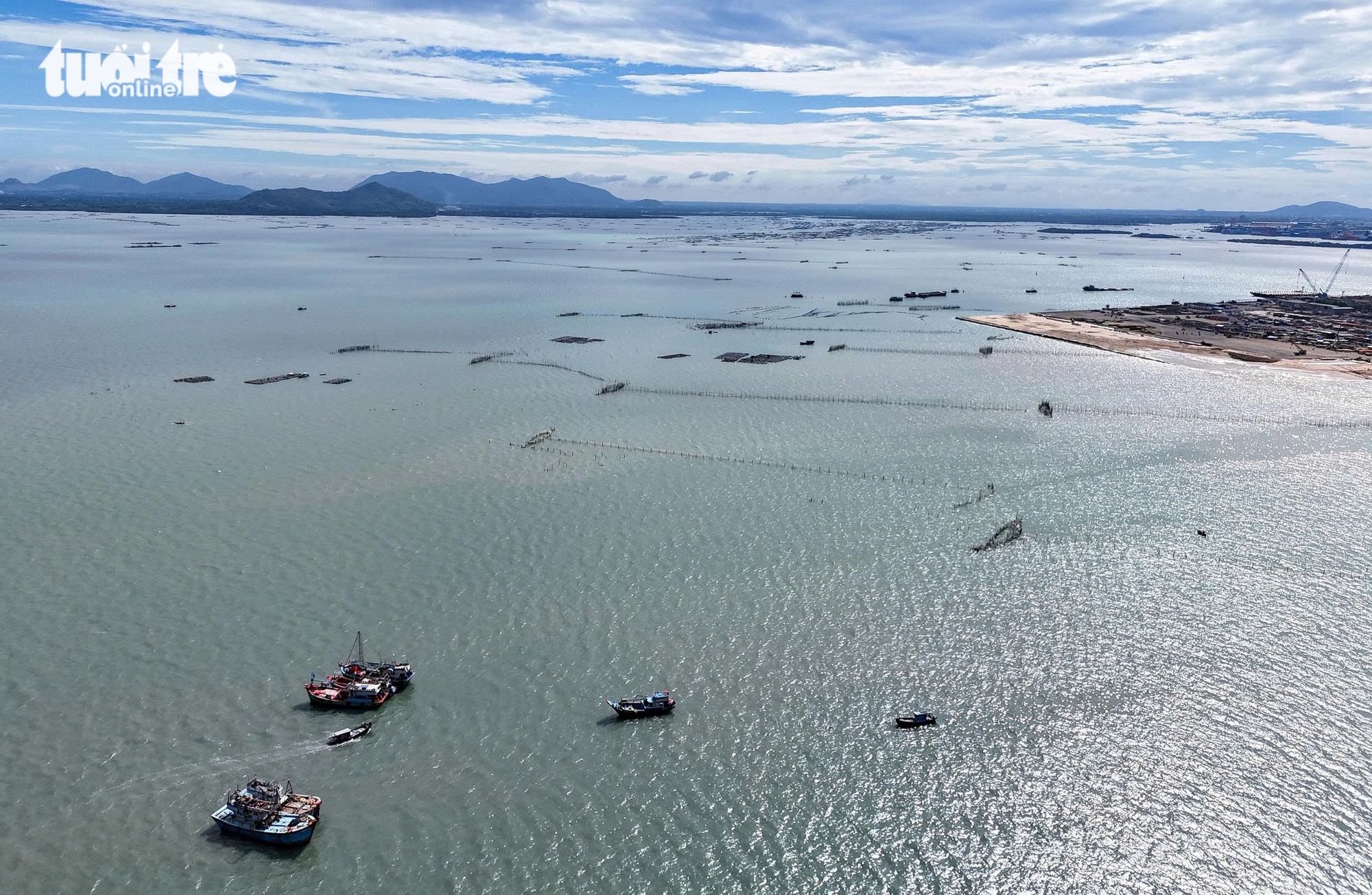
A view of Ganh Rai Bay near Vung Tau, where a proposed sea-crossing road would connect Vung Tau and Can Gio across the water of Ho Chi Minh City. Photo: Chau Tuan / Tuoi Tre
The proposed road will form part of a broader transport network under development in Can Gio, alongside projects including the Ben Thanh–Can Gio railway, Can Gio Bridge, upgrades to Rung Sac Road, and other regional transport links.
The project’s starting point is planned on Bien Dong 2 Road in the Can Gio urban area, with the endpoint at the intersection of the planned Sao Mai–Ben Dinh route and 30-4 Road in Vung Tau.
The 14.06-km project will include nearly 1.9 km of approach roads, an 8.01-km sea bridge, a 295-meter connector section, and a 3.85-km subsea tunnel, including a 3-km immersed tunnel segment.
The road is designed as a six-lane urban route with a speed limit of 80 kph and will occupy about 169.3 hectares of land and water surface.
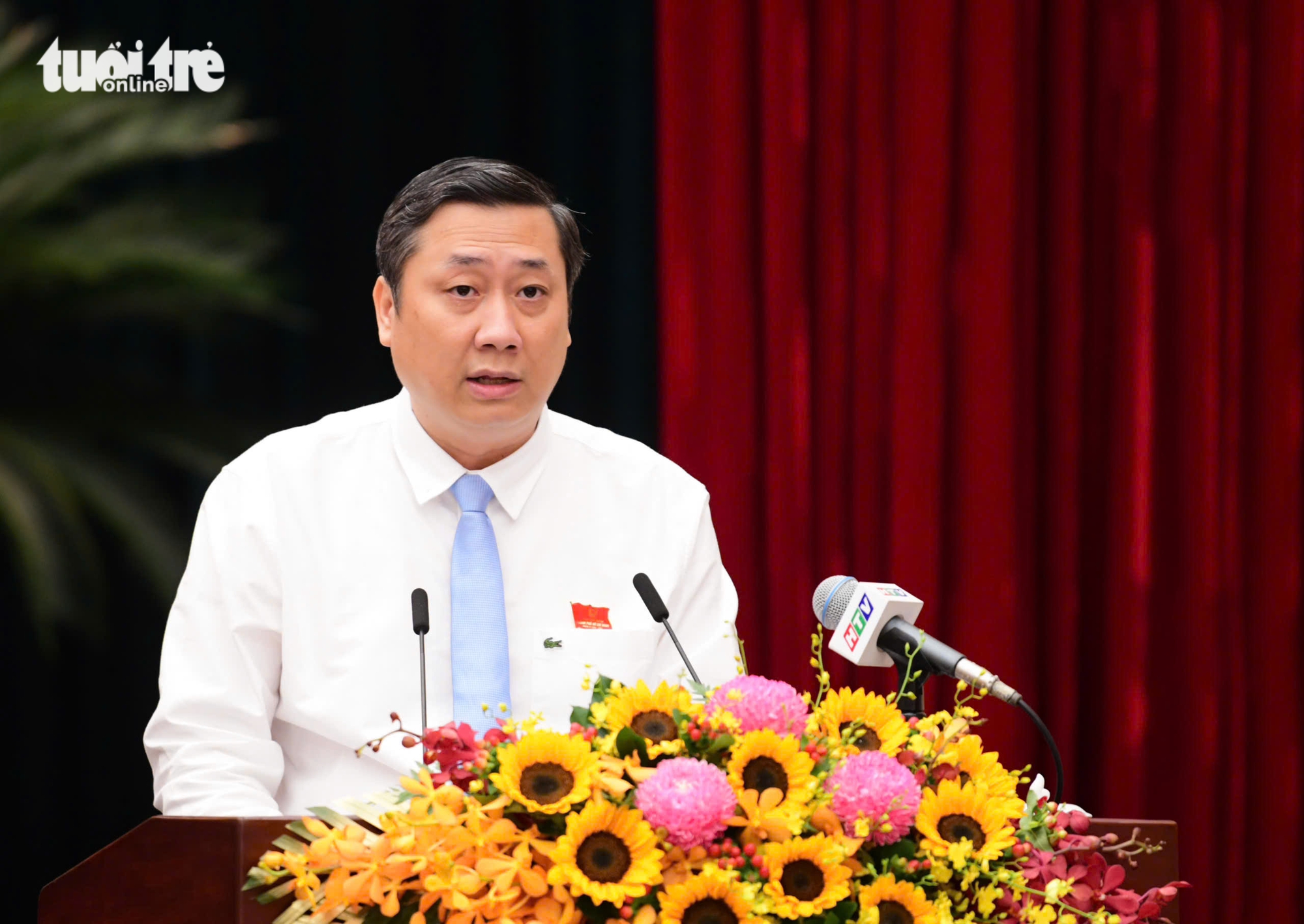
Nguyen Cong Danh, head of the Economic and Budget Committee of the Ho Chi Minh City People’s Council, presents an appraisal report on the proposed Can Gio–Vung Tau sea-crossing project in Ho Chi Minh City, Vietnam, June 19, 2026. Photo: Quang Dinh / Tuoi Tre
Construction is proposed for 2026-29 as part of an overall project schedule running from 2025 to 2029.
The project will be implemented under a build-transfer (BT) contract, with payments made through a combination of land assets and state budget funds.
Nguyen Cong Danh, head of the Economic and Budget Committee of the Ho Chi Minh City People’s Council, said the PPP structure would help reduce pressure on the city’s budget by allowing investors to mobilize capital for project implementation, including preparation and land clearance costs.
Authorities said the model could accelerate construction through private-sector participation while enabling the application of modern technologies and project management expertise to help control costs, quality, and progress.