
Quite a few people notice that their clothes have become tighter, and the scale shows a few kilograms more after the summer holidays.
That’s because summer weight gain isn’t usually caused by large portions or obvious overeating, but by a series of small daily habits that imperceptibly increase total calorie intake, fruttberry said in a press release.
Invisible calories
One of the most common causes of summer weight gain is liquid calories. On hot days, we naturally want to refresh ourselves, so we more often choose lemonades, cold tea or coffee with various syrups, fruit cocktails, smoothies or alcoholic beverages.
The problem is that calories from drinks often don’t feel as full as calories from solid food. As a result, you soon want to eat again, and the total number of calories for the day increases imperceptibly.
For example, one serving of iced coffee with syrups or cream can have more than 400 calories, and a few summer cocktails can be the equivalent of a full dinner. Because we don’t think of such products as “real food,” their contribution to weight gain often goes unnoticed.

Shutterstock photo/Non-alcoholic cocktails
Hunger is often confused with thirst
Another often overlooked cause of weight gain is insufficient water consumption. Sometimes the desire to snack is not due to hunger, but due to lack of fluids. On hot days, we sweat more, so the body loses more water and electrolytes. Even mild dehydration can manifest as fatigue, decreased concentration, or lack of energy. People often mistake these signals for signs of hunger and choose a snack instead of a glass of water.
In addition, adequate fluid intake is important to maintain normal metabolism. When the body lacks water, the desire for sweet or high-calorie foods can increase, which in the long run contributes to higher calorie consumption.
We eat out more often
Summer is inseparable from outings, barbecue parties, festivals, cafe terraces and vacations. Although such moments bring a lot of pleasure, they also change our eating habits.
At home, we can usually control the ingredients, cooking method and portion sizes. Meanwhile, in restaurants or cafes, dishes are often prepared using more fat, sugar or various sauces, which significantly increase their caloric content.
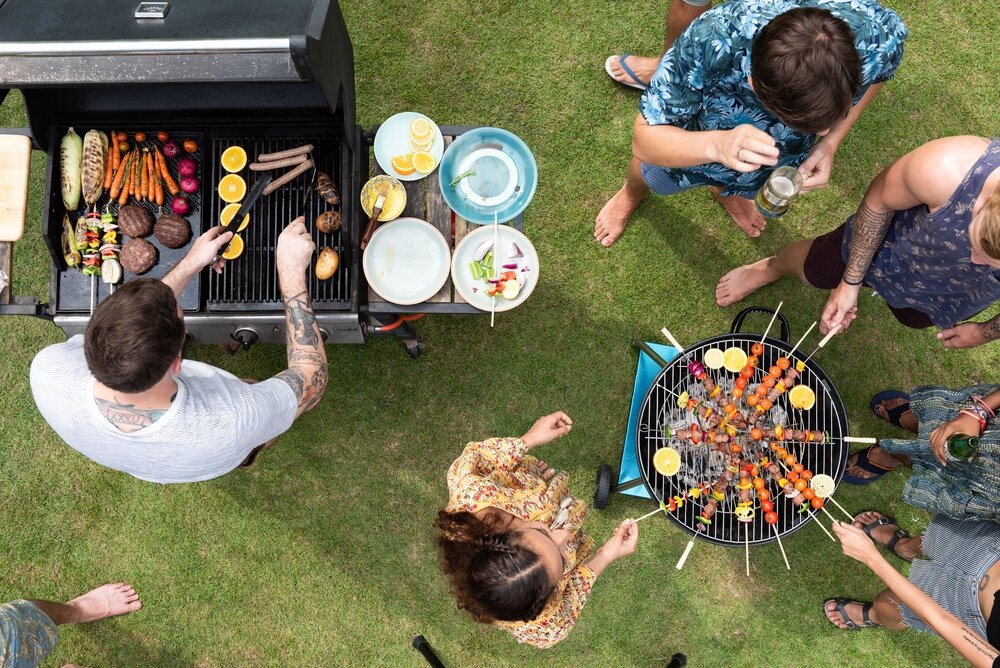
Shutterstock photo/Grill
In addition, when eating with friends or family, we often pay less attention to hunger and satiety signals. The social environment can encourage us to eat more than we planned, because eating becomes not only a physiological need, but also part of communication. For this reason, even a relatively active summer does not always prevent weight gain.
Eating disorders
In the summer, not only the diet changes, but also the whole agenda. Longer evenings, more frequent outings and vacations mean that meal times become less regular.
Some people skip breakfast or eat lunch much later than usual because of the heat. Others snack throughout the day and consume the largest amount of food in the evening. Such fluctuations can make natural appetite control difficult. When there are long breaks between meals, hunger increases and it becomes more difficult to control portions and food choices in the evening. As a result, spontaneous snacking or binge eating episodes are more common.
Sleep also plays an important role. In summer, due to the longer evenings, we often go to bed later, and the duration of sleep is shortened. Not getting enough sleep can increase your appetite and lead you to choose sweeter or fattier foods more often. In addition, longer evenings are often associated with additional snacks, which imperceptibly increase the total amount of calories consumed.
The heat doesn’t always mean less calorie consumption
It is often thought that we eat less on hot days because our appetite decreases. Indeed, there may be fewer main dishes, but this does not necessarily mean a lower total calorie count.

Shutterstock photo/Pistachio ice cream
When you don’t want a full lunch or dinner, they are often replaced by various small snacks. A handful of nuts, a portion of ice cream, a few cookies with coffee, cheese snacks or fruit desserts seem innocent, but at the end of the day, their calories add up to a pretty significant number.
The so-called “vacation effect” plays an additional role. When on vacation, we tend to allow ourselves to deviate from the usual rules because we think it’s only a short period of time. However, changes of even a few weeks can affect weight.
Fiber for appetite control
One of the most effective ways to reduce spontaneous snacking is to ensure a sufficient amount of fiber in your daily diet.
Fiber has the ability to absorb water and increase the volume of food in the stomach. As a result, satiety signals reach the brain faster, and the feeling of fullness lasts longer. This is especially important in the summer, when the schedule becomes less predictable and it is not always possible to eat regularly. Also, fiber slows down the absorption of carbohydrates, so the blood glucose level rises more evenly. When blood sugar levels fluctuate wildly, we are more likely to feel a lack of energy and a desire to snack on something sweet. Sufficient fiber helps to reduce these fluctuations.
The most important thing is not only how much we eat, but also what we eat
Although it is impossible to avoid all temptations in the summer, weight control is often not determined by strict restrictions, but by daily choices. Therefore, instead of diets or short-term restrictions, it is much more useful to focus on daily habits: instead of sugary drinks, choose water with lemon or mint, plan at least one hearty meal before going out, add vegetables to every main meal, and choose products with more protein and fiber for snacks. Instead of daily ice cream, it is better to choose Greek yogurt with berries, instead of chips – fruit, a small portion of nuts or a snack with fiber.
These small but consistent decisions not only help keep your weight under control, but also allow you to enjoy your summer without the guilt or unpleasant surprises of the holiday season.