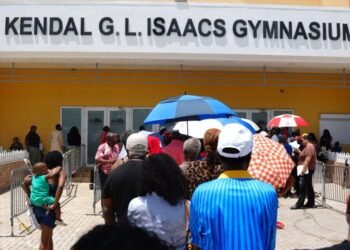
As Bahamians prepare to head to the polls to cast ballots for the next government to run the country for the next five-year term, among the electorate will be young adults exercising this rite of passage for the first time. And while many people may lay claim to voter apathy, there are those are looking forward to casting their ballot.
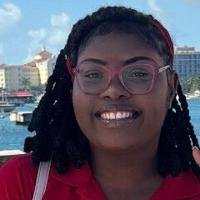
Mya Minnis, 20, will be casting her vote in a general election for the first time, with mere weeks before Bahamians head to the polls to elect the next government. And Minnis believes it is important for her to cast her vote, because she says voting is one of the most direct ways the citizenry can shape the future of the nation.
“Overall, voting is not just a right,–– it is a responsibility,” said Minnis. “It is our opportunity to speak up about the issues that affect us and to help shape the direction of our country.”
Although she said that she has seen indifference among her peers in relation to voting.
“Many may not fully understand politics, while others simply feel disconnected or unmotivated to register,” she said.
“As a young person myself, I believe this is something that deserves more attention, as our voices matter just as much as anyone else’s.”
She suggested making political information easier to understand and more relatable, creating spaces where young people feel comfortable asking questions and having open discussions as well as teaching practical political topics in schools.
While she said she has seen indifference in her peers, Minnis said she does not feel that way, and registered well in advance of the dissolution of Parliament on Wednesday, April 8, the announcement that the General Election will be held on Tuesday, May 12, and the statutory cutoff for voter registration and transfers on Wednesday, April 8.
Shamar McKenzie, 22, another first-time registrant said voting is important to him because it gives him the opportunity to have a say in who governs the country.
The journalism student at University of The Bahamas, McKenzie said his professors spoke to him about the importance of registering to vote.
Tyra Munroe, 20, was one of the people who registered at the ninth hour, and will be casting a ballot for the first time. The UB student said voting is not just about carrying out her constitutional right as a Bahamian citizen. She said casting her ballot allows her to be an active participant in determining the fate of the country.
Munroe said amongst her peers she has seen people express interest, as well as those that young adults who are indifferent.
“I have seen all sides of the spectrum. As a journalism major, election season is like the Superbowl for my peers and I, so I have seen classmates excited about the opportunity to make a change in their country,” she said.
For Dasya McKenzie, 20 casting her vote allows her the ability to change the trajectory of the nation.
“Young people are indifferent to voting because we are either ignored or demonized as problems in society. Politicians fail to reach us through intelligent policy and dismiss taking that opportunity because we don’t vote as much,” she said
“Most of the youth are less party-centric and more national or global-centric, and most politicians have yet to evolve from this perspective. We don’t want ham and turkey while infrastructure and institutions collapse. We want you to enact legislation that allows to get our turkey, maybe even rear it, for generations,” said McKenzie, a student at UB.
Although they will be casting their ballots for the first time in a General Election, each person had issues they said they would like to see addressed.
As the election date draws near, two issues McKenzie said he would like to see discussed by candidates include housing and transportation.
“I personally would like to see some affordable housing options for people who are in their early 20s. Generally, I would say a better bus system — especially for people who live in areas that the bus doesn’t frequent,” said McKenzie.
Two concerns Minnis would like to see addressed by candidates include the job market and the condition of the roads.
“It can often be difficult to secure a decent job or even an interview without personal connections,” said Minnis. “Another issue is the condition of our roads. In Nassau, some roads remain in poor condition following heavy rainfall, and this continues to impact daily life.”
An issue Munroe would like to see addressed is an increase in minimum wage. She said the current minimum wage is not sufficient for the average Bahamian household.
A concern McKenzie said she wants candidates to address is investing in education.
“An educated society is a less violent and healthier society — both mentally and physically. Investing in education would mean greater conflict resolution skills which would result in less strain on the prison, judiciary, and healthcare system,” said McKenzie.
Ruby Ann Cooper-Darling who made history as the first Bahamian woman to register to vote when women were allowed to cast a ballot, said the young people “better get out and vote.”
In 1962, at age 21, Cooper was the first woman to register to vote in the 1962 General Election.
The 1833 general elections were the first elections in which non-white residents were able to vote.
Since January 10, 1967, the majority of people were able to participate in one of the most important events in The Bahamas.
The Franchise Act of 1799 allowed only free white males age 21 and over, who were freeholders, and had paid 50 pounds duties in the preceding year, to vote in the elections.
In 1807, free negroes were allowed to vote once they satisfied the same criteria. By the end of the 1800s more people were able to vote because they only had to have a free hold (land holding) of five pounds or a household tenancy (rental property) of two pounds eight. In the Family Islands the household tenancy was one pound four. Voters who owned the required amount of land in more than one constituency had the right to register and vote in each one. This meant that many people held more than one vote, called the plural vote. This gave a minority of people the majority of votes, with the poor and the women having no say in who governed the country.
When the PLP was formed in 1953 by William Cartwright, Henry Taylor and Cyril St John Stevenson, they were determined to bring about changes in the election process. They especially wanted representation to be opened to women and all other adults who did not own property. A group of women who formed a movement called the Suffragettes also agitated for the vote for women. They were led by Mary Ingraham, Mable Walker, Georgiana Symonette and Eugenia Lockhart.
Before the 1930s voting was done in the open. Everyone knew who people voted for. In 1937 during the governorship of Sir Charles Dundas, the process was changed. After the Secret Ballot Act was passed in June 1939 people in New Providence were allowed to vote with a secret ballot.
The General Assembly Elections Act was passed in 1959 and women were allowed to vote after 1961. In July 1962, women registered to vote for the first time. In the November 1962 elections women voted for the first time. However, the plural vote was still in effect. In The Nassau Guardian of July 2, 1962, the Parliamentary Registrar, Maxwell Thompson, stated that men or women over 21 years old who owned land in a different area from where they lived could vote a second time in these areas or in areas where they were tenants (paying rent).
By the time of the next general elections in 1967 the plural vote had been abolished and there was one man/one vote. After 1967 the minimum age of voters was dropped to 18.