Of Alessandro Guarasci
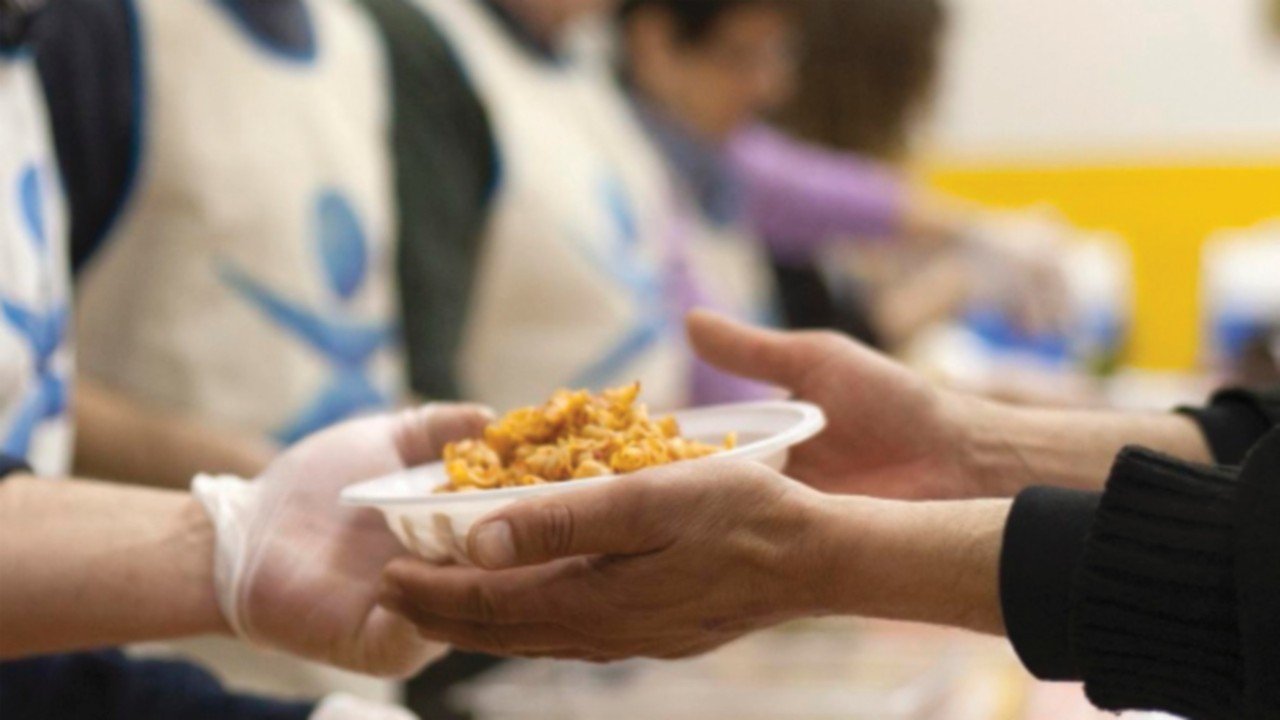
For many Italians, poverty takes on an increasingly structural dimension, which lasts for years. The Caritas Italiana statistical report presented today in Rome highlights how the number of people supported by the network in 2025 grew by 1.7 percent compared to 2024. A smaller increase than in the past but which highlights one aspect: the social difficulties persist, affecting 282,539 people, comparable to the same number of families. Over a quarter of those assisted have been followed for at least five years, while the incidence of new audiences decreases.
“There have been no declines compared to the period before the pandemic, confirming a poverty that tends to take root and become a stable condition in the lives of many families”, writes Caritas Italiana. For the president, Monsignor Benoni Ambarus, «poverty is always a question that first and foremost questions the Church, its way of being within history, its ability to be close to the most fragile people and territories. But the institutions must also be consulted. The data collected by the Caritas network is an opportunity to convert the gaze of all of us. Poverty is a creature with many heads and we have the duty to make proposals. Bonuses are a logic of charity; instead we need to act in a structural way.”
Poverty is therefore a phenomenon that welfare policies are evidently unable to combat and which risks worsening considering that inflation this year in the euro area will stand at least 3.1 percent. The Caritas report highlights how in ten years, from 2015 to 2025, the number of accompanied people grew by 48 percent. The majority of those who turned to Caritas (78 percent) do so due to lack of income, so much so that the average ISEE is less than 5,000 euros. Almost half of those who turn to Caritas are unemployed but as many as 24 percent have a job that doesn’t allow them to make ends meet with dignity. The most significant increase in assisted people is observed in Northern Italy (+61.8). At the same time, each center listens to around 80 users, a slight decrease compared to the 83 recorded in 2024. This figure does not indicate a reduction in situations of social fragility but rather reflects the expansion of the territorial presence of parish listening points.
The differences between the different areas of the country remain very accentuated. The North not only concentrates the highest share of people accompanied by the Caritas network but also has the highest average number of people assisted per service, with almost 100 users per centre. The values reach particularly high levels in Liguria (150 assisted per facility) and in the Piedmont-Valle d’Aosta area (106). In the Center and the South, the average load per service is instead more contained, standing at 65.5 and 72.8 users respectively. However, there is no shortage of realities characterized by levels of care higher than the average of their geographical area, such as Calabria (116.9), Sardinia (108.7) and Campania (95), which highlight a particularly intense demand for support.
Among the most significant trends is the increase in the elderly component. In ten years the number of over 65s met by the Caritas network has grown by 191 percent, compared to an overall growth in users of 48. This is a figure that draws attention to an increasingly close intertwining of economic poverty, ageing, health fragility, weakening of family networks and social isolation. For Federica De Lauso, Caritas researcher, “poverty is increasingly combined with situations of chronic, mental illnesses, handicaps, and all this also for the elderly, especially for the over 65s, means an additional burden and hardship, therefore health, material deprivation, housing problems which add up”. The condition of many families, often single-parent families, should not be underestimated, as they are the subjects who ask for help most often: 52 percent have minor children, equal to 147,000 families, like the number of children and young people in financial difficulty assisted by the Caritas network.
Another factor is loneliness. The single people assisted are 32.9 percent. These are people who have gone through difficult periods, such as bereavements, separations, job losses and who have not found a network capable of supporting them, thus losing their economic capacity. For Caritas, «in this perspective, poverty increasingly shows itself as a progressive thinning of ties, of close relationships and of the concrete possibilities of being accompanied in moments of greatest difficulty. Alongside this there are difficulties related to housing: in 2025, housing vulnerability involved 34.9 percent of the people followed (it was 33 in 2024); 23.1 percent experienced conditions of serious housing exclusion (homeless, homeless or in emergency accommodation), while 11.8 struggled to support housing costs including rent, utilities and household expenses.