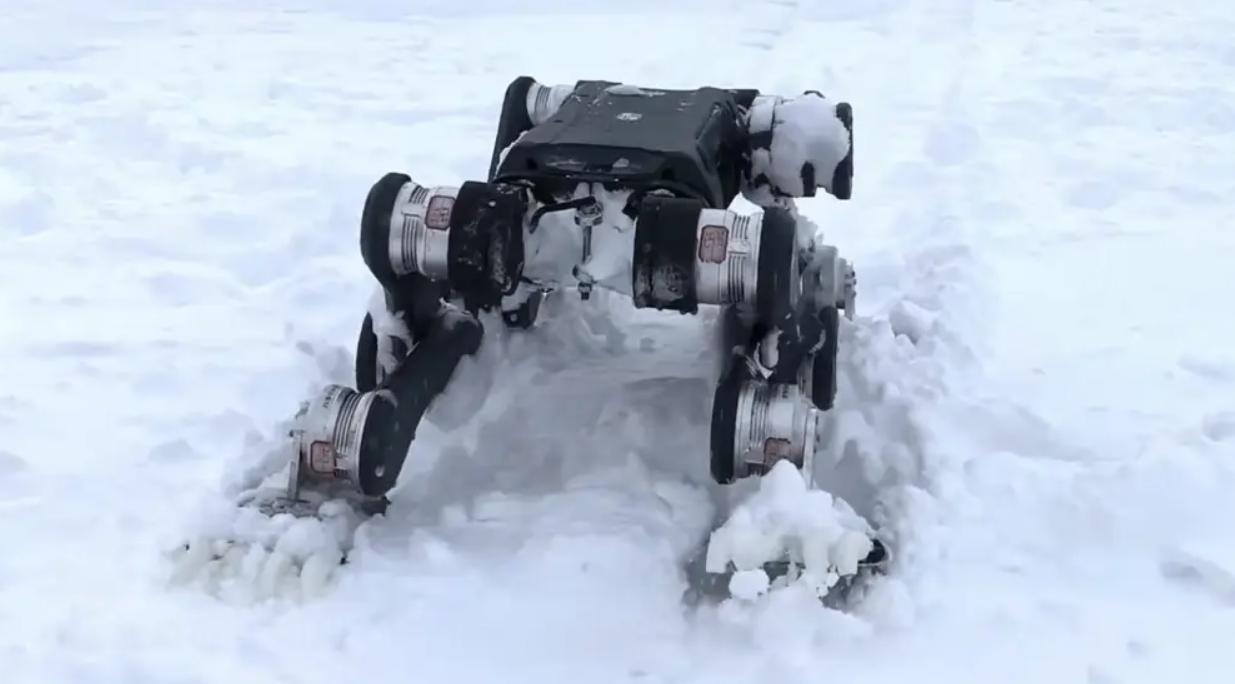
Weighing less than 20 kilograms, the Lynx S10 is a model designed for normal use, but has been specially redeveloped for Arctic conditions. The research team replaced the robot’s standard wheels with biomimetic feet inspired by the large paws of polar bears. The system, supported by anti-slip surfaces and crampon-like equipment that provides stronger grip on ice, significantly increased mobility on ice and snow-covered terrain.
A NEW ERA IN POLAR RESEARCH
The tests were carried out during the expedition of the Sun Yat-sen University Polar research ship operating in the Arctic Ocean. Researchers state that working in the area is extremely dangerous due to melt pools and pockets of water hidden beneath the ice-covered areas. Thanks to its artificial intelligence-supported sensors, Lynx S10 managed to avoid obstacles by determining its own route on this difficult terrain. The cameras and LiDAR sensors on the robot created a three-dimensional map of the environment, enabling it to move safely.
It is emphasized that the robot used in the Arctic mission is not a commercial product, but a prototype still under development. Despite this, it showed a remarkable performance in the trials by maintaining its balance in areas where ice, snow and water intertwined. The robot, which managed to pass over thin layers of ice with water under the surface in some tests, also demonstrated its potential to collect data in areas that research teams have difficulty reaching.
DANGEROUS TASKS CAN BE UNDERTAKED INSTEAD OF PEOPLE
DEEP Robotics engineers announced that the data obtained will be used for models to be developed in the future. The company thinks that robot dogs can support humans in high-risk tasks such as climate change research, environmental data collection studies and search and rescue operations. It is stated that such autonomous systems can provide significant advantages, especially due to extreme weather conditions and wildlife hazards in polar regions.

This test, carried out on the glaciers above the Arctic Ocean, is considered to be one of the important steps showing that robotic technologies can be used in the world’s most challenging natural conditions beyond the laboratory environment. However, experts state that the Lynx S10 is still in the development phase and needs to undergo more tests for large-scale field missions.
All copyrights of the articles, news and photographs published on the website www.sozcu.com.tr belong to Mega Ajans and Rek. Tic. It belongs to A.Ş. It cannot be quoted without permission, even by citing the source.