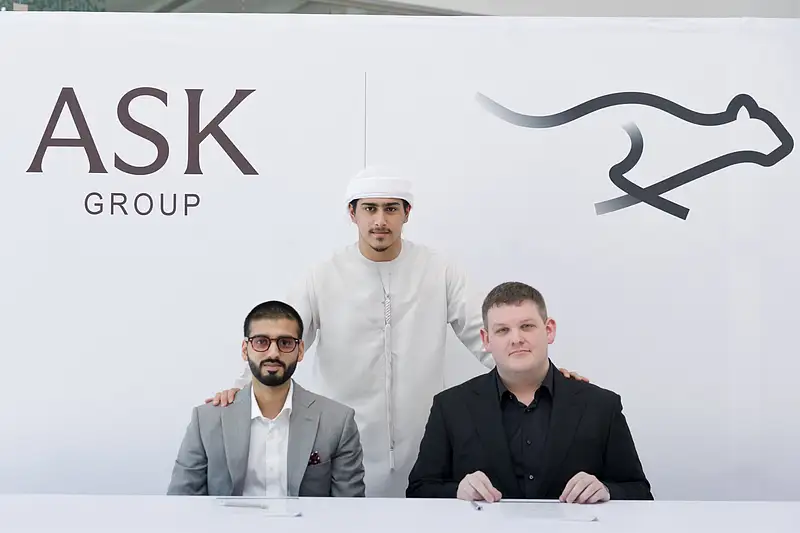
The joint venture aims to transform cross-border payments and open access to tokenised Gulf commodities for investors worldwide
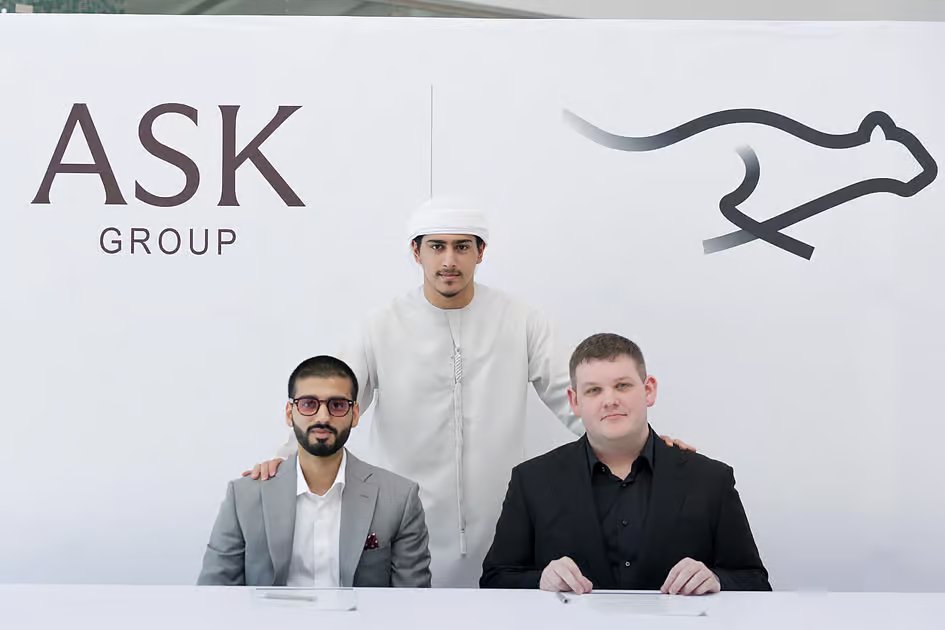
The UAE’s ambitions to become a global leader in digital finance have received a significant boost following the launch of a joint venture between Keeta, the blockchain infrastructure company, and ASK Group, the UAE-based investment and operating group led by Sheikh Ahmed bin Sultan bin Khalifa bin Zayed Al Nahyan.
The partnership is centred on two key objectives: modernising cross-border payments across some of the world’s busiest remittance corridors and bringing physical Gulf commodities onto blockchain-powered investment platforms that can be accessed by investors globally.
Together, the partners aim to build the infrastructure required for the next generation of financial markets, further strengthening the UAE’s position as a hub for digital innovation and financial technology.
The collaboration represents one of the most significant blockchain infrastructure initiatives to emerge from the Gulf region, combining sovereign institutional backing with technology designed to support large-scale financial activity.
Eric Schmidt, former chief executive of Google and one of the technology sector’s most influential investors, is among the prominent backers of Keeta. The company’s network was tested in collaboration with Google’s Spanner engineering team, achieving 11.2 million transactions per second with 400-millisecond settlement finality. The results have attracted attention from institutional investors and financial technology firms evaluating next-generation payment and settlement infrastructure.
“As a global financial centre, the UAE is determined to lead the world as we enter this new era,” said Sheikh Ahmed bin Sultan bin Khalifa bin Zayed Al Nahyan. “This partnership is a long-term commitment to building the infrastructure that will define how trillions of dollars in real-world assets move.”
Reimagining cross-border payments
The UAE is one of the world’s largest remittance hubs, with millions of residents regularly sending money to families across South Asia, Africa, Southeast Asia and beyond. The UAE-India corridor alone facilitates approximately $20 billion in annual transfers, while the UAE-Philippines, UAE-Pakistan and UAE-Kenya corridors account for tens of billions more.
These flows support families, fund education and contribute significantly to local economies across developing markets. However, many traditional cross-border payment systems continue to rely on multiple intermediaries, often resulting in higher costs, slower settlement times and operational complexity.
Keeta’s settlement network is designed to address these challenges through its anchor model, which allows licensed financial institutions to connect their existing infrastructure to the network and become settlement participants.
Under this framework, a sender in Dubai can initiate a transfer that is processed by a UAE-based anchor institution and delivered through a receiving anchor in markets such as India, the Philippines or Kenya. Transactions that traditionally take hours or days can potentially be completed in under a second.
The model is designed to work alongside regulated financial institutions rather than replace them. Banks, exchange houses, payment providers and remittance companies can integrate through a single connection, gaining access to multiple payment corridors without building separate bilateral relationships in each market. For the UAE’s established exchange house sector, this could create significant operational efficiencies and new commercial opportunities.
“Together we are going to take assets and payment flows that have operated the same way for decades and put them on rails built for the next century,” said Ty Schenk, Founder and Chief Executive of Keeta.
Opening Gulf commodities to global investors
Beyond payments, the joint venture is targeting one of the region’s most ambitious real-world asset tokenisation initiatives.
The GCC is home to some of the world’s largest concentrations of commodity wealth, including oil, gold, silver, copper and other industrial metals. Yet direct ownership of these physical assets has historically been limited to governments, producers, institutional investors and major commodity traders.
The partnership aims to address this gap by creating a marketplace where physical Gulf commodities can be represented as digital assets backed one-to-one by audited holdings.
By 2027, the venture plans to establish a Keeta-powered public exchange that will allow investors to purchase fractional ownership of physical commodities. Each digital token would be backed by assets held in audited custody, supported by on-chain proof-of-reserves that can be independently verified.
The concept would allow a retail investor in Tokyo, an institutional fund in London or a family office in Singapore to gain direct exposure to Gulf commodities with greater transparency and accessibility than has traditionally been available.
The opportunity is substantial. Global commodity markets move several trillion dollars annually, while the GCC’s vast energy and commodity reserves represent one of the world’s largest pools of real-world assets. If successfully implemented, the initiative could become one of the largest examples of commodity tokenisation undertaken to date.
The technology behind the venture
Keeta is a Layer 1 blockchain network developed specifically to meet the throughput, compliance and speed requirements of institutional financial markets.
Its transaction processing capabilities and settlement speeds position it among the highest-performing blockchain networks currently targeting large-scale financial applications. The infrastructure is designed not only for traditional financial transactions but also for emerging machine-speed activity generated by algorithmic systems and AI-driven applications.
A key feature of the network is its built-in compliance architecture. Asset issuers can embed regulatory conditions directly into digital assets, including investor eligibility requirements, jurisdictional restrictions and transfer controls. These rules are then automatically enforced across every transaction on the network.
The platform also incorporates a digital identity framework that allows participants to verify their credentials once and use them across multiple products and services. This reduces repetitive onboarding requirements and streamlines participation across different financial markets and payment corridors.
Why the UAE is the launchpad
The UAE has established one of the world’s most advanced regulatory environments for digital assets and financial innovation.
Regulators including Dubai’s Virtual Assets Regulatory Authority (VARA), the Financial Services Regulatory Authority (FSRA) within Abu Dhabi Global Market (ADGM), and federal market authorities have helped create a framework that continues to attract global banks, institutional investors and technology companies.
The UAE’s geographic position also makes it a natural hub for trade and remittance activity, connecting major markets across South Asia, Southeast Asia, Africa, Europe and the wider Middle East.
ASK Group, which operates across infrastructure, fintech, blockchain, real estate and sports, holds exclusive rights to facilitate and execute Keeta’s expansion across the UAE, India and the wider Middle East and Africa region. Combined with Keeta’s technology platform, the partnership aims to establish a foundation for broader adoption of next-generation financial infrastructure.
Future phases of the venture are expected to expand across additional remittance corridors, commodity categories and regional markets, with the UAE serving as the operational and regulatory blueprint for wider regional growth.