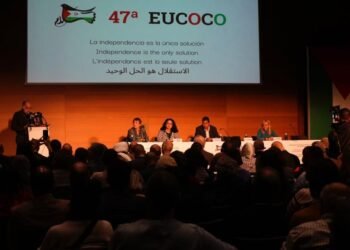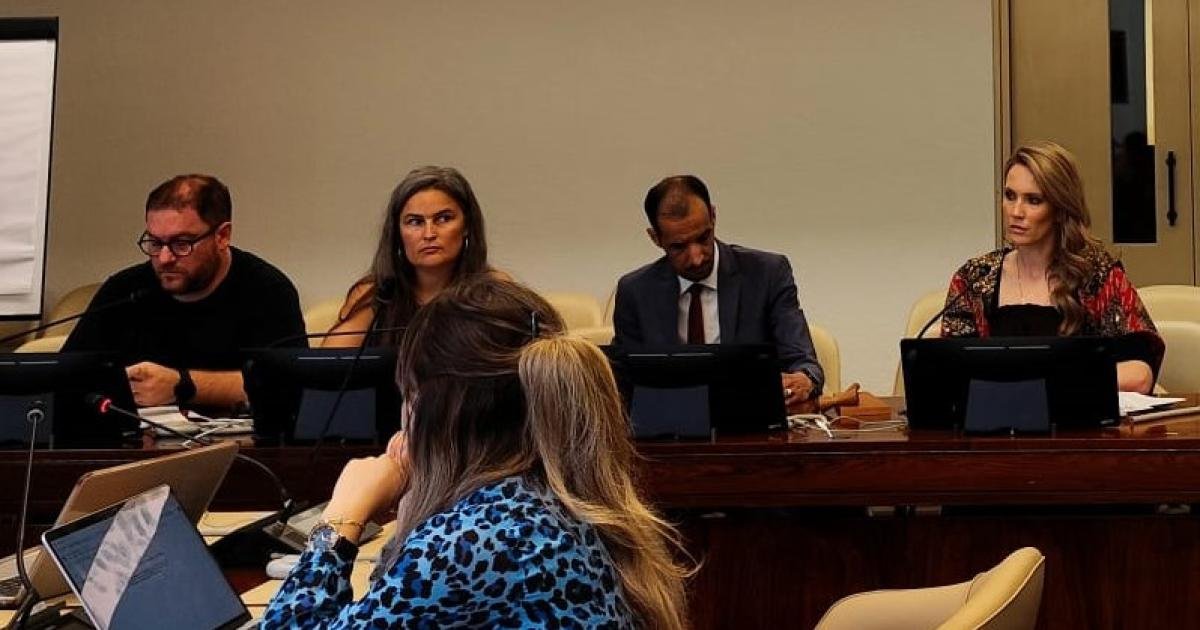
Geneva (UN Human Rights Council), June 19, 2026 (SPS) – The coordinator of the Maghreb region at the International Institute for Nonviolent Action “Nofact”, Lucille Mibon, and the coordinator of the Catalan Federation of Associations in Solidarity with the Sahrawi People (ACAPS), Albert Geralt, affirmed the commitment of the two organizations to continue supporting Sahrawi human rights defenders, work to expose violations committed in the occupied Western Sahara, and defend the right of the Sahrawi people to self-determination in accordance with international law.
This came in a joint intervention during the high-level symposium hosted by the Human Rights Council in Geneva to present the annual report for 2025 on human rights violations in occupied Western Sahara, prepared by the working group on human rights with the support of international experts and the organizations “Nofact” and “ACAPS”.
The two speakers stressed that the continuation of the Moroccan occupation is based on a policy based on concealing the truth of violations and preventing them from reaching international public opinion, in order to preserve Morocco’s image as an economic and tourism partner, considering that the annual report contributes to revealing official propaganda and highlighting the reality of violations committed against Sahrawi civilians.
The two interveners stressed that the role of the two organizations, along with the International Solidarity Movement, is to support activists who document violations despite the risks they are exposed to, defend the principles of international law and human rights, and mobilize international support to pressure to end the occupation and respect the right of the Sahrawi people to self-determination.
He also warned that the work of solidarity organizations is facing increasing pressure due to the escalation of Moroccan pressure activities, which have manifested in intimidation campaigns, canceling events, and putting pressure on organizations and individuals in solidarity with the Sahrawi cause, stressing that this will not deter them from continuing to support Sahrawi voices.
The two international activists highlighted that the report represents the result of collective work in which human rights defenders from the occupied territories, activists from refugee camps, and members of the Sahrawi community participated, along with international experts and solidarity organizations, with the aim of ensuring documentation of violations and preventing them from being obscured or ignored.
They praised the steadfastness of Sahrawi human rights defenders, recalling their experience working with them, stressing that the commitment of these Sahrawi human rights defenders to defending rights and freedoms constitutes a source of inspiration for the international solidarity movement. They also noted the increasing role played by Sahrawi women and youth in leading human rights work.
At the conclusion of the intervention, the two organizations called on governments and international institutions to listen to the report’s recommendations and take practical steps to protect human rights in Western Sahara. They also called on civil society organizations across the world to expand the network of solidarity with the Sahrawi people, stressing that international solidarity cannot replace the struggle of the Sahrawis, but it ensures that they do not face this struggle alone. (Was)
090/500/60 (Was)