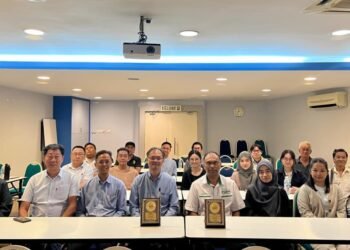

Lee says such engagement would allow operational realities to be considered and help minimise unintended consequences across supply chains.
KUCHING (June 19): The Federation of Malaysian Manufacturing (FMM) has called for a structured consultation mechanism involving cargo owners, manufacturers, logistics providers and relevant government agencies before future revisions to commercial fuel subsidy arrangements are introduced.
FMM president Jacob Lee Chor Kok said such engagement would allow operational realities to be considered and help minimise unintended consequences across supply chains.
He said FMM was concerned over the recent revision of commercial diesel subsidy quotas under the Subsidised Diesel Control System (SKDS), which took effect on June 1, as manufacturers continue to face elevated logistics and transportation costs.
Under the revised quota structure implemented by the Ministry of Domestic Trade and Cost of Living (KPDN), fixed monthly diesel allocations for goods transport vehicles have been revised across 23 vehicle categories.
While the expansion of eligibility for selected vehicle categories was welcomed, Lee said most goods transport vehicle categories would receive lower monthly diesel allocations compared to the previous structure.
“FMM is concerned that the changes were introduced without prior engagement with cargo owners, manufacturers and logistics providers despite their potential implications for transportation costs, supply chain efficiency and ultimately the cost of goods,” he said in a statement.
He said manufacturers continue to face elevated logistics and transportation costs despite the recent easing of geopolitical tensions in West Asia, with many cost increases and operational adjustments remaining embedded in supply chains.
Lee cited FMM’s Third Survey on the Impact of the West Asia Crisis on Malaysian Manufacturing, Trade and Supply Chains, conducted from May 25 to June 10, which found that 87 per cent of manufacturers reported business conditions had either worsened or remained unchanged since early May.
“Logistics and freight costs remain among the most significant challenges facing industry, with 86 per cent reporting continuing logistics-related pressures,” he said.
The survey also found that 51 per cent of respondents continued to face higher domestic transportation costs, while 49 per cent reported higher haulage surcharges or difficulties securing transport services for certain routes.
Lee said feedback received by FMM indicated diesel quota constraints had directly impacted transport availability and haulage costs.
He said some transport operators had become reluctant to undertake certain deliveries or routes once subsidised diesel allocations were exhausted, as operating on commercial diesel significantly increased costs.
“In such situations, operators either imposed additional charges to recover costs or declined less profitable routes.
“This is not merely a transport sector issue. Commercial vehicles move raw materials, intermediate products and finished goods throughout the economy.
“When transportation costs increase or transport capacity becomes constrained, the additional costs are passed along the supply chain and ultimately affect prices paid by businesses and consumers,” he said.
Lee said FMM had also proposed the establishment of a Crisis Adjustment Mechanism within the SKDS, allowing temporary and targeted quota adjustments during major external disruptions affecting transportation and supply chain operations.
He said the mechanism could provide a structured avenue for businesses and transport operators to seek temporary relief based on operational requirements while preserving the objectives of subsidy rationalisation.
“This would enable genuine operational requirements arising from extraordinary circumstances to be assessed quickly while maintaining the integrity of the subsidy system,” he said.
Lee stressed that the objective was not to reverse subsidy reforms but to ensure the framework remained flexible enough to respond to exceptional circumstances while safeguarding supply chain resilience, industrial competitiveness and cost-of-living objectives.
As manufacturing remains a key contributor to economic growth, exports and employment, he said policies affecting critical supply chain inputs must balance fiscal responsibility with the need to maintain efficient supply chains and stable consumer prices.
Lee added that FMM had formally requested an engagement session with KPDN to better understand the basis for the revised quota allocations, share industry feedback and discuss measures to minimise unintended impacts.
“FMM stands ready to work closely with KPDN and other relevant agencies to develop solutions that strengthen subsidy governance while safeguarding supply chain resilience, economic competitiveness and consumer interests,” he said.