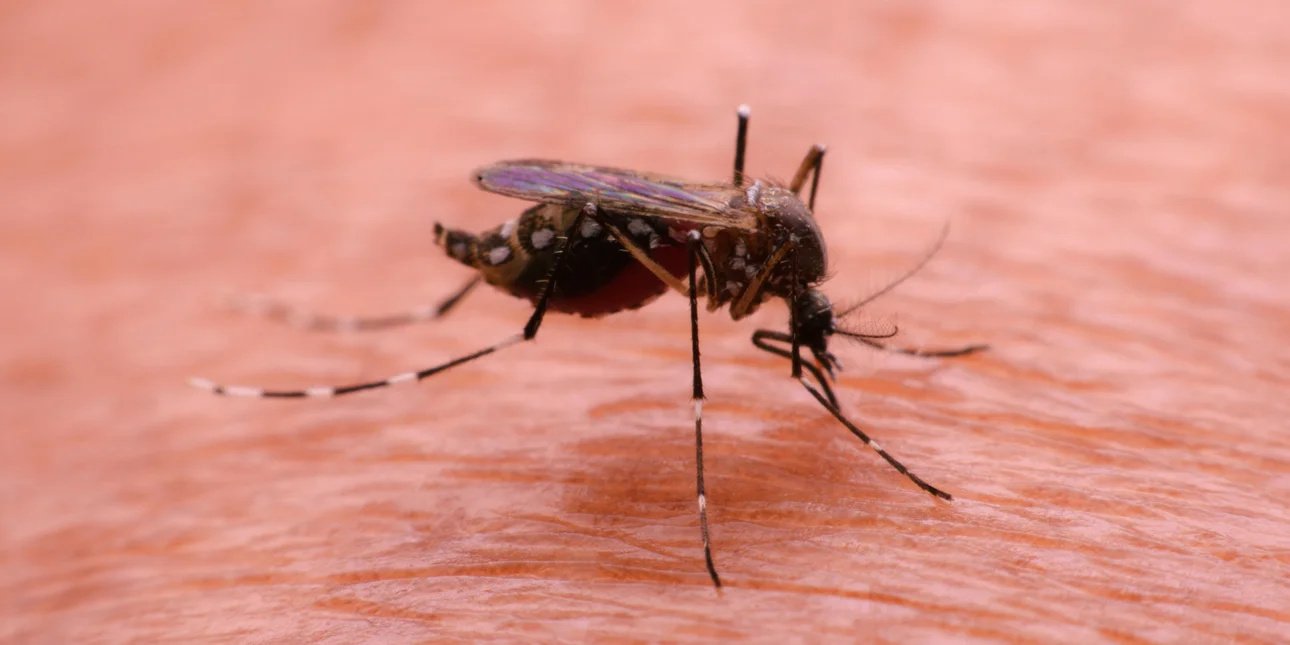
A species mosquito considered the main vector of Japanese encephalitis virus appears to be spreading in southern Europe, according to updated maps from the European Center for Disease Control and Prevention.
Culex tritaeniorhynchus was endemic, until recently, mainly in North Asian countries. However, experts stress that, so far, there is no cause for concern, as no such case has yet been recorded in any country in Europe.
The deputy professor of Hygiene and Epidemiology of the School of Medicine of the University of Athens and member of the Committee of Experts of the Ministry of Health, Gikas Majorkinis
In fact, according to what the associate professor of Hygiene and Epidemiology of the School of Medicine of the University of Athens and member of the Committee of Experts of the Ministry of Health, Gikas Majorkinis, reported today in iefimerida, “it is estimated that, at the present stage, almost half the population of the earth is in areas where the Japanese encephalitis virus is endemic, that is, almost 3 billion people in East and Southeast Asia. The virus which is the leading cause of encephalitis in Asia appears to have spread to Australia with endemic cases reported in recent years. The relatively recent spread to Australia appears to have occurred through waterfowl migration.’
Japanese encephalitis: What the ECDC maps mean and why Greece is “in the picture”
However, in what specific way does Gikas Majorkinis “read” the ECDC’s recent public intervention and how would he explain the Center’s relevant maps, which also include Greece in the countries feared for the development of Japanese encephalitis cases? The professor is detailed and explains to iefimerida:
“The Japanese encephalitis virus is one of the viruses that we have known for many years, as epidemics of it have been reported since 1871. As it is transmitted to humans through mosquitoes, it belongs to the large group of arboviruses, viruses that are transmitted to humans through the bite (bite) of an insect. ECDC recently heard that mosquitoes that could be effective carriers of the virus (of the Culex genus) have been identified in South-Eastern Europe, raising the risk that the virus will become established even in Greece. For this to happen, the wild animals that act as natural reservoirs of the virus must be infected. Such are wild waterfowl, especially herons. As intermediate hosts (or propagators) of the virus, pigs are mainly mentioned, in which there is evidence that it can spread even without a mosquito bite.
Mallorca: The risk of introducing the Japanese encephalitis virus is low
Gikas Majorkinis, however, is absolutely reassuring, as the mechanism of said infection is not the simplest:
“Human-to-human transmission of the virus is known to be inefficient, and neither is human-to-mosquito transmission. Humans are terminal hosts. This makes the introduction of the virus into the region (from East and South-East Asia) extremely difficult, because even if an infected person comes to Greece from an area where the virus is endemic, it will not be able to be transmitted further. The importation of either an infected mosquito that will infect a heron in Greece or the importation of an infected heron is required. As the wetlands in Greece are specific, the probability of such an event of an imported heron from East and Southeast Asia where the Japanese encephalitis virus is endemic is generally considered low.”
What we need to know about Japanese encephalitis – Symptoms and risks
It is worth noting, however, that in the case of cases of Japanese encephalitis, there are certainly risks, but the spread of the disease does not seem to be able to become so wide and massive, while the mortality of all infected individuals, due to the disease, must be considered as particularly low. Gikas Majorkinis notes, in this regard, in iefimerida:
“As for the disease, the vast majority who will be infected will pass the virus either asymptomatically or very mildly, and only 1 in 250 people will pass the form of the neuroinvasive disease, i.e. encephalitis which is manifested by high fever, lethargy, neck stiffness, photophobia, etc. Children younger than 15 are a particularly vulnerable group. About 15%-20% of patients who develop encephalitis will die, while 40% of those who survive have significant lifelong neurological problems. A vaccine is available in the US for travelers who will be staying in endemic areas for a long period of time.”
Source: iefimerida.gr