These would allow Iran to transport, insure, market and receive payments for its oil through legitimate international financial institutions.
“This sounds like a pretty good deal for Iran,” Leon told CNN.
Oil is Iran’s principal economic lifeline, generating roughly half of total government revenue, according to the US Energy Information Administration.
Signs of recovery have already begun to emerge.
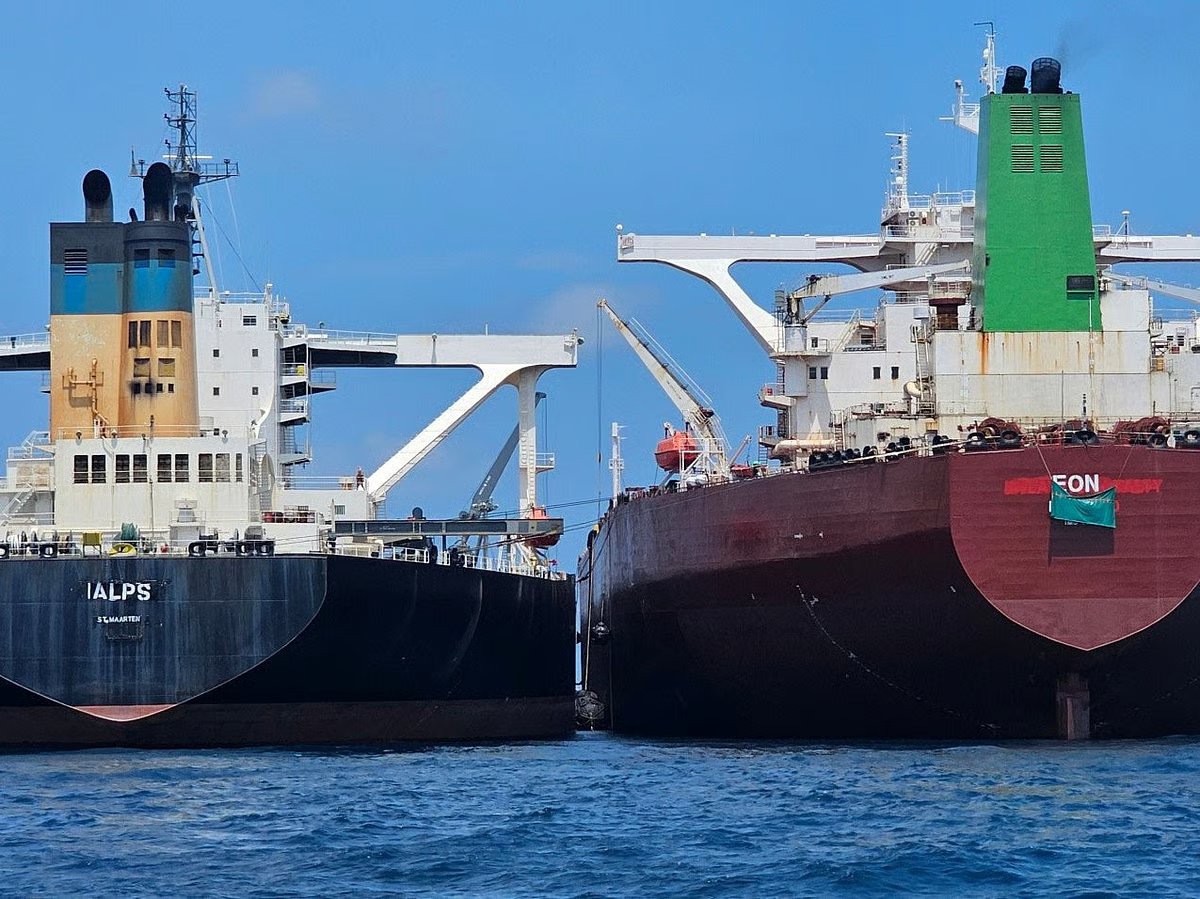
Maritime intelligence firm TankerTrackers reported that Iran successfully exported 3.8 million barrels of crude through the Strait of Hormuz this week after Washington agreed to lift its naval blockade.
Toll-free passage, for now
The agreement would also restore “toll-free” passage through the Strait of Hormuz for 60 days.
It’s unclear whether or not Iran could collect transit or “service fees” of roughly $1 per barrel, generating an estimated $2 million from each tanker using one of the world’s busiest energy chokepoints once the 60-day period ends.
More than $100 billion could be unlocked
The agreement also promises access to one of Tehran’s largest untapped financial resources: frozen overseas assets.
Iranian funds locked in banks across Asia, Europe and elsewhere are estimated at between $124 billion and $167 billion, roughly one-quarter of the country’s annual pre-war economic output, according to estimates cited by CNN from Middle East analyst Frederic Schneider.
A $300 billion rebuilding opportunity
The proposal also envisions a $300 billion investment fund financed by private investors rather than US taxpayers.
Such funding could become critical after months of bombardment reportedly destroyed large sections of Iran’s industrial base, including steel mills, petrochemical complexes and some oil facilities.
On Kharg island, Iran’s main oil export terminal, the US launched precision strikes targeting Iranian military installations, but intentionally avoided striking the island’s oil and gas facilities in the initial stages.
Later satellite imagery did, however, show significant damage and fires to the island’s oil storage facilities, BBC reported.
Iranian authorities estimate the war caused approximately $270 billion in damage, although that figure remains impossible to independently verify.
Economists told CNN that rebuilding those industries would require years of investment, modern tech and foreign capital.
President Donald Trump has acknowledged that foreign investors would be permitted to participate in Iran’s reconstruction.
The US leader, however, questioned whether many companies would rush back into the country until they gained confidence in Tehran’s future conduct.
Global banks may remain cautious
Even if sanctions are eased, analysts warn that re-entering Iran will not happen overnight.
Many international banks remain wary after paying billions of dollars in penalties over the past two decades for violating US sanctions.
Key challenge: Solving Iran’s structural problems
Yet economists caution that the agreement alone cannot solve Iran’s structural problems.
“Besides sanctions that have hurt Iran very badly, arguably the key problem in Iran is mismanagement and corruption,” Mazarei told CNN.
That warning underscores the central question facing the agreement.
Sanctions relief could provide Tehran with unprecedented financial resources.
But whether those funds improve the lives of ordinary Iranians — or instead finance more military activities and Iran’s geopolitical ambitions — may ultimately determine whether the accord succeeds or unravels.