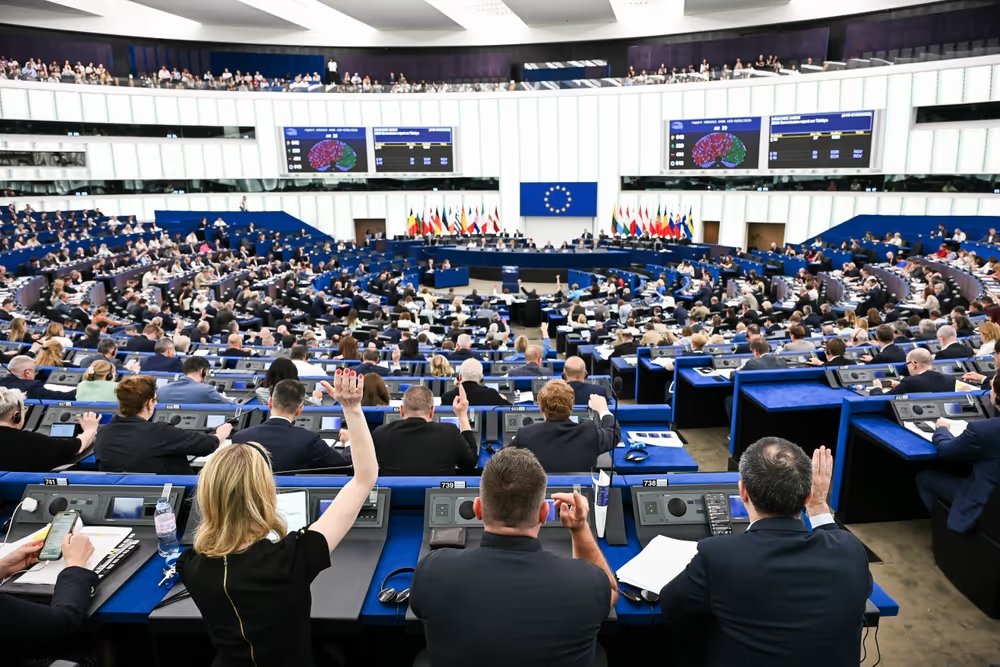
On Thursday, June 18, 2026, the European Parliament approved a resolution by “show of hands” in which they demand “accountability” for the violations committed by the regime of Daniel Ortega and Rosario Murillo in Nicaragua since 2018, which “may constitute crimes against humanity.” In addition, the MEPs demand the release of all political prisoners, the end of repression, and the suspension of the application of the Association Agreement with the country.
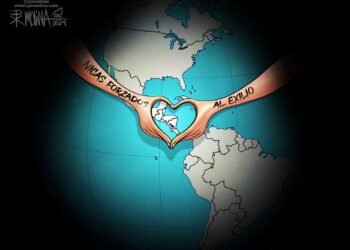
The resolution approved under the title Political prisoners in Nicaragua: the cases of Carlos Brenes, Salvadora del Socorro Martínez Aburto and Brooklyn Riveraexposes the deepening of the human rights crisis in the country since 2018 and “strongly condemns the systematic repression of the Ortega and Murillo regime, arbitrary detentions, forced disappearances, false trials, exile, denationalization, confiscation and crimes against humanity.”
The text, which merges the seven motions presented, demands that the ruling of the Inter-American Court of Human Rights be “complied with”; and “supports accountability, including through universal jurisdiction and referral to the International Criminal Court.”
Likewise, they agree on increasing pressure against the Ortega and Murillo regime through more “specific sanctions” against those responsible for the repression so that they are held accountable before international justice.
Through this resolution they asked for greater support for “democratic agents” and civil society in Nicaragua and in exile and for “no multilateral or Union fund to reinforce the regime.”
They demand the release of political prisoners
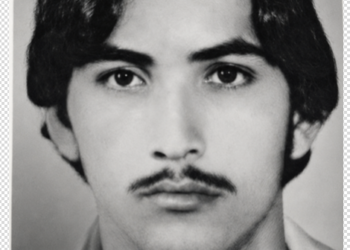
MEPs demanded the “immediate and unconditional release” of Charles B.renes, and his wife Salvadora Martínez detained in August 2025, and that of all political prisoners. In addition, they demanded information about his whereabouts and state of health.
Brenes and Martínez are under a “regime of incommunication and sentenced without procedural guarantees to 15 years for “treason”. The former military man suffers from diabetes and has been denied medication, according to complaints from his relatives.
“Demands,” the resolution adds, “the immediate and unconditional release of Brenes, Martínez and all political prisoners, the annulment of the convictions for political reasons, information on their fate and whereabouts, and immediate proof that they are still alive.”
During the debate prior to the resolution held on June 17, 2026, the MEP, Elena Nevado del Campo of the European People’s Party (EPP) group, pointed out that “Europe cannot support the systematic repression of the regime and the dismantling of the rule of law.”
“We must think if we are with those who oppress or we are with those who fight for their freedom. We must be next to the victims,” mentioned Nevado del Campo.
“The case of Carlos Brenes, Salvadora Martínez and the tragic death in prison of indigenous leader Brooklyn Rivera “These are recent examples of this cruel repression,” said MEP Francisco José Millán Mon of the EPP, who accused the European External Action Service of limiting itself to “lukewarm statements” regarding the deterioration of human rights in the country.
The MEPs used these three cases to publicize the situation of people imprisoned for political reasons in Nicaragua.
The situation of fundamental freedoms in Nicaragua—they agreed—continues to be “very worrying and unacceptable.” Civic space has been restricted and critical voices in the country are threatened.
Brooklyn Rivera sentenced to death in custody
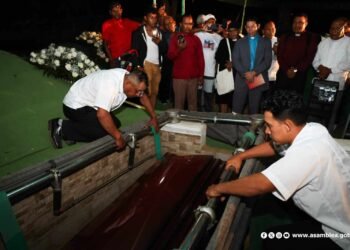
In addition, they demanded a “rapid investigation” into the death of Brooklyn Rivera, the “return of his mortal remains, the release of missing family members and accountability.”
Rivera remained missing for more than two years before dying in state custody. “The death in prison of Brooklyn Rivera is an illustrative example of this reality. It is necessary to carry out a broad, deep and independent investigation,” they noted during the debate.
Ortega-Murillo, according to the resolution, has “dismantled democratic institutions and the rule of law, through a constitutional reform that suppresses political pluralism, while persecuting opponents, journalists, clergy, indigenous leaders, human rights defenders and civil society.”
The approved resolution also contemplates:
- All detainees be granted access to family members and lawyers, medical care and international monitoring.
- Access to United Nations human rights mechanisms to detention centers.
- It condemns the persecution of Christian churches, indigenous peoples, civil society, opponents and their families.
- All organizations arbitrarily dissolved are reestablished and freedom of religion and belief is respected.
They propose trade sanctions
The MEPs demanded the activation of the democratic clause of the Association Agreement between the EU and Central America, and suspend its application to Nicaragua “as long as repression persists.” It also “emphasizes that Parliament will not collaborate with representatives of the regime within the framework of the recently created Parliamentary Association Commission.”
“Europe can and must act,” recalled MEP Elena Nevado del Campo during the debate, after pointing out that “the democratic clause of the association agreement between the European Union and Central America is there to respond to these violations of fundamental rights.”
MEP Nora Junco García, from the Group of European Conservatives and Reformists (ECR), warned that “out of respect for the victims and the credibility of the European Union” the time has come to activate the democratic clause.
“The question is whether we are willing to act as if we really believe it, because there is a democratic clause in our agreement with Nicaragua and it is precisely for these situations, not for the good days nor for when everything works well, but for when the regime systematically violates human rights,” said Junco García.
In February 2025, the European Parliament (EP) urged the European Union (EU) to activate the “democratic clause”.
“Dad, you are not alone.”
One of the most emotional moments of the debate occurred when MEP María Noichl read a letter sent by Thelma Brenes, daughter of the retired colonel in prison.
“Dad, wherever you are, I want you to know something: we have not forgotten you. You are not alone. They can hide you behind the walls of a prison, but they will never be able to erase you from our lives. Nor will they be able to destroy the legacy of your life,” Noichl said when reading the letter from the former military man’s daughter.
The resolution proposes toughening the European response against those directly responsible for the repression.
Another parliamentarian questioned that European sanctions have not yet directly reached Daniel Ortega and Rosario Murillo. “How is it possible that the European Union has sanctioned everyone around Ortega except him, who is the main person responsible along with his wife?” he pointed out.