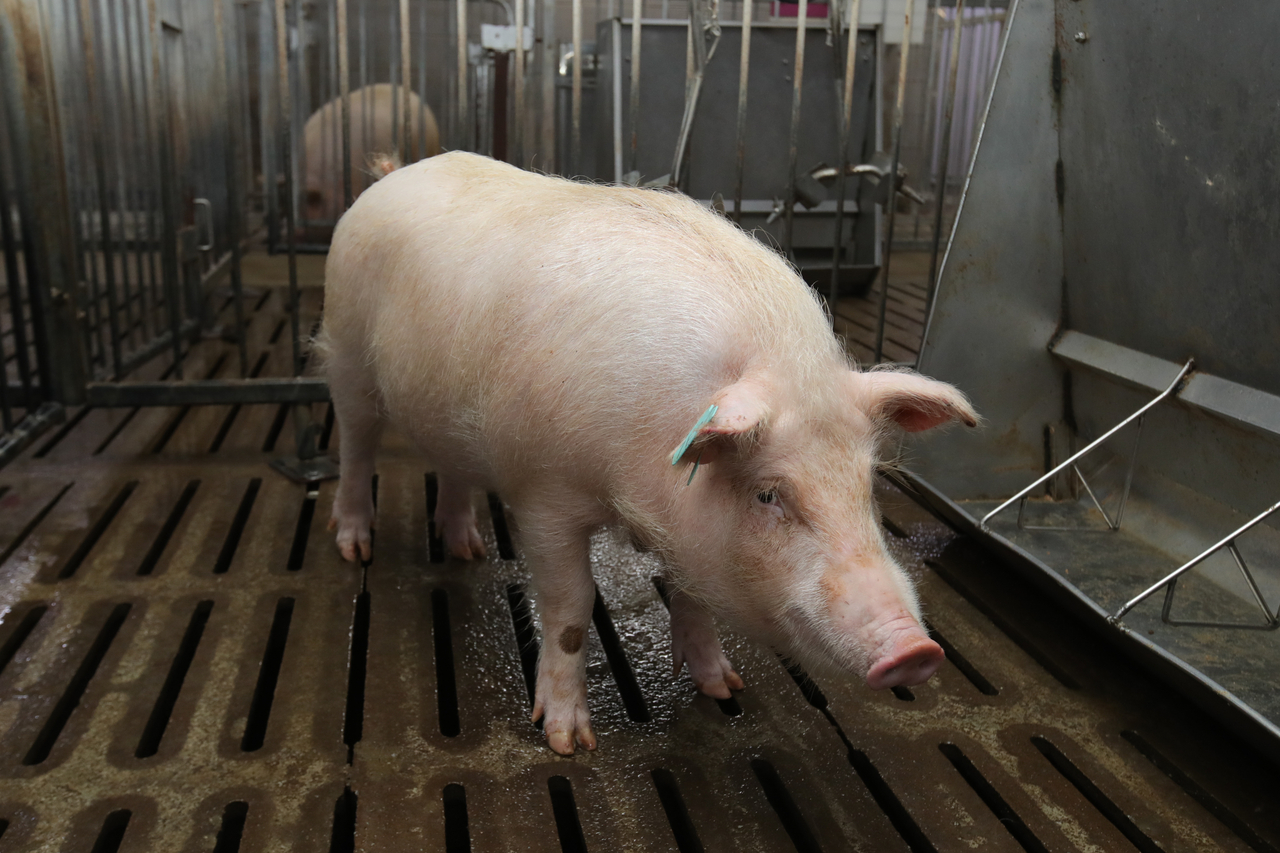
South Korean researchers said a genetically engineered miniature pig developed for organ transplants has maintained stable traits across generations, a finding that could improve the reliability of xenotransplantation studies.
The Rural Development Administration said Monday that its National Institute of Animal Science confirmed the cloned mini pig “XENO,” developed for cross-species transplants, has preserved key genetic characteristics over 11 generations spanning 17 years.
The results suggest the animal can serve as a consistent experimental model for transplant research, addressing a long-standing challenge in the field where genetic variability between donor animals has led to inconsistent outcomes.
Xenotransplantation — the transplantation of organs or tissues between different species — has been explored as a potential solution to organ shortages, but immune rejection remains a major hurdle.
The institute first developed the pig in 2009 by removing the GGTA1 gene, which produces the alpha-gal antigen known to trigger strong immune rejection in humans. Eliminating the gene reduces the risk of hyperacute rejection following transplantation.
The project dates back to earlier breakthroughs, when second-generation offspring of the cloned pig were successfully born, confirming that the modified genetic traits could be passed on. That milestone addressed concerns that limited reproductive capacity could hinder long-term research.
Since then, researchers have maintained the lineage through a closed breeding system, using only internal stock without introducing outside animals. Genome analysis showed the XENO line forms an independent genetic group and retains stable growth traits, while preserving transplant-related characteristics across generations.
The findings mark progress toward standardizing experimental conditions in xenotransplantation research, where differences between individual donor animals have often complicated comparisons across studies.
“Using animals with consistent characteristics allows repeated experiments under identical conditions, improving the reliability and accuracy of results,” an institute official said.
The study was published in the April 2026 issue of the journal Laboratory Animals.
Lee Kyung-tae, head of the Animal Biotechnology and Genomics Division at the institute, said the research demonstrates the long-term stability of donor animals for transplantation.
“We confirmed that pigs developed for xenotransplantation can be maintained stably over an extended period,” Lee said. “This will help improve the precision of research aimed at applying organ transplants to humans.”
This story was written with the assistance of AI and edited by Korea Herald staff.—Ed.
hnpark@heraldcorp.com