An idea launched by the German chancellor triggered the alarm in Bucharest and Kyiv. Germany’s plan offers false integration to Ukraine, and behind it can be a trap for countries like Romania. Two top experts explain, for “The Truth”, the scenario we fear the most.
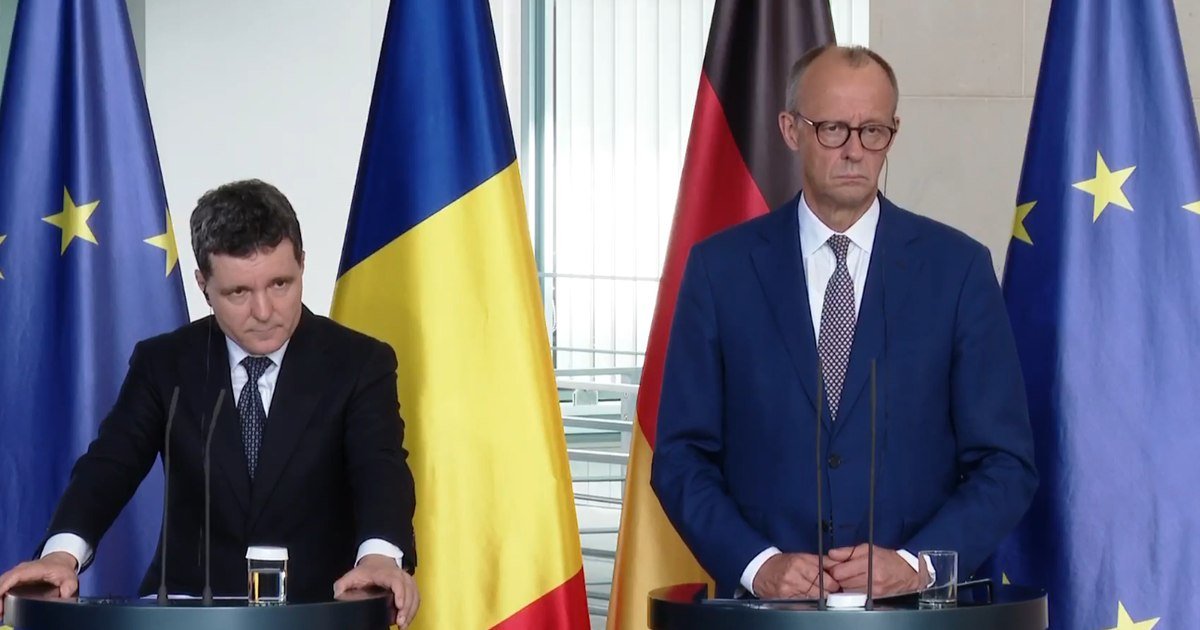
Friedrich Merz and Nicușor Dan in Berlin. PHOTO: Video capture
The topic of the enlargement of the European Union will occupy a central place on the agenda of the European summit that will take place in Brussels on June 18-19. Germany has muddied the waters: it insists before the summit that Ukraine should first receive “associate member” status, which would mean limited European integration of Kiev.
Germany’s plan that ricochets off Romania
For Romania, a postponement of Ukraine’s accession cannot be good news, for several reasons. An integration of Ukraine would bring certain advantages, including the fact that Kiev would be obliged to align with European legislation and allow more rights to the Romanian minority in this country. Other advantages for Romania relate to security.
But perhaps the most important is the fact that a postponement of the integration of Ukraine would mean the same thing for the Republic of Moldova. Just as Romania was associated with Bulgaria from the moment it started negotiations for accession, and then also for Schengen, Ukraine and the Republic of Moldova were invited together to open negotiations with Brussels. This means that blocking Ukraine’s integration would entail the same outcome for the Republic of Moldova.
For this reason, Romania is now trying, through diplomatic means, to associate the Republic of Moldova with the countries of the Western Balkans, which in turn are candidates for integration into the European Union. In this endeavor, Romania would have the support of France and even that of Germany, according to some sources.
The international political analyst Ștefan Popescu and the MEP Siegfried Mureșan have confirmed the difficulties that Ukraine is facing in this accession process, which is currently only at the beginning, and the former warns that Germany’s plan will backfire on Romania.
Enlargement of the European Union: Why partial membership is dangerous
Siegfried Muresan believes that the option proposed by Chancellor Friedrich Merz is not fair to Ukraine.
“I do not agree with the statement of the Chancellor of Germany proposing a partial accession of Ukraine to the European Union. What the people of Ukraine and the Republic of Moldova want is to become full member states of the European Union. For this the Republic of Moldova is making major reform efforts and for this the people of Ukraine have been fighting for over 10 years. This is what they fought for in the EuroMaidan protests in 2014, which were violently attacked by the then pro-Russian president of Ukraine, but people showed then that they want a modern, pro-European Ukraine. They managed to remove the pro-Russian president, and now we see how they have a genuinely pro-European government.” said Siegfried Muresan, for “Adevărul”.
In his opinion, it is the duty of the European Union to FACILITATE the integration of Ukraine and the Republic of Moldova, and the two states must become full members.
“We see how they strive, we see how they make sacrifices and it is our duty, the European Union, to offer a European perspective. This means that the Republic of Moldova and Ukraine in the coming years should become member states of the European Union without half-measures and without any intermediate stage of accession”. Siegfried Muresan also stated.
The trap of a multi-speed Europe
The international political analyst Ștefan Popescu is reserved about the chances that the Ukrainians have. The negotiations are expected to be difficult, especially regarding agriculture, given that Ukraine is a large agricultural producer, the expert recalls. Countries such as France and Poland, which are declaratively favorable to the Ukrainian case, do not look favorably on the competition that Ukrainian farmers would bring. Moreover, in recent years there have been major problems, and European farmers from the two states, but also from other EU member countries, contested the facilities granted by the European Commission to Ukraine, through which this country could sell its agricultural products tax-free in the Union.
But Ștefan Popescu believes that Romania would not be affected only indirectly if Ukraine and the Republic of Moldova were kept at the gates of Brussels for many years, and then they would receive an uncertain status. The expert makes the connection with “Europe of multiple speeds” or “Europe of concentric circles”, concepts that describe a different integration model of member states, with an elite, a hard core, and several circles of countries depending on their integration.
“This is a big danger, and here we should not only look at Moldova. The fact that at the moment when some members enter the European Union with fewer rights, the idea of a Europe with different degrees of integration is a danger for Romania as well. Romania cannot accept such a thing. We saw that Ukraine rejected such a proposal from the very beginning, which is really dangerous not only for Ukraine or Moldova, but also for Romania and Bulgaria. Without a doubt, there must be some solutions to improve the governance of the European Union, the ability to to make decisions, but an integration in which you do not participate, in which you do not have all the rights that others enjoy, a partial integration is not an integration”, says the expert.
Can Chisinau be disconnected from Kyiv?
Ștefan Popescu also talks about the obstacles in the way of the two states. The analyst does not believe in Romania’s ability to succeed in “moving” the file of the Republic of Moldova, thus disconnecting Chisinau from Kiev in order to give it more chances for faster integration.
“Despite the support of France, I do not believe in the ability and real will to decouple Moldova from Ukraine. Moldova is an almost as complex case and in any case very different from the Western Balkans. It is a more complex case because Moldova is a state with partial sovereignty, a sovereignty affected by Russia. It is not the same as in the case of Kosovo-Serbia, brought up by some. In the case of Moldova it is a little different, because when you have Russia there, it is much more complicated. Of course, I would like to and it is an older idea of Romania to include Moldova in the Western Balkans, but I think this is not the real option that is on the table”, adds the specialist.
Even if Romania, with the support of France and Germany, were to decouple the Republic of Moldova from Ukraine, the obstacles would continue to be among the most diverse and complicated.
The precedent of the deadlock with Turkey: How long the accession negotiations last
“The so-called negotiation process is indeed historic, but let’s not forget that it was just as historic in October 2005, when the negotiations with Turkey opened, and the negotiation was lost on the way. I am surprised that no news from Romania mentioned the case of Turkey, which was a complex case. But unlike Ukraine, Turkey did not have a war, it had secure borders, it was a state, let’s say, an inevitable partner of the EU with strategic interests However, in June 2018, after 13 years, the accession process has stalled. is the comparison of Ștefan Popescu.
Compared to the period in which the previous waves of admission of Eastern European states to the European Union took place, the whole context has changed, and for candidate states such as Ukraine and the Republic of Moldova, things have gone for the worse.
“In a changing world, priorities change very quickly. The world now, in which the negotiations begin, is no longer the world of the late 90s, when the European path of the countries of Central and Eastern Europe began. Then it was a different world, much more settled, without the war in Ukraine, with Russia in a different phase than the current stage, and with the United States fully committed to European security.” points out Popescu.
Last but not least, he mentions another important aspect often overlooked: during the years when the European Union accepted candidate states in waves, the United States was much more deeply involved in the issue of continental security.
“There is a big mistake in not emphasizing enough the organic connection between the American commitment to European security, of course through NATO, but also bilaterally, and the enlargement process of the European Union. These are two things that have conditioned and intertwined. The European Union, the European community, had as its basis the cornerstone of the North Atlantic Treaty of 1949”, concludes Ștefan Popescu.
What does the “associate member” status proposed by Friedrich Merz provide
The idea of Ukraine becoming an associate member, without full rights, belongs to Chancellor Friedrich Merz. He made it public in a letter sent to the leaders of the European Union, a document published by AFP and quoted by Agerpres.
“It is clear that we will not be able to complete the accession process in the near future, given the numerous obstacles as well as the political complexities of the ratification procedures,” wrote Merz, among others, justifying his proposal.
He also stated that the association would entail the participation in some meetings of the European Council, at the level of heads of state and government, but also the appointment by Ukraine of an associate European commissioner, without a portfolio. Equally important is that Ukraine would have practically no right to vote, even if it would symbolically send its first MEPs, who would not have any real decision-making power.
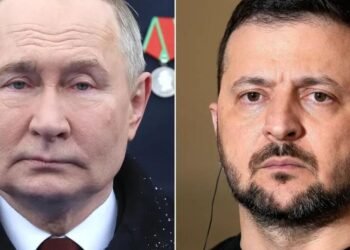
Although Merz tried to sweeten the plan and said it would work for a limited period, Kiev flatly rejected it. President Volodymyr Zelenskiy spoke of an injustice, calling for Ukraine to be able to achieve full membership by 2027.
If Ukraine, the Republic of Moldova and the states of the Western Balkans hope for an integration as soon as possible and with full rights, but the obstacles from Brussels remain notable. Although at the declarative level all member states support the enlargement, in reality divergent interests are blocking the process.
Ukraine, for example, does not only face the reluctance of Germany, but also that of France and other states. In addition, other net contributor states to the European Union budget are also opposed, although they do not say so explicitly. Countries like Denmark, Austria and Sweden refuse to bear even higher costs, given that Ukraine, a country devastated by war, will need more than 600 billion euros just for reconstruction.