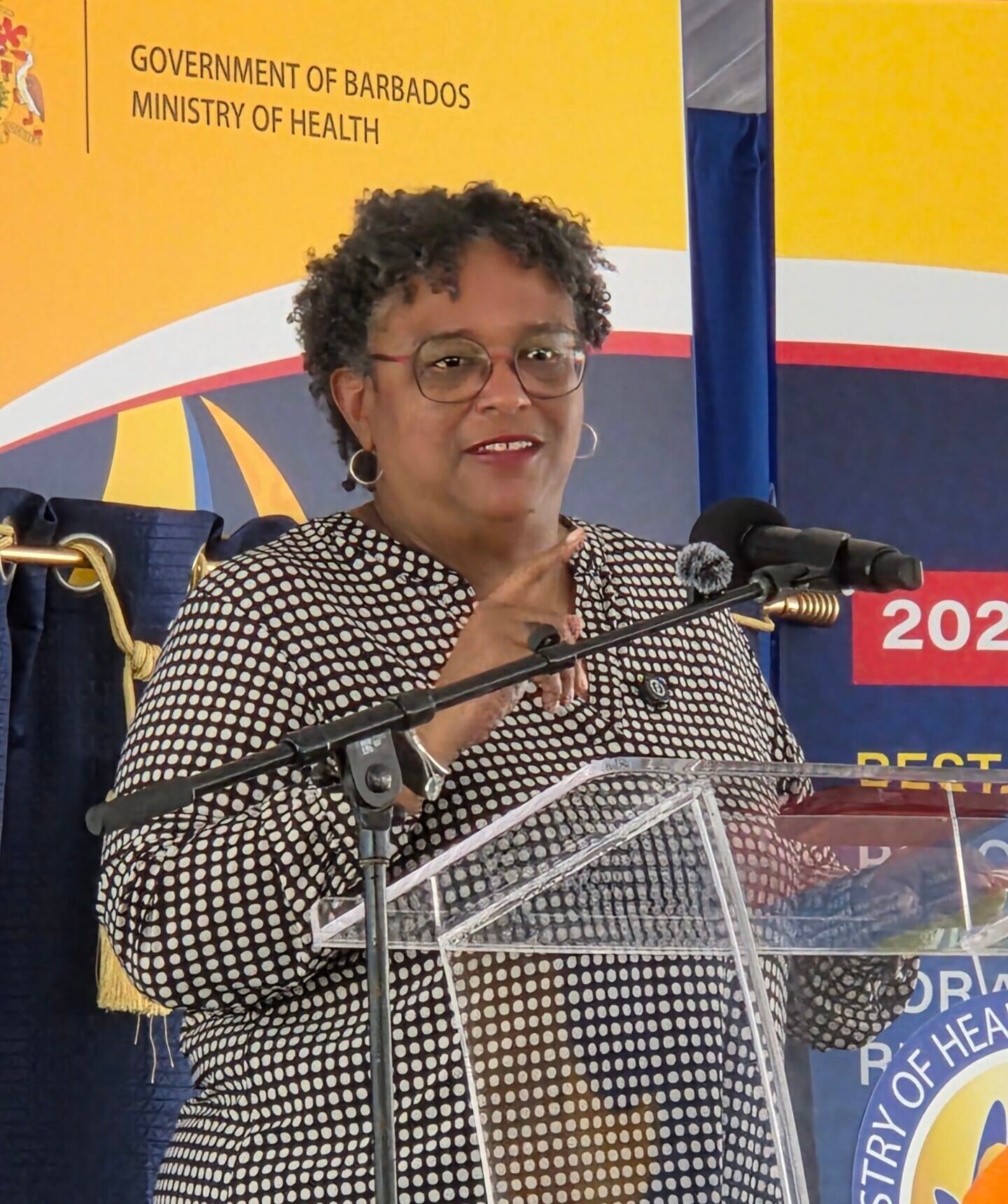
Barbados has strengthened its ability to detect and respond to drug-resistant infections, with the Best dos Santos Public Health Laboratory now designated a PAHO/WHO Collaborating Centre, placing the island in a leading role in the regional fight against antimicrobial resistance (AMR).
The lab would give Barbados the ability to detect threats early, before they spread, considering the risks posed by pathogens to the island’s declining and ageing population, which already has high levels of non-communicable diseases, said Prime Minister Mia Mottley.
She stressed the importance of collaboration among health agencies ahead of a crisis in order to protect the population: “Collaboration is the sine qua non for progress in public health. Without collaboration and without partnership, we are not able to contain the spread of diseases. Without collaboration and without partnership, we are not able to expand the body of science and knowledge that we have. Without collaboration and without partnership, we are literally in a position of being a victim of circumstances…

Some of those attending the ceremony. (Photo Credit: Jenique Blegrave/Barbados TODAY)
“There must be training, there must be acquisition of equipment, there must be hand-in-hand holding, and there must be the recognition that the partnership extends beyond the lab to the detection and tracing that is absolutely critical for the whole picture to be put together.”
The lab is also engaged in research on antimicrobial resistance (AMR), the third-leading cause of death worldwide, as Barbados continues to lead the global fight against superbugs.
Mottley, who chaired the Global Leaders Group on Antimicrobial Resistance, reiterated that the “silent slow-motion pandemic” was on track to be the number one killer of human beings by 2050.
“The reality is we have taken for granted the benefits that antibiotics have given us, even with the pervasive ordinary use of them every day, but can you imagine living in a world where you cannot cure infection? Regrettably, however, the evidence is there to show that the effectiveness of those antibiotics is waning, and that with the development even of new antibiotics, the lifeline that they are expected to have is much less than those that preceded us.”
World leaders made a commitment at last year’s United Nations General Assembly to reduce deaths from bacterial infections by ten per cent, which Mottley described as an important step in reversing the trend.
“We believe that it is through the actions that we are taking today that, in the good old tradition of the Barbadian proverb ‘one blow does kill old cow’, we will achieve success globally,” Mottley added.
She signaled Barbados’ intention to deepen its scientific capabilities through initiatives such as the Barbados Living Lab, saying that investments such as these were not only about advancing science but protecting lives.
“Our ability to provide timely diagnostic information to doctors such that they can prescribe the best treatments that they can in a race against time is what this is all about.”
Lab director Songee Beckles said the designation recognised the level of work carried out by the facility and enabled it to make a difference on the international stage.
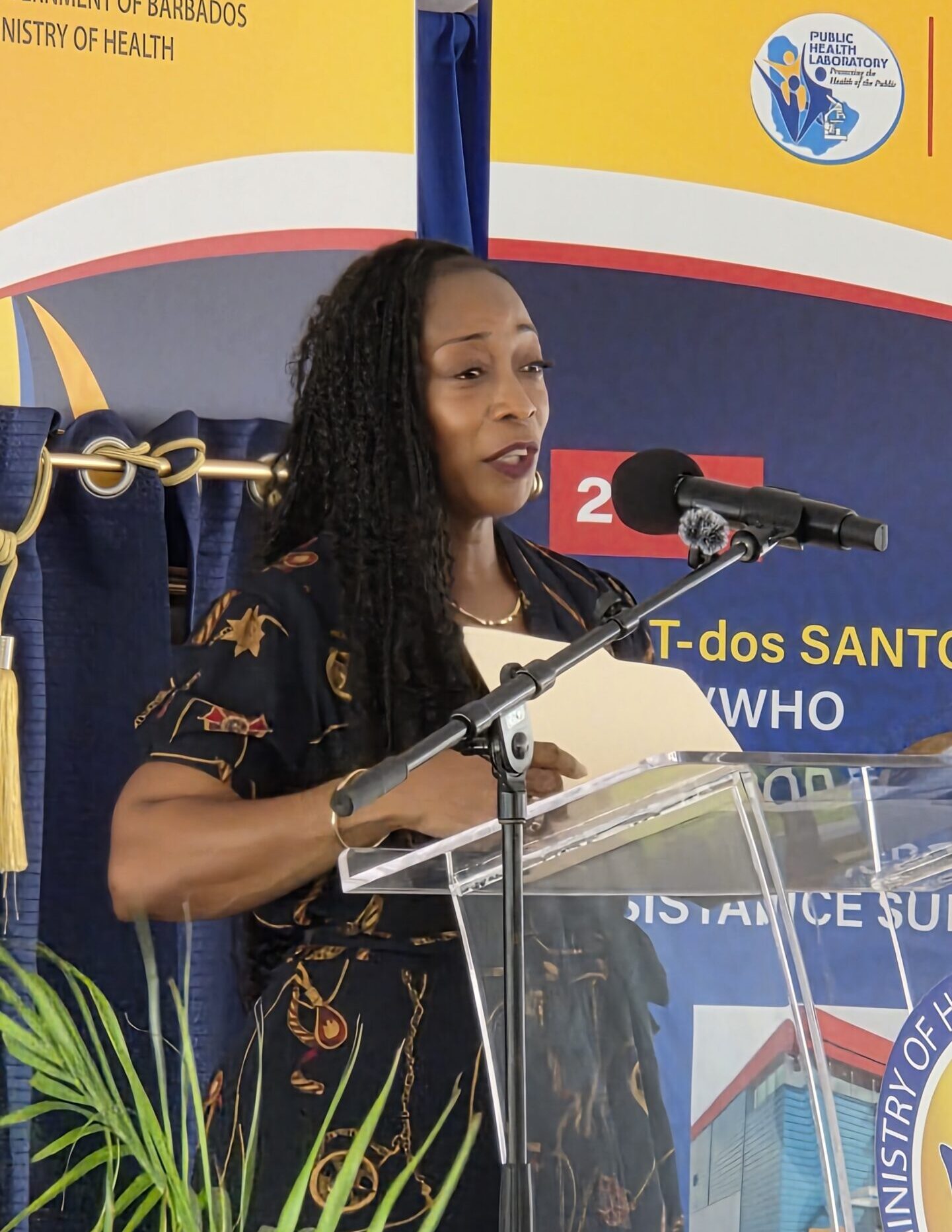
Director of the Best dos Santos Public Health Laboratory Songee Beckles. (Photo Credit: Jenique Blegrave/Barbados TODAY)
“Since 2016, the Best dos Santos Public Health Laboratory has transformed from a national diagnostic facility into a recognised regional centre for antimicrobial resistance surveillance.
“Through strategic partnerships, workforce development, technological advancement, molecular diagnostics, genomic surveillance and international collaborations, the laboratory has become a cornerstone of AMR detection and response in Barbados and the wider Caribbean.
“Its designation as a PAHO/WHO Collaborating Centre for Antimicrobial Resistance Surveillance in 2026 represents the culmination of years of sustained investment and achievement. As AMR continues to pose a major global health challenge, BDSPHL is well positioned to support national, regional and international efforts aimed at preserving the effectiveness of antimicrobial agents and protecting public health.”
(JB)