lobal financial markets have issued a definitive verdict on the fiscal strategy of President Prabowo Subianto’s administration: Sell Indonesia. Finance Minister Purbaya Yudhi Sadewa has dismissively brushed this off as a misguided negative perception, claiming critics fail to comprehend the nation’s supposedly sound fundamentals.
Yet while he blames external factors for the collapsing rupiah and the plunging Indonesia Stock Exchange Composite index, the underlying market data suggest otherwise, with the Rp 335 trillion (US$18.7 billion) free nutritious meal (MBG) program acting as the primary lightning rod for capital flight.
This has created a stark disconnect between state propaganda and global reality: While the regime boasts about its flagship project as a monumental triumph, international observers and global investors are reading a completely different story.
First, global markets have documented how the program reverses the fundamental logic of social welfare by disproportionately benefiting the wealthy.
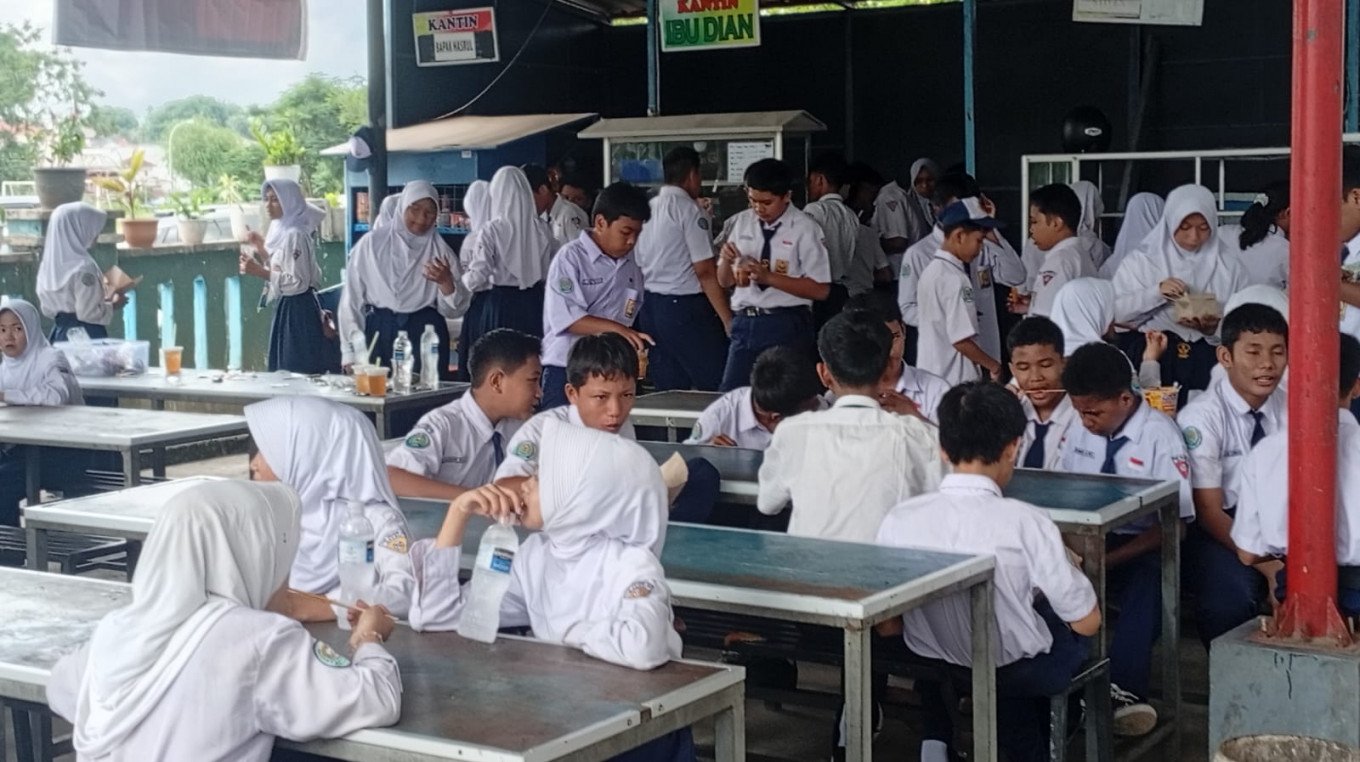
While other countries target their most impoverished populations first, the free meals program has inadvertently favored the elite. Data from the 2025 National Economic Survey (Susenas) confirm that nearly half of the program’s budget was captured by the richest decile while the poorest 10 percent were left with a measly 1.1 percent.
Second, global watchdogs have highlighted a glaring regulatory failure: Indonesia is operating thousands of industrial-scale kitchens completely devoid of the hygiene and sanitation certificate (SLHS). While only 0.4 percent of the program’s kitchens, known as nutrition fulfillment service units (SPPG), were certified as of September 2025, progress remains alarmingly sluggish: By June 2026, almost half of the 29,991 SPPG operating still lacked basic safety clearance.

Every Thursday
The human cost of this regulatory void is staggering. According to the Network for Education Watch (NEW) Indonesia, food poisoning linked to the free meals program has affected over 37,673 beneficiaries across 36 provinces to date, including infants and pregnant women. Critics argue that the country has effectively turned its most vulnerable citizens into guinea pigs for a massive, unvetted experiment.