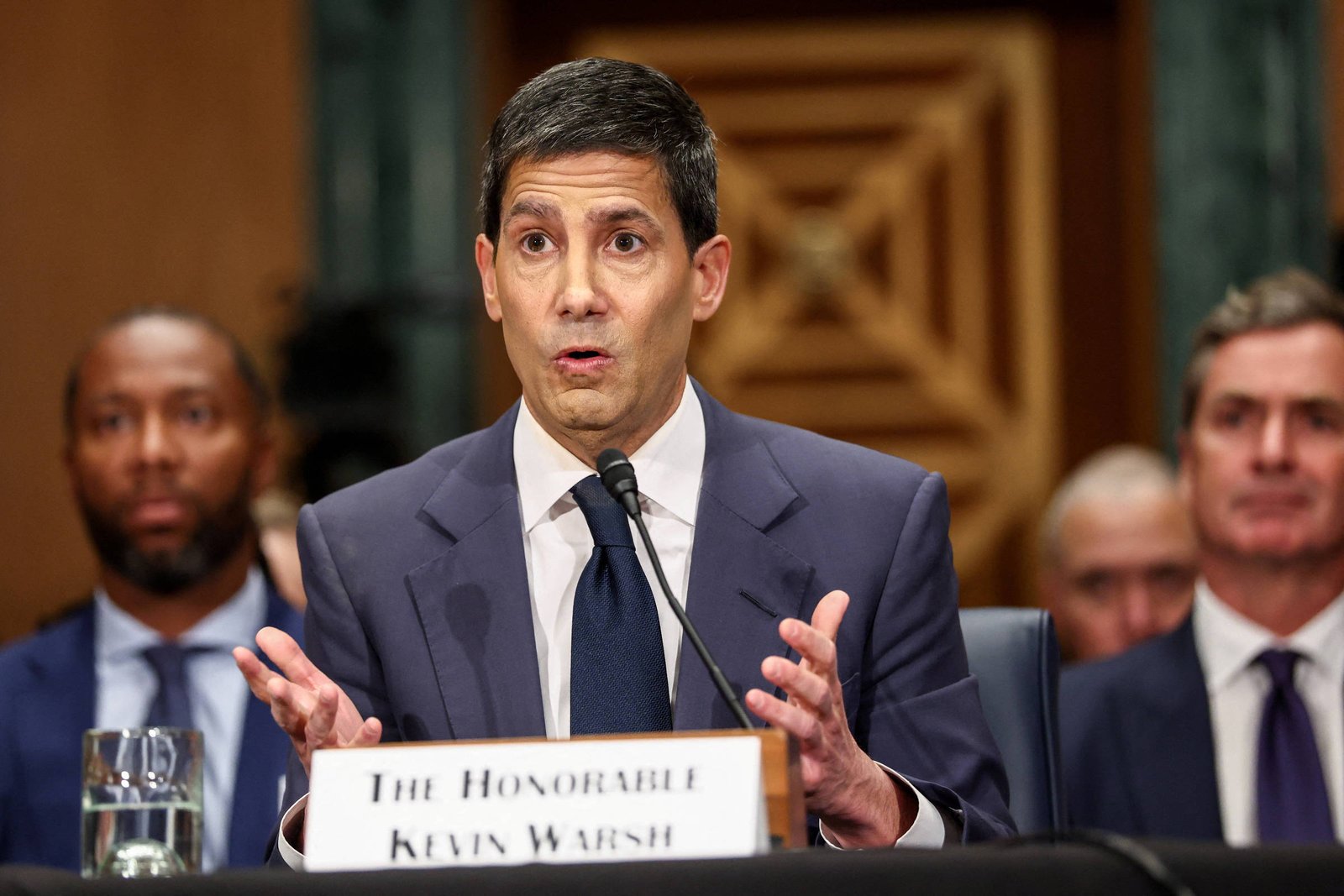
Kevin Warsh, nominated to chair the Federal Reservecalled for a “regime change” at the central bank of the United Stateswhich would include a new “structure” for controlling the inflation and a possible review of the way the bank communicates with the public about monetary policy.
In a confirmation hearing before the Senate Banking Committee, which quickly hinted that big changes are coming in a Fed Led by Warsh, the 56-year-old lawyer and financier blamed the central bank for rising inflation in the wake of the Covid-19 pandemic, which continues to harm US families.
“The fatal policy errors going back four or five years” are a legacy that families are still overcoming, Warsh said, arguing that the Fed needed “a regime change in the conduct of policy. That means a inflation structure new and different.”
That change includes Fed communications that “aggravated” the problem, the former Fed governor argued, in a sign that he may want to change things like the central bank’s current use of quarterly projections of economic and interest rates.
Warsh’s hearing quickly became controversial.
He did not directly say that the president donald trump lost the 2020 election — a statement that Democratic Senator Elizabeth Warren said would be a litmus test of Warsh’s independence from the Republican president who nominated him for the Fed’s top job — and also said she would maintain plans to sell more than US$100 million (about R$500 million) in assets without detailing what they are or to whom they would be sold.
The profits, according to him, would be invested in “simple” assets.
Warsh was also asked about comments made by Trump shortly before the hearing began that he would be disappointed if Warsh did not get quick approval for the rate cuts.
“Presidents tend to be in favor of lowering rates,” Warsh said. “President Trump expresses this publicly.”
“The independence of monetary policy is essential,” Warsh said in a public statement delivered to committee members, who will recommend whether he should be confirmed for a seat on the Fed’s Board of Governors as well as a four-year term as head of the central bank.
“I do not believe that the operational independence of monetary policy is particularly threatened when elected officials — presidents, senators or members of the Chamber (of Deputies) express their opinions on interest rates” said Warsh, former Fed governor.
“Congress charged the Fed with the mission of ensuring price stability, without excuses or equivocation, arguments or anguish. Inflation is a choice, and the Fed must take responsibility for it. Low inflation is the Fed’s armor.”
Warsh said rate cuts are justified because technological changes triggered by artificial intelligence will increase productivity, a view that other central bankers say may be true over time but will not necessarily make rate cuts appropriate in the short term.
The Fed has missed its 2% target for more than five years, first due to the shock of the pandemic but more recently due to the influence of the Trump administration’s tariffs and high oil prices tied to war in the Middle Easta potential problem for Republican lawmakers heading into the November midterm elections.
UNCERTAIN TIME FOR VOTING
Trump has repeatedly clashed with Powell over monetary policy since naming him head of the Fed in his first term in the White House. Powell’s term as central bank chief formally ends on May 15, but he could stay in the role longer if Warsh’s confirmation is delayed.
At this time, the date of a committee recommendation or a full Senate vote is uncertain.
Republican Sen. Thom Tillis, a member of the committee, said during the hearing that Warsh’s confirmation would be delayed until the U.S. Justice Department drops an investigation into Powell that the senator considers frivolous and part of Trump’s effort to pressure the Fed to lower rates or force Powell to resign.
While next week’s economic policy meeting could be Powell’s last as Fed chief, the impasse has raised the prospect that he will remain in the role even after his term formally ends.
District of Columbia U.S. Attorney Jeanine Pirro, a Trump ally, does not appear willing to drop the Powell investigation, and the president does not appear to be pressuring her to do so — even if that stance potentially means cohabiting with the current central bank chief for months more or triggering another legal battle by trying to name a temporary replacement from among the other six Fed governors.
In the absence of a confirmed successor to the top job, the central bank has in the past appointed its own “pro tempore” Fed chief. Powell’s term as central bank governor extends until 2028, meaning he could remain a key policymaker even if Warsh is confirmed.
Trump also said he could still fire Powell if he does not step down as governor. This measure would certainly be the target of a legal challenge, as was the president’s attempt last summer to fire Fed Governor Lisa Cook.
It’s an unprecedented situation for the US central bank, where the transfer of authority has typically been collegial.
The Fed has a board and staff based in Washington, but it also includes a dozen regional banks, tens of thousands of employees across the system, and functions that range from setting interest rates for the entire country to managing the payments system, supervising and regulating banks, managing swap lines with foreign central banks and conducting research on everything from cryptocurrencies to rural health.
Warsh, who served as Fed governor from 2006 to 2011, has been deeply critical of Powell’s leadership, and the hearing provided an opportunity to explain in more detail what he plans to do differently.
“The Fed must stay in its lane,” Warsh said in his opening speech to the committee, echoing a constant conservative criticism that the central bank’s work on issues such as climate change or economic equity, or comments on fiscal spending, were out of bounds.
Republicans, including Tillis, have generally supported Warsh’s nomination.
Democrats, for their part, say they have a good list of questions to raise, from Warsh’s role at the Fed during the era of big bank bailouts during the 2007-2009 financial crisis to why his recent financial disclosures include a promise to divest some of his $100 million-plus portfolio rather than more details about the assets he owns.