Monday, May 25, 2026, 07:26
1087 readings

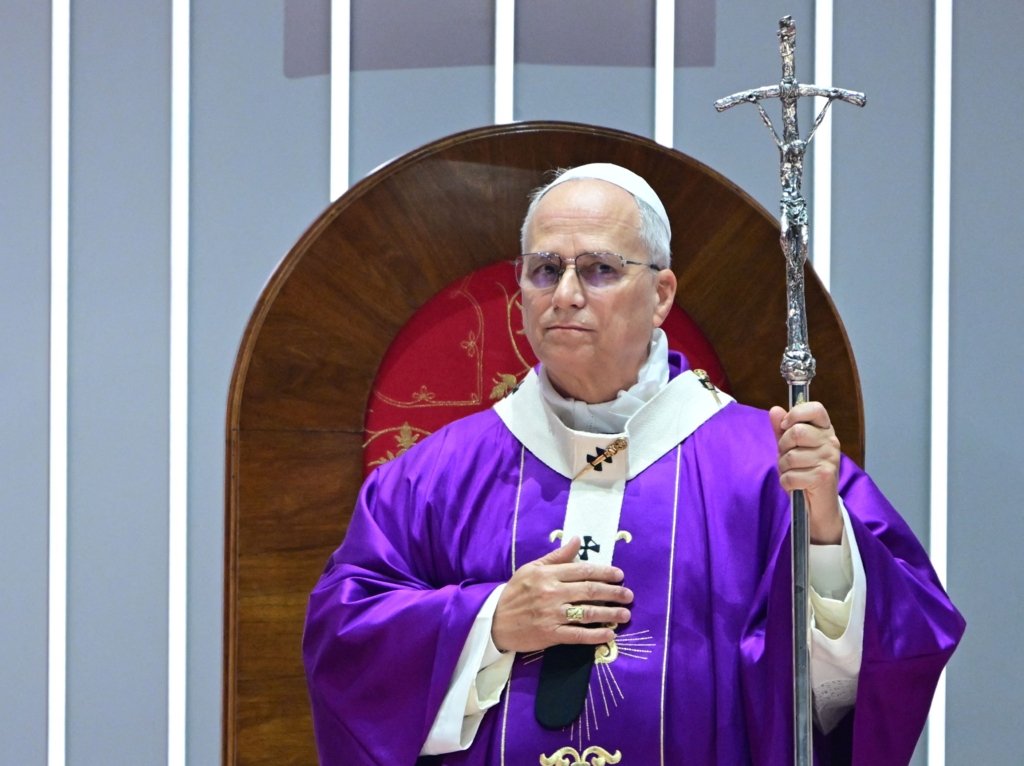
Pope Leo XIV criticizes artificial intelligence PHOTO Hepta
The Vatican presents on Monday, May 25, the first encyclical of Pope Leo XIV. The document “Magnifica Humanitas” is dedicated to protecting human dignity in the face of the rapid development of artificial intelligence (AI) worldwide. The Sovereign Pontiff has previously criticized the “delegation to machines of decisions about the life and death of people”.
As a sign of the importance attached to the text, entitled “Magnifica Humanitas” (Magnificent Humanity in Latin), the pope will personally attend its presentation at 09:30 GMT – a first – alongside senior officials of the Holy See and AI experts, including the co-founder of the American start-up Anthropic.
Since his election a year ago, the first North American pope in history has multiplied warnings about the dangers of AI, especially its military use, while denouncing the “ecological havoc” caused by the “mad race” for rare metals essential to modern electronics.
According to the United Nations, AI could be worth as much as $4.8 trillion by 2033, a 25-fold increase within a decade, while concentrating its profits in the hands of a limited number of actors. In 2025, the UN sounded the alarm about a “dangerous regulatory vacuum”.
By dedicating an encyclical to this topic, the Pope sends a strong message: addressed to all believers, it establishes a reference position on social, moral, political or theological issues and generally serves as a basis for long-term teaching and debate. The Vatican presents on Monday, May 25, the first encyclical of Pope Leo XIV. The document “Magnifica Humanitas” is dedicated to protecting human dignity in the face of the rapid development of artificial intelligence (AI) worldwide. The Supreme Pontiff has previously criticized the “delegating to machines the decisions regarding the life and death of people”.
Experts estimate that the impact of “Magnifica Humanitas” could be comparable to that of the encyclical Laudato Si’, Pope Francis’ manifesto on integral ecology, which, since its publication in 2015, has triggered a wave of political and associative reactions around the world.
Pope Leo XIV’s Manifesto on Artificial Intelligence
The Vatican has kept secret this new text – the length of which remains unknown – dedicated to “the protection of the human person in the age of AI”. But it inscribes it in the continuity of his social teaching: it was signed on May 15, the date of the 135th anniversary of the encyclical Rerum Novarum (1891) of Leo XIII, which laid the foundations of the Church’s social doctrine in the face of the industrial revolution.
“The industrial revolution revolutionized the labor market, people’s lives, hegemony and power relations. At that time, it was necessary to train individuals in the use of tools. The same happens today: we have to train and educate,” Marijana Grbesa, a professor at the University of Zagreb and a participant in a conference on AI at the Vatican, explained to AFP. But “today, education is not enough. It is also an aspect that the Pope emphasizes in his message,” she adds. “It’s a wake-up call to the whole civilization” to “show rationality when using these tools.”
The head of the Catholic Church particularly emphasized the need for “digital literacy (…) to understand how algorithms shape our perception of reality” and called for more transparency in these systems that govern the operation of various chatbots.
In December, Leo XIV denounced the rush to AI in the military, saying that the “delegation of human life and death decisions to machines” was a “destructive spiral”.