When identity becomes a political issue: We have rights, but not yet a decent life
The rights of the LGBT+ community in Slovenia have come a long way in the last two decades: from the question of whether same-sex couples can even count on legal recognition of their community, to marriage and the possibility of adoption. But just where it seems that society has taken the biggest step, another, often even more uncomfortable question opens up: what happens when a person not only demands the right to a partner or family life, but the right to their own name, gender, body and identity? For transgender and non-binary people, the debate therefore quickly shifts from the area of tolerance to the area of control: who gets to decide who someone is, what they have to prove to institutions and why personal identity must still be subject to medical, administrative and political checks.
Transgender people are a minority group, but by no means marginal. International research points out that their exact number is difficult to determine, as countries measure gender identity differently or not at all. When population surveys directly ask about transgender identity, the estimates for adults most often range around a few tenths of a percent of the population, while the percentages are generally higher for younger generations. Behind these numbers are not abstract categories, but people whose everyday lives often depend on very concrete things: an identity document, access to health care, safety at school or work, the way others address them, and the willingness of institutions to see them at all.
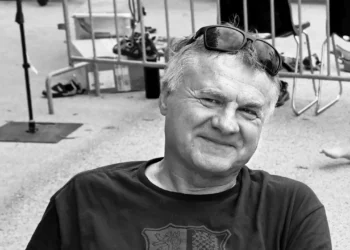
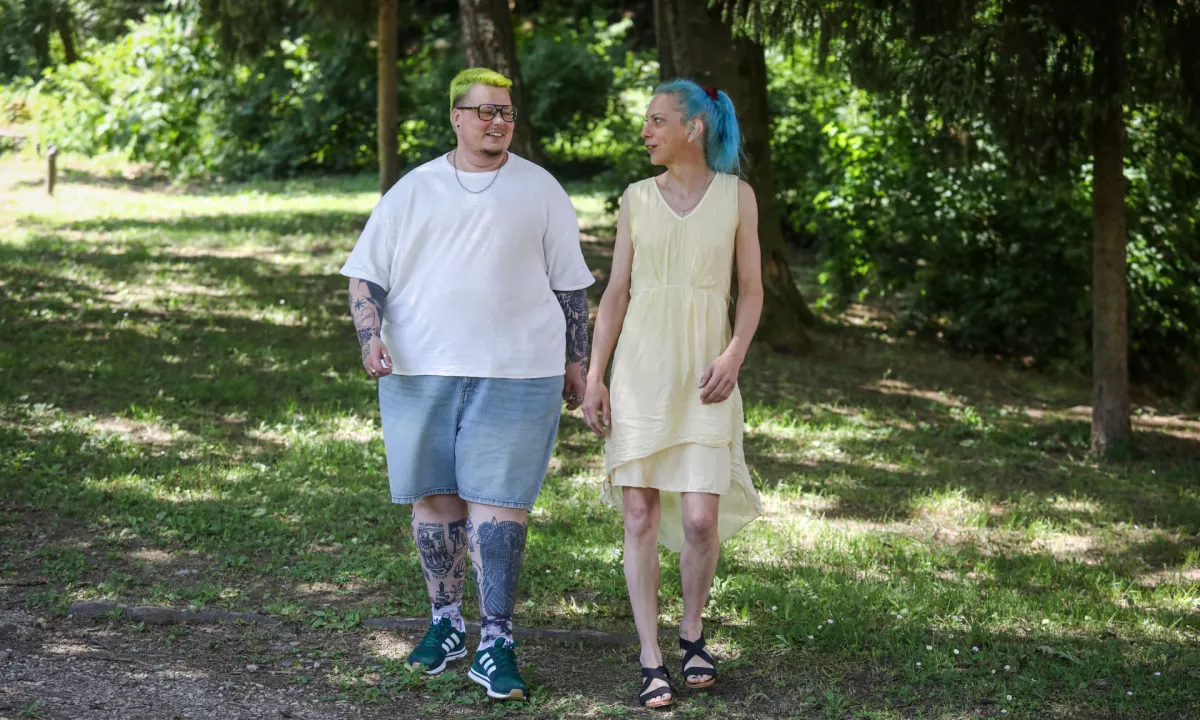
That’s why Linn Julian Koletnik and Lea Aymard don’t need a long introduction, but they also can’t be eliminated with a few labels. Koletnik is a transmasculine non-binary person, a long-time activist of the LGBT+ community, a social worker, a master’s degree in gender studies, the founder of the TransAkcija Institute, a researcher at the umbrella European organization TGEU and a transdisciplinary artist. Lea Aymard is a transwoman, French-born interdisciplinary artist, director of photography, writer and transfeminist activist who has been living and creating in Slovenia for many years.
Both speak from a space that cannot be separated from personal experience, but in doing so they never stay to themselves. Koletnik builds thought with the precision of someone well versed in the legislation, institutions and activist battles of recent decades. Aymardova speaks more jerkily, in images and twists, like someone who often sees the world first as a scene, only then as an explanation. Together, they are interlocutors, where private, political and artistic issues are not mutually exclusive, but constantly shift from one to the other.
The conversation also takes place at a time when pride month is being celebrated around the world and in Slovenia. June is dedicated to remembering the history of the LGBT+ movement, the struggles for rights, visibility and dignity, as well as reminding that equality is never finally won. Pride Month is not only a celebration of rainbow flags, parades and community, but also a reminder of the violence, exclusion and legal inequalities from which the movement grew. In this sense, the conversation with Koletnik and Aymardova is not only a conversation about identity, but also about how far society is willing to go when the word pride no longer means simply accepting the other, but recognizing his right to say who he is.
Since we are in the month of June, which in your context is also called the month of pride, a time when pride parades take place all over the world, what is your view or how do you assess the state of rights of the LGBT+ community in Slovenia at this moment?
Lynn: The situation is actually very complex and difficult to assess unambiguously. It seems to me that a certain minimum has been reached in Slovenia within the heteronormative matrix: we have marriage for same-sex couples and the possibility of adoption. These are rights that belong to the first wave of ensuring LGBT+ rights in Europe, and Slovenia came to them relatively late. This is also why it is usually placed somewhere in the middle on the map of rights.
I wouldn’t call it the minimum, but it is a big step and progress that not all European countries can boast of.
The article is accessible only to subscribers
The article is accessible only to subscribers