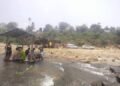
The Christian pilgrimage path is a national and global narrative
Rapporteur of the Tourism and Heritage Committee in the Senate, Al Ain Sharhabeel Madi, confirmed that the “Seven Wonders of Jordan” initiative represents a national project to reread the tourist, cultural, natural and spiritual map in the Kingdom within an organized institutional framework, aiming to highlight the cultural diversity that Jordan enjoys and enhance its presence on the global tourism map.
Madi told Al-Rai that the initiative is based on the basic principle of Petra remaining a global reference outside the scope of competition, while the Seven Wonders of Jordan constitutes a national space to highlight additional Jordanian sites that deserve to be known and highlight their historical, religious, natural and cultural value, through a national participatory process that ensures the participation of local communities in the various governorates.
He explained that the initiative begins with the preparation of an initial national atlas that includes dozens of archaeological and tourist sites from various parts of the Kingdom, to be developed gradually to become a comprehensive national reference linking the sites together within thematic and seasonal itineraries and groups, instead of simply displaying them as individual points on the tourist map.
He pointed out that the Christian pilgrimage route remains an independent strategic path that enhances Jordan’s position on the global level, especially since the location of the bathtub constitutes a foundational point in the national and global Christian narrative, making it a stand-alone religious and tourism product. He added that the year 2030 represents a historic opportunity linked to the two-thousandth anniversary of baptism, which requires early preparation through developing services, paths, and infrastructure, and raising the readiness of sites to receive increasing numbers of visitors and pilgrims.
He stressed that readiness to receive tourists must be a criterion for qualification and development and not a means of excluding sites of historical or religious value, pointing out that the Golden Triangle region, with its three sides; Aqaba, Petra and Wadi Rum are full of many sites that represent successive eras of civilization spanning thousands of years, and constitute an important tributary to the national tourism product.
He pointed out that Aqaba Governorate in particular contains more than 16 archaeological sites representing the Stone, Copper, Bronze, Iron, Nabataean and Roman eras, in addition to the successive Islamic eras from the Rashidun, Umayyad, Abbasid, Fatimid, Mamluk and Ottoman eras, all the way to the Hashemite era. These sites carry great historical and religious value, and some of them left a direct impact on the march of Arab-Islamic civilization.
He added that the diversity of the tourism product in Aqaba, Wadi Araba and Al-Quwaira gives the region a unique character, and provides broad opportunities to expand the economic benefit base for local communities by integrating them into the development of the tourism product and creating direct and indirect job opportunities, which reflects on local development and improves the level of services provided to visitors.
Madi pointed out that major paths such as the Path of the Kings and the Christian Path constitute the main arteries of the proposed National Atlas, and contribute to linking the governorates together and prolonging the duration of visitors’ stay, which reflects positively on the economic and tourism movement in various regions of the Kingdom.
He stressed that promotion, marketing, and the use of traditional and digital media tools and social media platforms at the local, regional, and international levels represent essential pillars for the success of the initiative, in addition to continuous coordination with partners from official institutions, the private sector, and local communities to ensure its sustainability and achieve its goals.
He called for the creation of an interactive electronic platform that allows citizens and visitors to participate in selecting sites according to criteria of readiness and historical and religious importance, and that the selection process must be based on clear technical foundations that ensure justice and transparency and enhance the sense of national partnership.
Madi stressed that the “Seven Wonders of Jordan” initiative is not just a list of tourist sites, but rather a Jordanian message to the world that redefines Jordan as a comprehensive cultural and humanitarian destination, and establishes a national and global reference that highlights the Kingdom’s richness and diversity, and enhances its presence on the international tourist map within an authentic national identity based on history, culture, and cultural diversity.