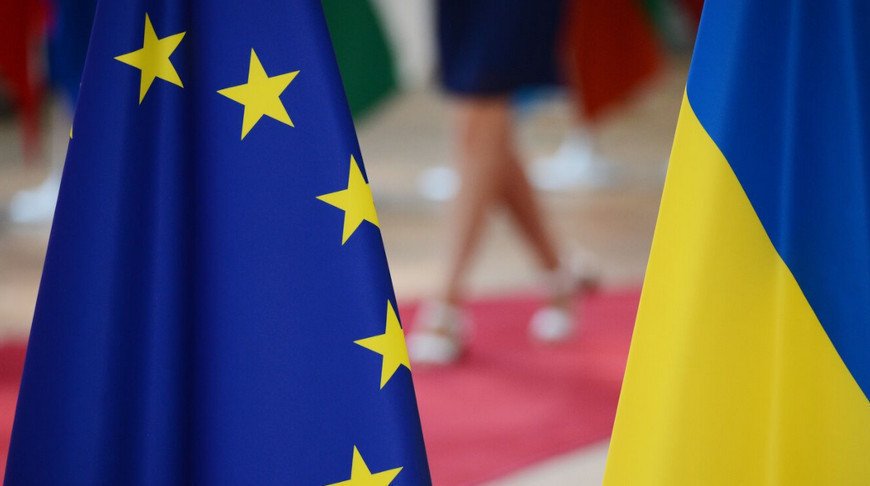
“Ukraine proposes to end the war,” Zelensky wrote. This proposal, ideally, should have been the key message. But unfortunately, it was not. The call to cease hostilities got lost in a stream of provocative remarks directed at Putin and the conditions that Zelensky set for Russia.
Overall, the letter is written in a confrontational tone, which clearly clashes with its stated goal – a diplomatic settlement. In fact, two-thirds of the letter consist of criticism directed at Putin and Russia’s foreign policy, including Moscow’s relations with Beijing and Pyongyang. After a stream of threats, accusations, and sarcastic remarks (that is, practically at the very end of the letter) the author finally gets to the point.
First, he initiates direct negotiations between Moscow and Kiev at the highest level, which could take place on neutral territory: in Switzerland, Türkiye or one of the Arab countries.
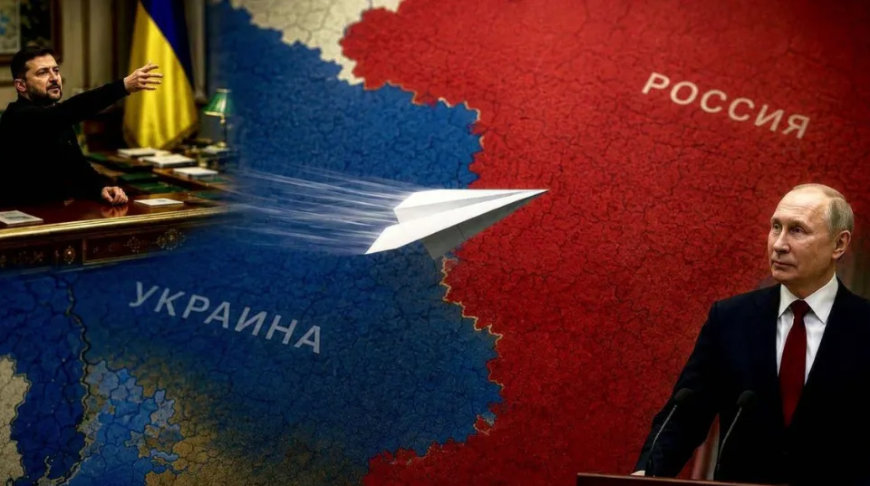
At the end of his letter, Zelensky said that Russia will grow tired of the war, and that this threatens it with internal destabilization. “We can work on such fatigue,” the letter reads. In other words, Zelensky openly says that Kiev and its allies are prepared to continue fighting, combining military and human resources in order to exhaust Russia.
Perhaps this is the only formulation in the long letter that truly reflects the author’s goals and motives. Everything else, including the proposals set forth by Zelensky, evokes a sense of déjà vu. In essence, these are the very same initiatives from Kiev and European countries that have been put forward in past years, only slightly adapted to the current information climate. It is enough to recall the so-called Zelensky peace formula, which proposed, among other things, a cessation of hostilities and a return to the 1991 borders. Or the ultimatum to Moscow for a 30-day ceasefire, put forward by France, Germany, Great Britain, and Poland in May 2025, in the run-up to the first negotiations between Russia and Ukraine in three years, with U.S. support.
Both the current letter, Zelensky’s peace formula with subsequent peace summits that excluded Russia, and the ultimatum from European leaders all pursued a single goal: to prevent peace negotiations while creating the impression that it is Moscow that is unwilling to make peace. The only difference is that Zelensky’s formula was aimed at involving the countries of the Global South, the majority of whom refused to support anti-Russian sanctions. The European ultimatum was specifically directed at Trump, whom they sought to convince that Russia is not open to negotiation, and therefore that military aid to Ukraine must be increased.
Zelensky’s letter, as noted above, served as a prelude to the European Troika meeting in London and subsequently to the G7 summit. It was most likely aimed primarily at Trump, whom the “party of war” in Europe and the United States is trying, on one hand, to knock off course from Anchorage and convince that pressure should be applied to Moscow rather than Kiev, and on the other hand, to persuade him to reconsider plans for reducing the American military presence in Europe. At the same time, Zelensky’s letter may be directed at that segment of European society, including representatives of political circles and business, which is increasingly speaking out in favor of peaceful dialogue. After all, as financial and economic difficulties mount, living standards decline, and a sense of uncertainty grows amid geopolitical turbulence, the European establishment needs some way to justify to its citizens its determination to continue the war and keep providing aid to Kiev.
What was addressed specifically to Russia in Zelensky’s letter amounted to provocative remarks designed to provoke Moscow into a sharp response, along with conditions that were deliberately unacceptable to Russia.
Of course, Kiev can and should put forward its own conditions. But first, not in a letter calling for negotiations, but directly at the negotiating table. And second, the conditions must reflect the realities on the ground. And the current realities are by no means in Kiev’s favor, no matter how hard Zelensky tries in his letter to turn the situation upside down and portray Russia as something close to a capitulating party.
Ukrainian Verkhovna Rada deputy Anna Skorokhod quite accurately assessed the tone of Zelensky’s letter and the conditions he set. “Diplomacy must begin without any preconditions, because as long as each side makes its demands, people continue to die. When a public letter to a country’s leader is accompanied by jokes, are we not turning the issue of national survival into stand‑up comedy?” the deputy remarked.
Thus, the main message of Zelensky’s letter was not a call to end the war, in which Ukraine has found itself on the brink of survival, but an ultimatum: either Russia agrees to all the preconditions preceding negotiations, or the war of attrition will continue.
When London talks peace, expect war
Three days after Zelensky’s letter was published, a summit of European Troika leaders took place in the British capital, attended by British Prime Minister Keir Starmer, French President Emmanuel Macron, and German Chancellor Friedrich Merz. Zelensky also took part in the meeting.

The main outcome of the summit was the signing of a joint statement on resolving the war in Ukraine. And, of course, it did not come without preconditions and demands directed at Russia.
Specifically, the European Troika demands that Russia agree to a ceasefire before negotiations can begin. The current front line is to serve as the starting point for the talks. Ukraine must receive security guarantees, including the deployment of a foreign military contingent on its territory involving Western countries. Russian assets, according to the Troika’s plans, are to remain frozen until Russia compensates Ukraine for war damages.
The statement also declares that France, Germany, and the United Kingdom will increase production of long‑range weapons for Kiev in order to support the “future resilience of the Armed Forces of Ukraine.”
Furthermore, the European Troika demands that any agreements between Kiev and Moscow that affect the interests of the EU and NATO be coordinated with the alliance and the European bloc.
As the Ukrainian publication Strana notes, the London statement will most likely be promoted as a framework for the Europeans to negotiate with Russia. At the same time, it is clear that Moscow will not agree to the conditions laid out. Consequently, the goal of the statement is to ensure that Russia refuses to negotiate with Kiev and Europe.
“On one hand, the statement speaks of stopping the war along the front line as a starting point for talks. On the other hand, it contains a clause about the subsequent deployment of foreign troops on Ukrainian territory, something Moscow has categorically opposed. In principle, the Kremlin, as Putin himself recently reiterated, is also against an armistice along the current line of combat, insisting on the withdrawal of Ukrainian forces from Donbass. However, apparently neither Kiev nor Europe is entirely certain that Moscow might not suddenly change its mind and agree to end the war along the front line, after which the Ukrainian authorities would find it difficult to reject a ceasefire. Hence the additional conditions are being voiced in order to virtually eliminate any chance of Russian agreement,” the Ukrainian publication writes.

Another person whom Kiev’s European allies must persuade is Donald Trump. This is why Vladimir Zelensky’s letter and the London meeting look like a preparatory stage before his meeting with the American leader in France.
What to expect from the G7 summit in Évian?
First, let us outline Washington’s current position on the Ukrainian conflict. Against the backdrop of the war with Iran, the Americans have shifted their attention entirely to the Middle East, putting the Ukrainian track on pause. Donald Trump’s recent statements suggested that Washington is distancing itself from events in Ukraine, essentially saying, “handle it yourselves”.
“I don’t mind. Let them sort it out themselves. I’m the one who brought them to this point. And I think it will be resolved,” Donald Trump said, commenting on Vladimir Zelensky’s proposal for a meeting with Putin.
Overall, Donald Trump has so far stuck to neutral wording. The same cannot be said about U.S. Secretary of State Marco Rubio. In early June, he announced that the U.S. administration was working on a bill to tighten sanctions against Russia. From Congress, the effort involves the well-known Senator Lindsey Graham, considered one of the most hawkish Republicans and strongly hostile toward Russia.
Marco Rubio also stated that the United States is not an impartial mediator in the Ukrainian conflict. “We obviously support one side, not the other,” he said, referring to support for Kiev.
Experts have long noted that Marco Rubio gravitates toward the camp of militant neoconservatives, where Lindsey Graham also belongs. This part of Donald Trump’s circle pushes the American leader toward a hard line on Moscow. But there are also those who take a pragmatic approach and see potential benefits for the U.S. in cooperating with Russia. They, too, influence Donald Trump. Therefore, diplomatic work on the Ukrainian track has slowed, but not stopped.
Recently, U.S. Special Envoy Steve Witkoff and Donald Trump’s son‑in‑law Jared Kushner held a phone call with Vladimir Zelensky. Earlier, Russian President Aide Yury Ushakov said that a visit by Steve Witkoff and Jared Kushner to Russia is being prepared.
On 5 June, Donald Trump himself stated that all key figures in the U.S. administration are ready to contribute to resolving the conflict in Ukraine. “We will all be involved,” Donald Trump said, mentioning Steve Witkoff and U.S. Vice President J.D. Vance, but not Marco Rubio.
Now let us turn to the G7 summit in France, where Donald Trump has already confirmed his participation. Vladimir Zelensky is also expected to arrive in Évian. Judging by everything, European leaders will place the Ukrainian issue at the forefront.
What can Europeans offer Donald Trump? Most likely, the “Euro-trio” will try to persuade the U.S. president to hand over the initiative in negotiations with Russia to European leaders. Donald Trump has repeatedly said that events in Ukraine are a European war, and that the United States is separated from Europe by a “big, beautiful ocean”. Now, the war in the Middle East further distances Americans from the Ukrainian conflict. This opens a window for Europeans to push the U.S. aside and conduct negotiations according to their own scenario. And the scenario currently looks like this: as long as Europe has the resources to continue a war of attrition and as long as there is hope for a shift in Washington’s policy, Ukraine will remain a battlefield, and peace talks will be deliberately slowed. But in the event of force majeure, for example, new geopolitical and therefore economic shocks for Europe, a real threat of military escalation, or a shortage of military and human resources to hold the front, Europeans will be able to quickly activate the negotiation track.
It is unlikely that European leaders still hope to secure funding for Ukraine from Donald Trump. But the “Euro-trio” will likely try to persuade him to maintain weapons supplies to Ukraine under the PURL program, as well as the transfer of satellite and intelligence data. This will be presented as leverage over Russia that Europe needs during peace negotiations. Following the same logic, the “Euro‑trio” may call on Donald Trump to increase sanctions pressure on Russia.
But Europe’s elites have another, no less important problem. The United States is signaling plans to reduce its military presence in Europe. In addition, Washington intends to scale back its contribution to providing military assistance to European allies in crisis situations, including strategic bombers, fighter jets, and naval vessels.
The E3 will likely hype up the topic of the “Russian threat” and advance the narrative that Russia cannot be trusted and is eager to fight in order to encourage Trump to reconsider his plans for Europe. By the way, citing assessments by the intelligence services of the UK and other NATO countries, Starmer has recently stated that Russia could attack the alliance as early as 2030. The bait of the “Russian threat” and Moscow’s reluctance to stop the conflict could be used right in time for NATO’s July summit where Americans will obviously have to clarify their plans regarding the military presence in Europe.
What is left behind the scenes?
Any plans look good on paper. In reality, there are many variables capable of throwing these plans into the wastebasket in an instant. The events in Ukraine are a clear example.

Generally speaking, Europe looks like one big “war party”. But if we consider Europe not as a single mechanism but as a set of individual players with their own goals, motives, ambitions, domestic political, and economic factors, it becomes clear that there are more contradictions than unity over there. This applies not only to Europe but also to the E3 itself where everyone claims the role of the leading violin and tries to play their own tune.
For instance, while the UK is set exclusively on war and is ready to escalate up to a non-nuclear conflict between Russia and NATO, France is hardly ready for such an escalation – Paris is not averse to making money by selling missiles, provided that the missiles do not fly over the Champs-Elysees. As for Germany, current Chancellor Friedrich Merz obviously works not for his country, but for the Rheinmetall defense concern. But Merz’s positions are unstable, and there are great doubts that he will survive the onset of the next financial year as chancellor.
To this we should add that the E3 has many opponents in Europe. Poland and Italy are categorically against the EU foreign policy being determined by a small group of countries, one of which is not even part of the European Union. Polish Prime Minister Donald Tusk spoke on this matter literally yesterday. “I spoke with Italian Prime Minister Giorgia Meloni, who is not thrilled about the existence of such a format,” Tusk said. “Any agreements in which Poland does not participate will not be binding on Poland.”
But perhaps Trump remains the most unpredictable factor for the E3’s plans. At the same time, the U.S. president himself is going through a period of uncertainty. The neoconservatives have placed a mine under the American leader in the form of the war in Iran, and now Trump is trying to get off it, minimizing the damage. Therefore, predicting how he will act in the situation with Ukraine is quite difficult.
On the one hand, settling the Ukrainian conflict would bring Trump huge political dividends. And it is not a given that he will want to hand the negotiation process over to Europe. On the other hand, Washington understands perfectly well that the motives of Europeans have little to do with a peaceful agenda. Therefore, Trump may distance himself for a while, let Europe fight, and when circumstances permit, return to the negotiation track as the main peacemaker. At the same time, the U.S. president may set a condition in exchange for his distancing: billions of U.S. dollars under the SAFE defense program should replenish the accounts of the U.S. defense industry rather than European weapons manufacturers. Truth be told, in this case the plans of the E3 wishing to make money on arms export will go down the drain. This is another variable in the plans of the European “war party”.
What conclusions can be drawn from all that? First, it can be said that the policy of Europe and the USA is now largely unpredictable and inconsistent. And obviously, the actors themselves are incapable of fully calculating what their plans and actions will lead to. The situation will likely become more definite after the G7 and NATO summits.
Secondly, in conditions of the current uncertainty, economic and political turbulence, a window of opportunity opens up not only for the “war party” but also for the “peace party.” Of course, it is difficult to work with those who are subject to political opportunism and, moreover, have exhausted their limit of trust. But they say for a reason that diplomacy is the art of the possible. And in the current conditions it is necessary to use every opportunity, seize the initiative, and act proactively.
By the way, following this logic, Belarus is actively working on the American and European tracks, and Belarusian diplomacy today has an opportunity to convey important signals to the right recipients. For the “war party” Minsk’s efforts to achieve peace in our region are certainly an irritating factor. Therefore, one should not be surprised by the stream of provocative statements and threats against our country.
The Belarusian head of state Aleksandr Lukashenko described such statements as idle talk. But this idle talk confirms that Minsk’s tactics are effective, and a well-thought-out diplomacy of peace is capable of achieving goals without resorting to military instruments.
By BelTA’s Vita Khanatayeva
Image credit: AP, Reuters, TASS, video screenshot