Saudi fingers weave the final scene of the journey of covering the Kaaba before ascending the ancient house
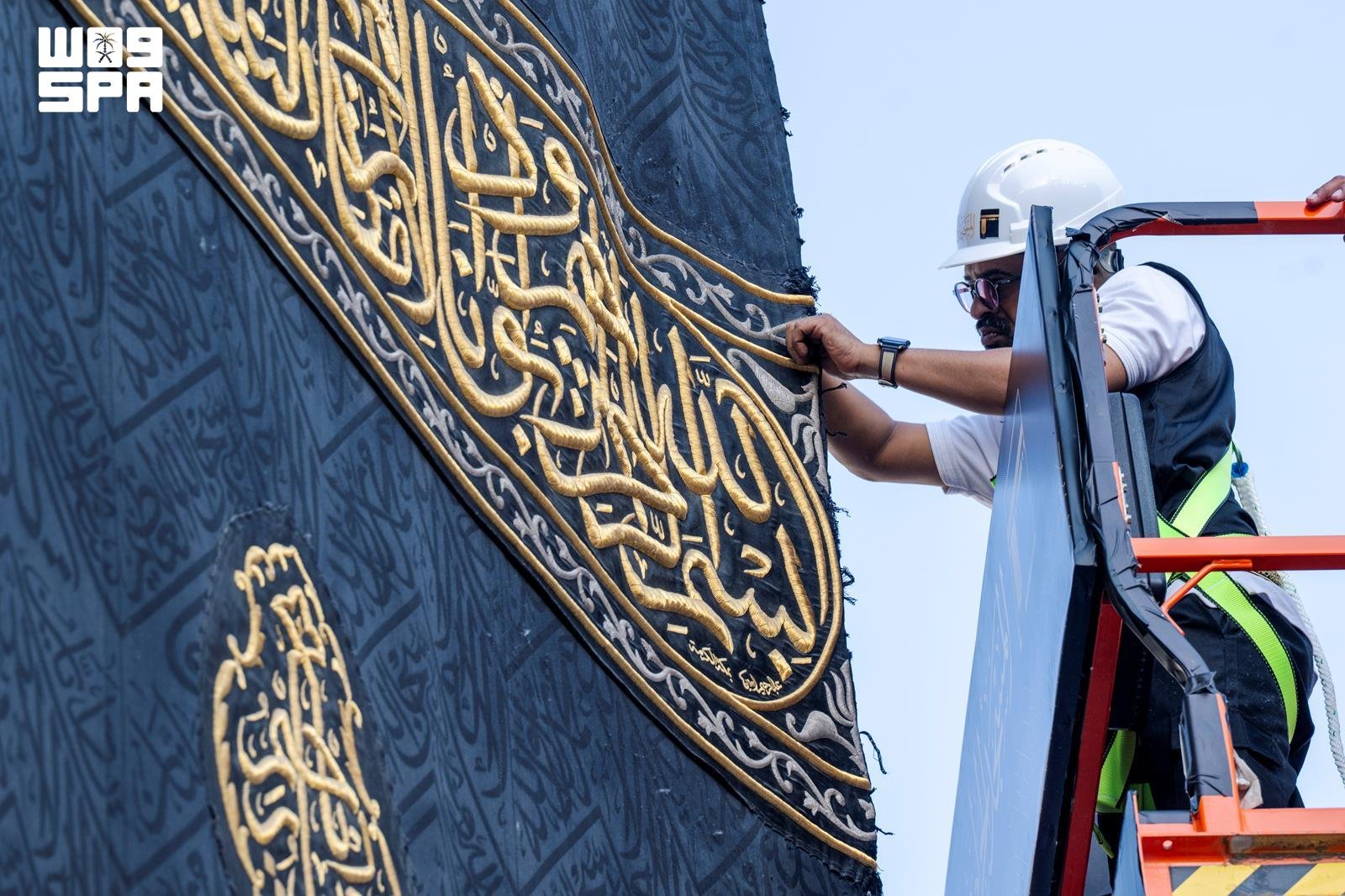
In a scene that is repeated once a year, and is awaited by the eyes of Muslims around the world with the dawn of the new Hijri year, specialized Saudi fingers come to the forefront of the event to perform one of the tasks most closely linked to the sanctity and greatness of the place, as they carry out the final stages of changing the covering of the Kaaba, in an exceptional field trip that culminates long months of meticulous work before the ancient house takes on its new garment.
As the time for changing the kiswa approaches, the surroundings of the Holy Kaaba turn into a delicate workshop in which artistic expertise intersects with historical and religious responsibility. The importance of this task is not limited to its artistic aspect only, but rather it represents the last link in a long series of works that begin within the King Abdulaziz Complex for covering the Holy Kaaba, where the kiswa proceeds through multiple stages that include preparing natural silk, dyeing, weaving, embroidery, and assembling its parts, before it reaches the most present and influential moment, which is the moment of its transition from the halls Manufacturing the walls of the Holy Kaaba, transforming it from a unique artistic product into a landmark of faith seen by millions of Muslims around the world.
The scene of the installation of the kiswa reflects the amount of care that the Kingdom has given to this work over the decades, as it is no longer just a matter of replacing one garment with another, but rather it has become an integrated system of specialized national expertise that deals with the finest engineering and technical details associated with the kiswa, starting with the lifting and fastening mechanisms, passing through the locations of the links, decorations, and embroidered verses, and ending with adjusting the visual consistency of all components of the garment around the corners of the Holy Kaaba.
The value of the national element behind this exceptional mission is highlighted in this scene, as the installation work requires cadres with precise knowledge of the characteristics of the cladding, its parts, and its installation mechanisms, as well as field experience that ensures that the work is carried out in a specific time and according to the highest levels of precision and professionalism, which has made this mission an advanced model of Saudi efficiency in serving the Two Holy Mosques.
The scene acquires a special human dimension for the workers participating in it, as many of them view this task as the honor of a lifetime and a responsibility unlike any other responsibility, as they stand close to the Holy Kaaba as they deal with its new dress piece by piece, in moments in which feelings of pride and pride are mixed with the reverence and prestige of the place, turning the working hours into an exceptional experience that remains firmly established in the memory.
The annual change of covering reflects a renewed cultural concept that combines preserving the ancient Islamic heritage and benefiting from advanced national experiences, as this occasion is embodied in an image of continuous care for the ancient house, in a way that preserves its status and enhances its visual and symbolic presence in the conscience of Muslims.
With the completion of installing the kiswa and hanging it on the walls of the Holy Kaaba, the curtain falls on a long chapter of continuous work, and a new journey begins for the kiswa that will remain for a whole year bearing witness to the efforts of Saudi fingers that have harnessed their skills and experience to serve the holiest parts of the earth, in a scene with which the meanings of care, attention and mastery that the Kingdom has given to the Holy Kaaba and its covering for many decades are renewed annually.