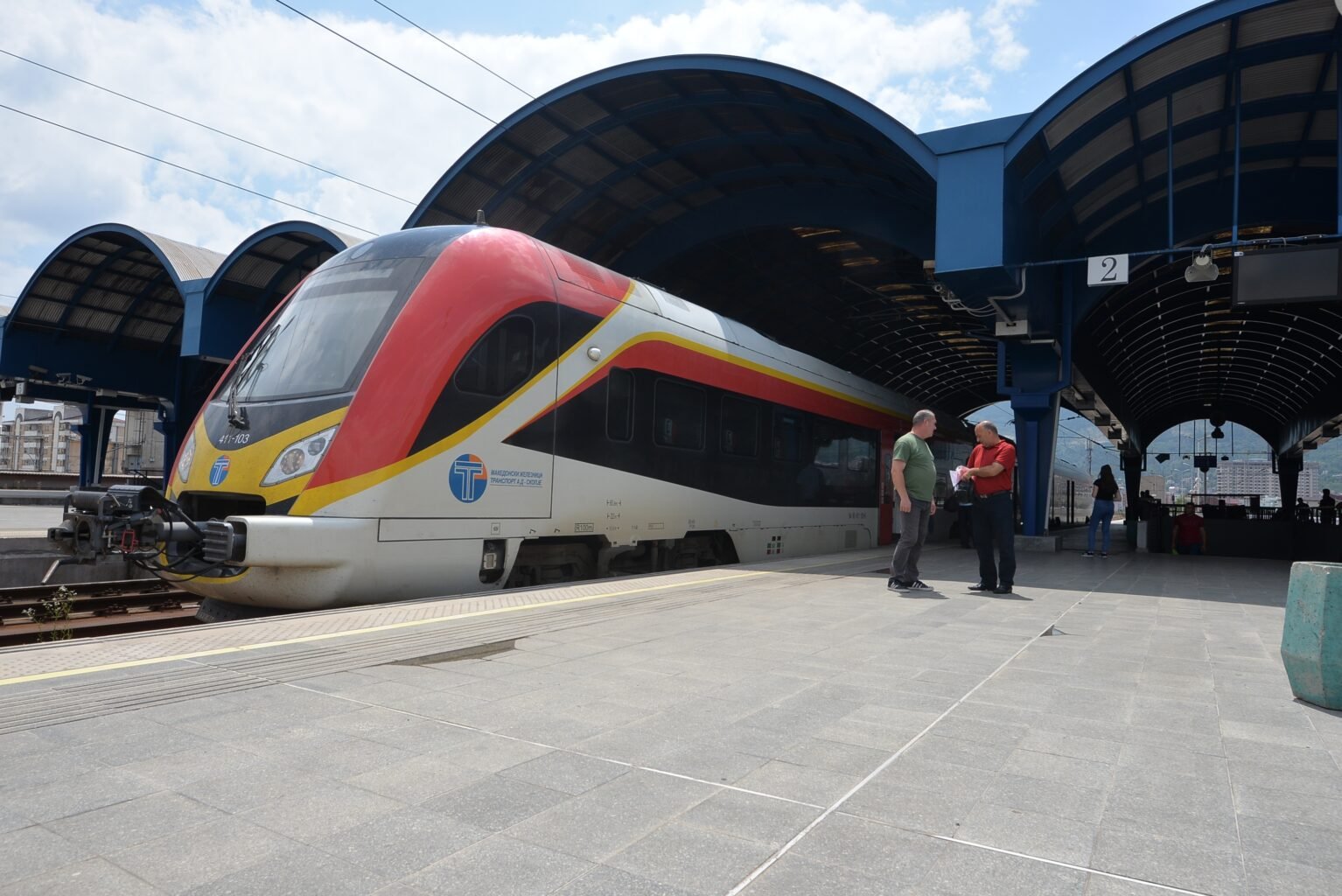
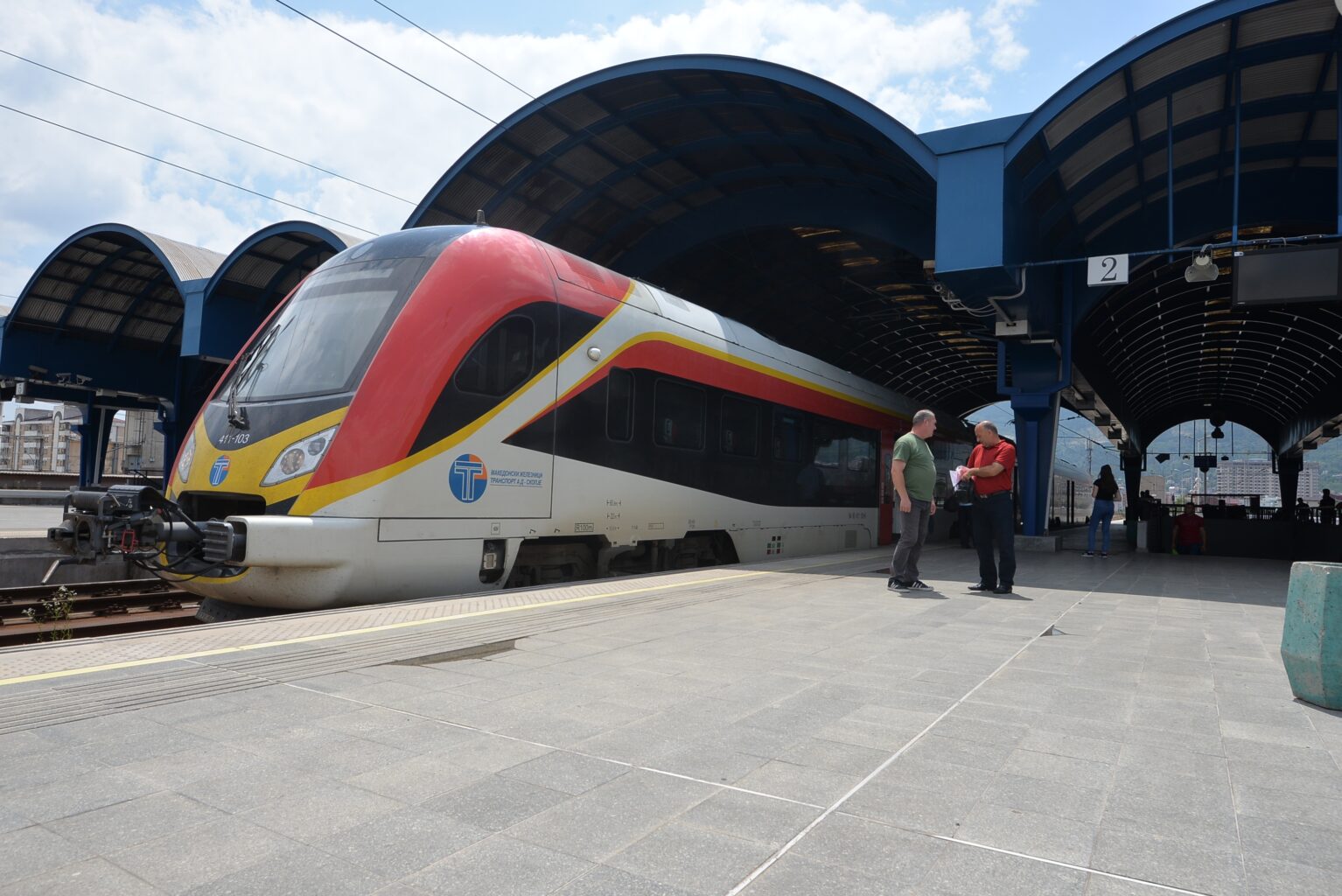
In just five minutes by train from Madžari to the center of Skopje, as opposed to several longer journeys by bus along the same route. Such a practical comparison was made today by representatives of the media within the “Traffic for All – Skopje” conference, organized by the “Go Green” association, in order to show the potential of public transportation and the need for its modernization.
The tour started with a JSP bus on the route Karposh 4 – Majari, along the route planned for the future bus rapid transit system (BRT). From there, the participants transferred to a train that arrived from Madžari to the Railway Station in Skopje in approximately five minutes, while the bus was still on the way.
The expert on urban sustainable mobility from “Go Green”, Darko Arsovski Petrovski, emphasized that the activity is part of the third edition of the regional conference “Traffic for All”, which is being held in the country for the first time this year.
– We had the opportunity to travel along the route of the future BRT system, and then to reach Skopje from Madžari by express train in just five minutes. Such comparisons clearly show how much more efficient rail transport can be in conditions of increasing traffic congestion – said Arsovski Petrovski.
“Go Green” believes that the introduction of BRT and the development of the city train are key steps for returning citizens to public transport and reducing traffic pressure in Skopje.
The Director of Railways at the Public Enterprise for Railway Infrastructure – Skopje, Ivana Bikoska, indicated that the “City Train” project is one of the most significant infrastructure projects for improving public transport in the Skopje region.
She informs that the first phase of the project, on the Zelenikovo – Skopje section, is 90.88 percent completed.
– Work is underway on the upper part of the railway, i.e. replacement of wooden sleepers with concrete sleepers and selective replacement of worn-out elements. The deadline for commissioning remains September 1 – said Bikoska.
According to her, the procedure for selecting a designer for the preparation of the technical documentation for the remaining two sections – from Volkovo through Gjorce Petrov and Skopje North to the center, as well as from Miladinovci through Ilinden and Madžari to Skopje – is underway.
The director of passenger traffic, Gorancho Jovanovski, emphasized that rail transport offers a significantly higher capacity and shorter travel time compared to buses.
– According to the timetable, the buses cover this route in about 65 minutes, and their capacity is four times smaller than that offered by the railway transport – said Jovanovski.
He confirmed that for the start of the city train, planned for September 1, rolling stock has already been provided, while parallel procedures for the procurement of new compositions are being conducted.
– In the initial phase, two trains will run in the morning hours, and in the rest of the day one train each, until the fleet is completed – Jovanovski pointed out.
The price of the tickets, as he added, has not yet been determined and will be defined in coordination with the City of Skopje and the Ministry of Transport.
In the meantime, some residents of the Municipality of Aerodrom expressed concern about the planned BRT route in Novo Lisice. They warned that the construction of the last stop, the depot and the service center could occupy a part of the “Paradise Garden” park.
The resident of Novo Lisice, Dimitar Samardziev, said that there is an alternative solution.
– We support BRT and we want better public transport, but not at the cost of destroying one of the largest green areas in the city. On the other side of the street there is state land of over seven hectares, which is enough for the construction of the stop and the depot – said Samardziev.
He appealed to the city authorities to consider the proposal while the preparation of the General Urban Plan is still underway.
The “Traffic for All – Skopje” conference aims to open a wider debate about the future of urban mobility in the capital and the possibilities for creating a faster, more efficient and more sustainable public transport system.