Pakistan, which acts as a mediator between Washington and Tehran, announced that both parties will sign a memorandum of understanding to end all hostilities, although the specific details of the agreement are still unknown.
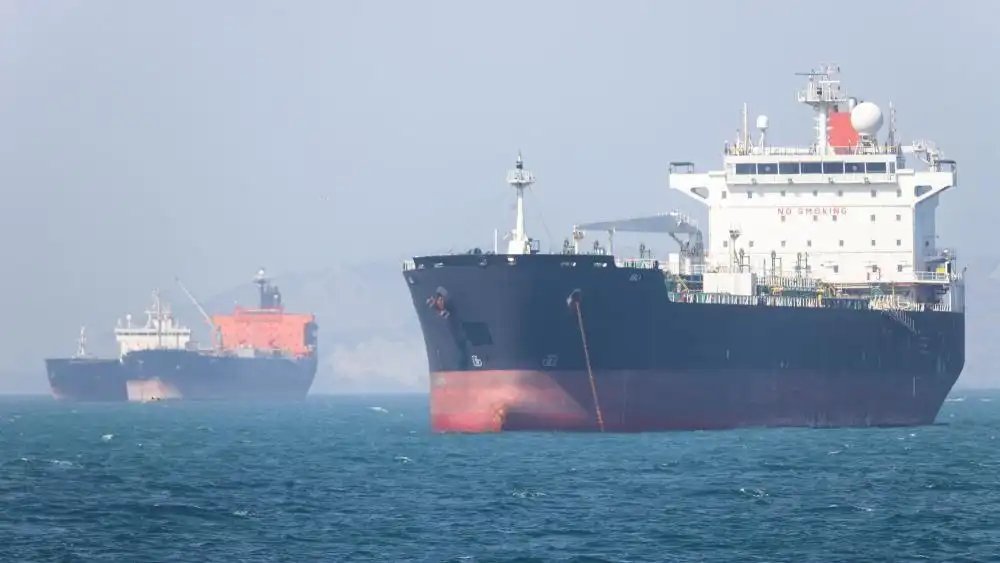
The president of the United States, Donald Trump, reported this Sunday that he reached an agreement with Iran to reopen the Strait of Hormuz.
However, the agreement goes beyond the opening of the Strait of Hormuz, since the Prime Minister of Pakistan, Shehbaz Sharif, who has acted as a mediator between Washington and Tehran, confirmed this Sunday from Islamabad that both countries reached a peace agreement that puts an end to the armed conflict in the Middle East. “Both sides have declared the immediate and permanent termination of military operations on all fronts, including Lebanon,” the official said, according to the agency.
Iranian Vice Foreign Minister Ali Gharaibabadi assured that the text will be ratified on the aforementioned date and announced that the immediate and permanent end of the war and military operations on various fronts, including Lebanon, will be declared as of tonight.
Trump’s announcement
In a publication on his social network Truth Social, the US president explained on Sunday that, in exchange for the reopening of the Strait of Hormuzthe United States will lift the maritime blockade imposed on the entry and exit of ships in Iranian ports.
The pact, which US President Donald Trump had pushed to be announced this Sunday, his 80th birthday, comes after several weeks of exchanges of drafts and contradictory statements between both parties.
“The agreement with the Islamic Republic of Iran is now complete. Congratulations to everyone! I hereby fully authorize the toll-free opening of the Strait of Hormuz and simultaneously authorize the immediate lifting of the United States naval blockade. Ships of the world, start your engines!” “Let the oil flow!” Trump wrote. without offering more details.
Iran’s announcement
The Iranian vice foreign minister confirmed this Sunday that the text of the final memorandum of understanding between Iran and the United States has been completed and that The official signing of the Islamabad Agreement will take place on Friday, June 19 in Switzerlandas reported by the Iranian Fars news agency. The official announced that “the immediate and permanent end of the war and military operations on various fronts, including Lebanon, will be declared as of tonight.”
CONTENT FOR SUBSCRIBERS
Furthermore, the lifting of the naval blockade constitutes another element of the agreement reached, he added. The vice minister anticipated the publication of the text of the memorandum: “We will soon publish the text of the understanding agreement and the people will see how many achievements we have obtained and how many commitments we have assumed.”
He warned, however, that Iran will respond decisively “wherever there is non-compliance” by Washington.
For its part, the Secretariat of Iran’s Supreme National Security Council confirmed in a document that “the war and military operations on all fronts, including Lebanon, will end immediately and permanently as of tonight” and added that “the maritime blockade against Iran will be lifted immediately and completely.”
Unknowns of the agreement
Despite the announcement of the agreement, many unknowns remain about the details of the memorandum.
The US administration had set as the main objective of the negotiations to get the Islamic Republic to renounce any ambition to obtain a nuclear weapon and hand over its enriched material to the United States for destruction. Iran, which has always maintained that its nuclear program is for peaceful and scientific purposes, has demanded that the United States lift economic sanctions and release billions of dollars in blocked Iranian funds, but Washington has so far ruled out facilitating the delivery of money to Tehran.
They warned of risk
Hours before both announcements, Iran warned that, if the United States does not fulfill its commitments in Lebanon, the agreement is in danger, referring to Israel’s attack on Lebanon, while Trump indicated that this attack should not have happened.
The Iranian chief negotiator in the peace talks, Mohamad Baqer Qalibaf, stated this Sunday, June 14, that it is “impossible to talk about moving forward” with the United States in search of an agreement if it does not fulfill its commitments in Lebanon. country that Israel attacked again this day.
Israel’s attack and Iran’s reaction came a day after US President Donald Trump announced that an agreement with Iran would be signed this Sunday.
Meanwhile, Trump stated that today’s Israeli attack on Beirut, the capital of Lebanon, “should not have happened, especially” on the day the United States and Iran are expected to sign a peace agreement.
“This morning’s attack on Beirut should not have happened, especially on such a special day when we are so close to reaching a peace agreement. Israel has the right to defend itself from threats, but the attack it was responding to was very light and insignificant; no one was injured or killed,” the president wrote on his Truth Social network in the morning.
CONTENT FOR SUBSCRIBERS
“We are very close to an agreement that will bring peace to the region, including Lebanon, and all parties should remain calm (…). This could be the beginning of a long and beautiful peace. “Let’s not blow it!” Trump added.
Meanwhile, Qalibaf said in
The president of Iran’s parliament also stated that Israel’s new attacks against the Dahye neighborhood of Beirut “have shown once again that the United States lacks either the will to fulfill its commitments or the ability to do so.” And he assured that Washington “cannot obtain concessions by giving the green light” to Israel. “The ‘good cop, bad cop’ tactic has become obsolete,” he said.
Conflict context
The agreement seeks to end the war started last February 28after the offensive launched by the United States and Israel against Iran, which resulted in the death of the supreme leader of the Islamic Republic, Ayatollah Ali Khamenei, in power since 1989.
Tehran, which appointed the Ayatollah’s son, Mojtaba Khamenei, as its new leader, responded with attacks against Israel and countries in the region that host US bases, in addition to blocking the Strait of Hormuz. This closure has caused serious economic disruptions, given that around 20% of the world’s oil transits through this route.
The United States and Iran, which agreed to a ceasefire last April, have negotiated in recent months a pact to end hostilities and reopen the Strait of Hormuz.