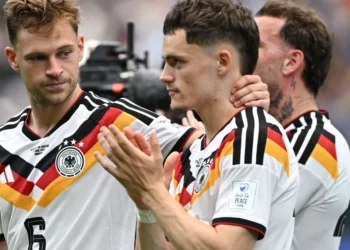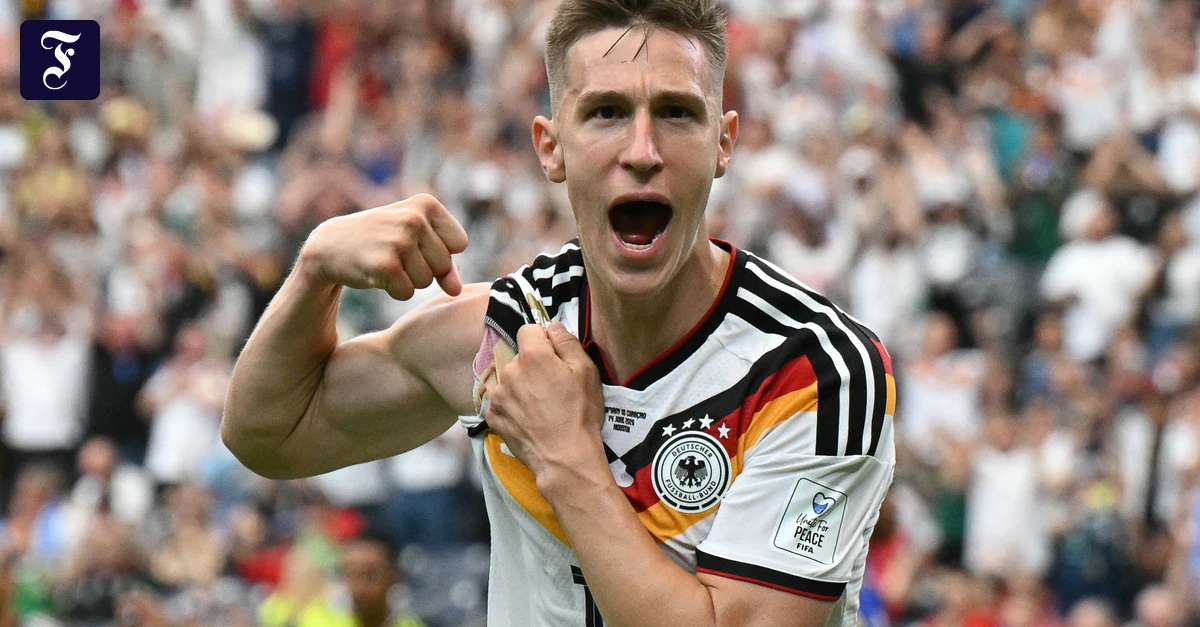
When Felix Nmecha sent the ball on a perfect trajectory after just under six minutes, it looked like the German national team was off to a rocket start in this World Cup. Suitable for the venue, the space city Houston“Major Tom” boomed from the loudspeakers for the first time: the goal anthem that the Germans brought with them to the United States.
And because it followed six more times, after Nico Schlotterbeck’s goals (38th), Kai Havertz with a penalty kick (45th + 5th), Jamal Musiala (47th), Nathaniel Brown (68th), Deniz Undav (78th) and Havertz again (88th), it was an opening that made you want more – not least the German himself.
In addition to the sometimes fine goals in the 7-1 win against Curaçao, what was noticeable was the joy with which they were received by the national players and their coach Julian Nagelsmann. You could see that a team here is looking forward to the tasks ahead. Thanks to the high result, this first win should mean qualification for the knockout round.
In the end, what was almost lost in the overall picture was that, in addition to the diverse samples of what heights they were capable of, the Germans also received a unique reminder for the rest of their journey. The interim equalizer by Livano Comenencia (21st) and even more so the phase that followed showed how quickly the earth could have it back if better opponents come than the 82nd in the world rankings.
But even if this performance on Sunday at the unusual midday hour was not completely weightless: the Germans were able to make the return flight from Texas to their quarters in North Carolina with an uplifting feeling, especially when compared to previous tournaments.
In any case, it was helpful that this World Cup had a “soft opening” for Nagelsmann and his team, a comparatively gentle start – unlike 2018 and 2022, when the opening defeats against Mexico and Japan were already the beginning of the end. This time, as is well known, the eight best third-placed teams in the twelve preliminary round groups advance.
Pleasant football climate
And when it came to the conditions, the Germans in Houston still played in their comfort zone. While it was sweltering outside at 32 degrees Celsius, there was a pleasant football climate in the air-conditioned NRG Stadium. That will change at the next stops, on Saturday in Toronto against the Ivory Coast and then on the following Thursday in the final stadium in New Jersey against Ecuador. Then it will perhaps also become clear how much the positive effect on the internal climate can have an impact on further performance on the pitch.
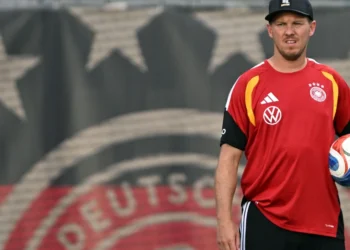
In any case, the national coach said afterwards: “An opening win is always important, we are happy that we achieved it. I congratulated the team from the bottom of my heart. The togetherness they have is extraordinary.”
The premiere, which was also Nagelsmann’s first ever World Cup game, got off to a good start for the Germans. From the kick-off they created a good dynamic of control and acceleration. Brown in particular on the left provided a lot of forward momentum, Nmecha was the center of strength and creativity in midfield, and after a few approaches it looked easy for him to put his team in the lead. A simple pass to Wirtz, a simple touch back, then a well-placed push with the inside of the right foot, and the ball was on its way towards the far corner. After that, the Germans initially maintained the momentum, Nmecha, Sané and Wirtz had chances to increase the score to 2-0.
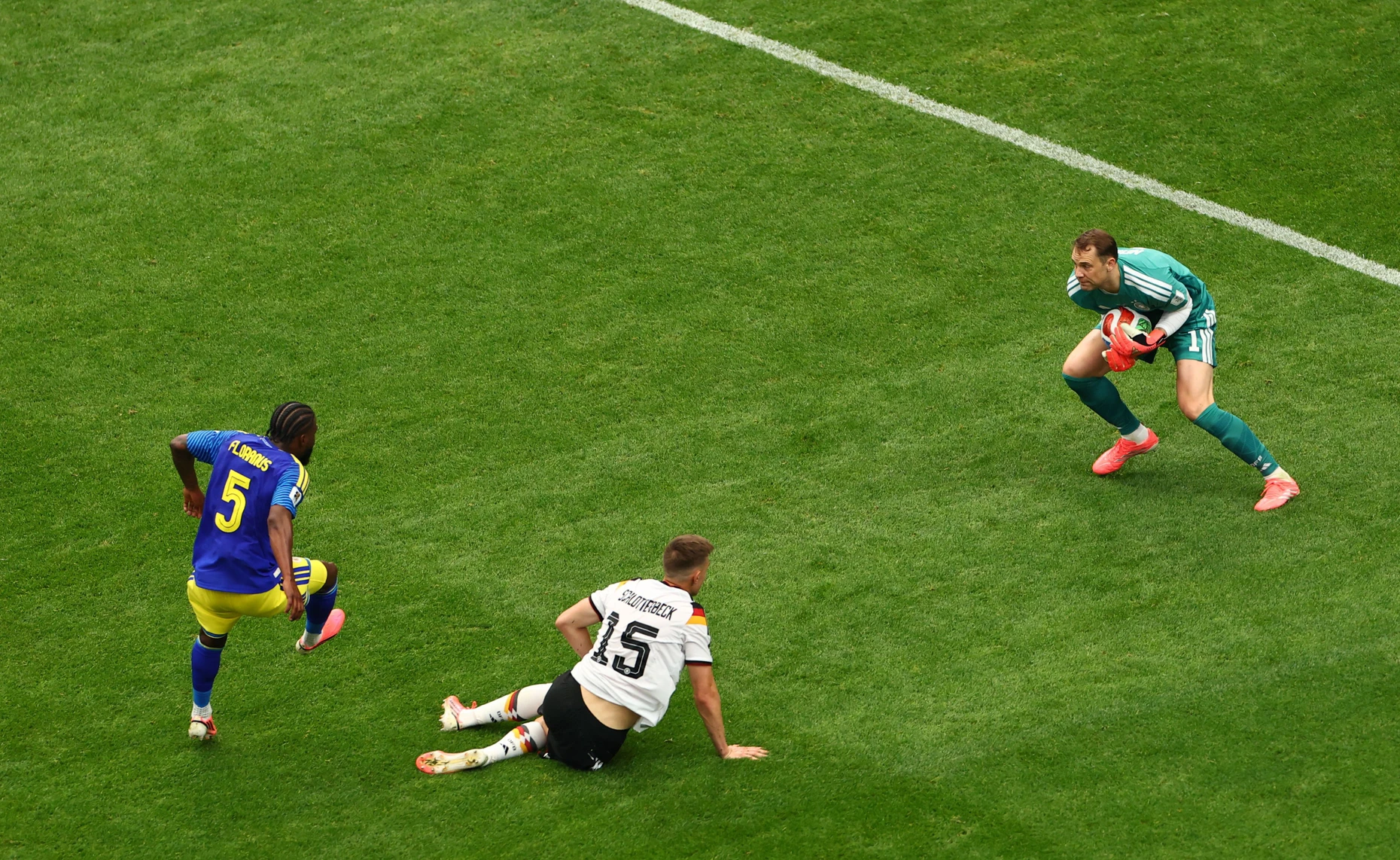
But then a certain negligence crept in. The ball was now with the opponent more often, and the opponent showed that he knew what to do with it – keyword: Dutch football school. After 21 minutes, the man in the green jersey with the number one looked up, a bit stunned. Manuel Neuer had previously been able to watch this game without doing anything, but when the first ball hit his goal, it was straight into the net. There were unfortunate circumstances that favored the goal: the fact that Curaçao remained in possession of the ball after Schlotterbeck’s clearance, as well as Kimmich’s touch, which deflected Comenencia’s shot. But the fact that it got this far also had something to do with careless defending; specifically, it was Schlotterbeck who wasn’t consistent enough.

The hit did not leave the Germans unscathed, and for a while her presentation seemed disjointed. Although Wirtz and Musiala still created situations that could have become something, it no longer looked coherent. It wasn’t just Havertz and Sané who lacked a connection during this phase, Kimmich had also been seen as more influential. It was fitting that the renewed lead came from a standard situation. When Brown kicked the corner and Schlotterbeck ran towards the goal, the movements were perfectly coordinated. And when Nmecha went down after a foul in stoppage time, it was a welcome invitation to Havertz.
After the break, the Germans immediately and decisively picked up where they left off. The fact that Musiala scored straight away probably didn’t boost hopes of a rising tournament curve – but not just for him. Now everything seemed to be easy for the Germans, including changing correctly. After 64 minutes, Undav came on for Musiala, who was substituted “not because of an injury,” as the national coach later emphasized, and immediately inserted himself with maximum efficiency: the assist for Brown’s goal, his own to make it 6-1 and another assist for the final point that Havertz set.