
Freddie Daley is a football fan and environmental scientist. He also wants his eight-month-old daughter to love her the beautiful game give. But British Daley fears that she will not be able to enjoy the game in the same way he did in his youth. “Many amateur football matches were canceled in the United Kingdom last winter due to flooding, which is a result of climate change.”
Daley sees how international top football continues to boom. Despite the “climate emergency”, sport is becoming increasingly polluting in a way that he believes will soon prove unsustainable. There is no concern among the larger football public for the time being. But the upcoming World Cup could be a turning point, Daley thinks. “Players and fans will have to deal with such warm conditions that it will be impossible to ignore.”
In a recent publication from World Weather Attribution scientists calculate that about 26 of the 104 matches will take place at a so-called ‘Wet Bulb Globe Temperature’ (WBGT) of more than 26 degrees – a measure of perceived heat that takes into account humidity, wind and solar radiation. During an estimated five matches, the WBGT will rise to 28 degrees, which leads to serious risks of heat stress for athletes and referees.
Also read
A new figure warns of dangerous heat forces
:format(webp)/s3/static.nrc.nl/wp-content/uploads/2026/05/29152616/290526WET_2034083587_hitte3.jpg)
In the first match of the Dutch national team, against Japan, the WBGT will “almost certainly” be 26 degrees, with water breaks recommended, and the chance of 28 degrees WBGT is one in three. The international players’ union FIFPro recommends postponing the match at that temperature, but FIFA’s own guidelines only do so at 32 degrees WBGT.
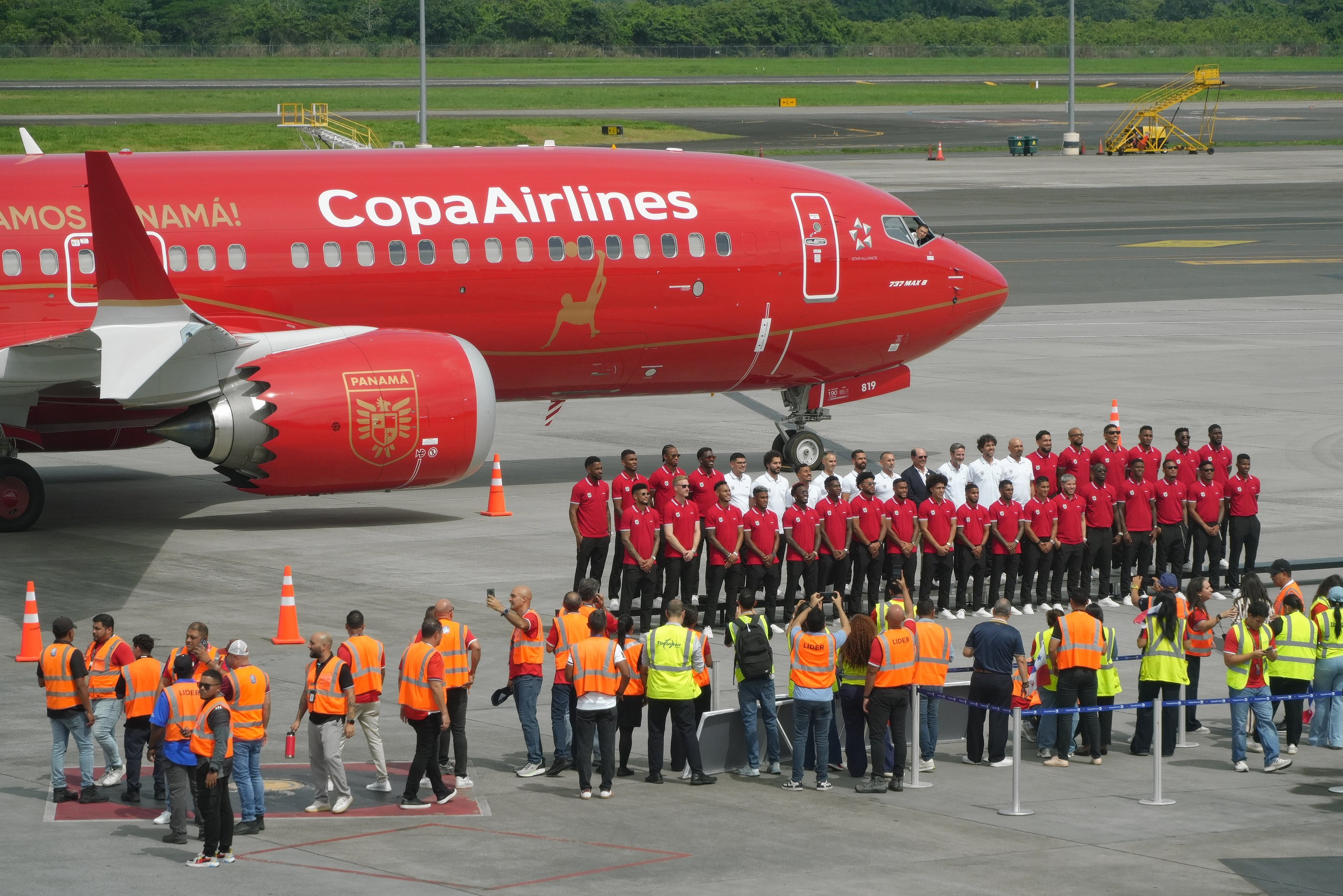
The Panamanian team leaves for the 2026 World Cup. It is the second time that Panama participates in the world championship.
Photo Aris Mariota/EPA
Climate scientist Theodore Keeping, one of the authors of the report, calls the threshold value of 32 degrees “absurd”. “It is an old value that has never really been looked at, because you never came close to it.” However, while many other major tournaments have adjusted that limit downwards in recent years, FIFA did not. The show must go onis the adage. And with a packed schedule, rescheduling a competition is organizationally complicated.
Read more
Dehydration and sunstroke
In addition to the players, scientists also fear for the fans, who will have to deal with the warm conditions. Dehydration and sunstroke lurk. FIFA decided this week that, despite an earlier decision, supporters are not allowed to take refillable plastic bottles into stadiums. FIFA wants to guarantee the safety of players and visitors, because the bottles can be thrown on the field. Scientists fear for the health of fans if they cannot find cooling in an accessible way.
“FIFA has done some things for players, but they haven’t done much for fans and others. It’s really up to fans to proactively take care of themselves,” says sports ecologist Madeleine Orr, author of How Climate Change is Changing Sportin the Pledgeball Podcast. To avoid dehydration, her advice is to prehydrate: make sure you get enough fluid before the competition.
To provide the footballers with some relief, FIFA decided to introduce water breaks before every match, twice for three minutes halfway between the first and second half. In an open letter Medical scientists say that breaks are too short for athletes’ bodies to really cool down.
Also read
FIFA is selling a global football celebration and fans are paying the price. ‘They want the color and the stories, but not the people themselves’
:format(webp)/s3/static.nrc.nl/wp-content/uploads/2026/06/02152930/030626BUI_2033798657_infantino_trump.jpg)
Existential threat
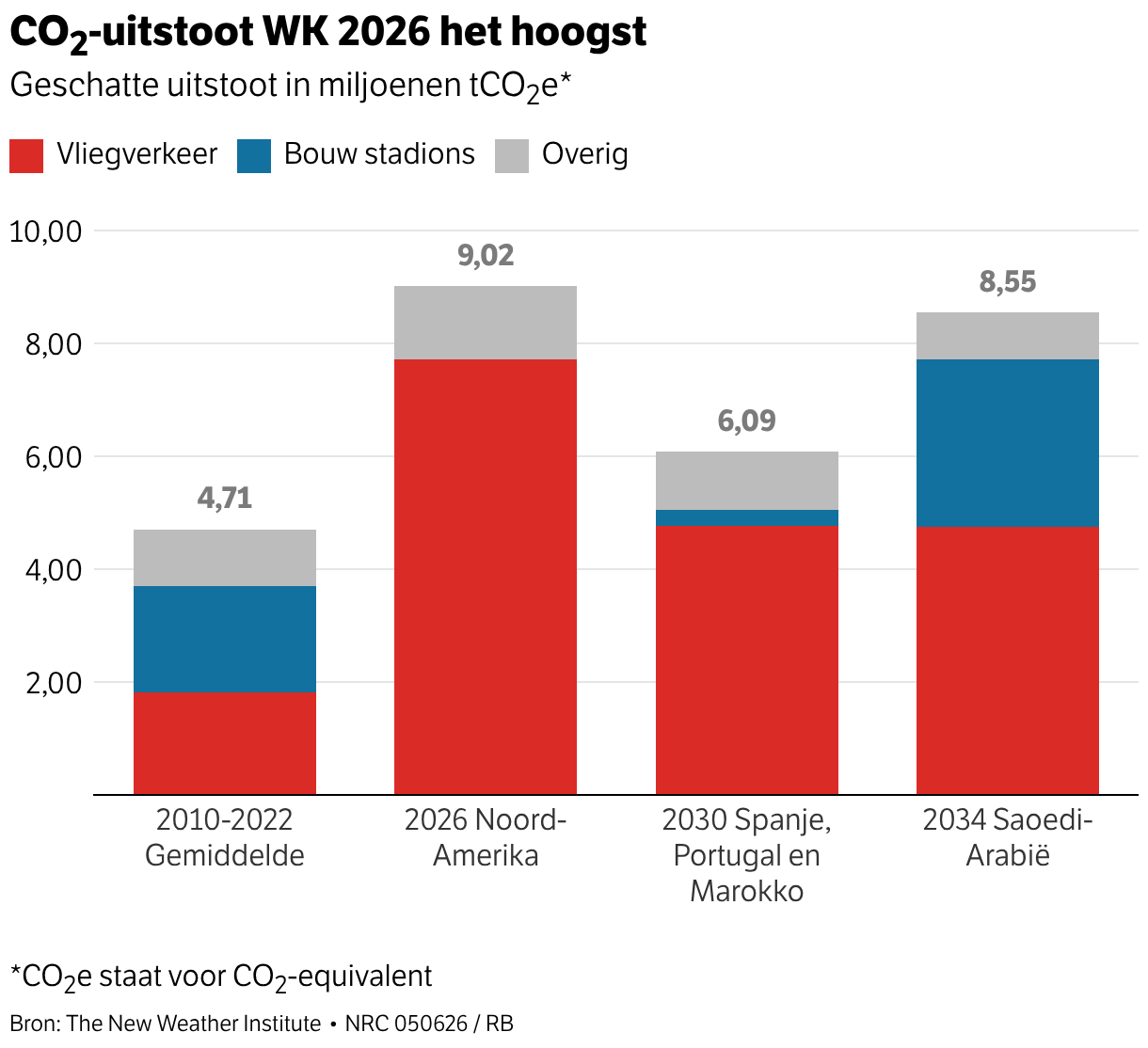
Players and fans are not only affected by global warming, the World Cup also contributes to it. Scientists, including Freddie Daley, calculated estimated WK emissions for the New Weather Institute in the report ‘FIFA’s Climate Blind Spot‘. They take the climate strategy that FIFA adopted in 2021 around the climate summit in Glasgow as a starting point. “Football is not immune,” said FIFA president Gianni Infantino at the time in a video announcing ambitious climate plans.
The scientists see that the plans at the time have largely come to a standstill or never got off the ground, while transparency about them is lacking. “Instead of confronting the existential threat,” FIFA is exacerbating it by adding fuel to the fire, the researchers write.
At the previous World Cup, in 2022 in Qatar, FIFA stated that it would organize a “completely CO₂ neutral” tournament. It turned out wishful thinkingat its best. Greenhouse gas emissions increased enormously compared to previous World Cups, partly due to the construction of new stadiums. This was evident from FIFA’s own now taken offline calculations. Moreover, the plans for CO₂ compensation were not valid. A Swiss advertising watchdog deemed FIFA guilty of deception with the claim about CO₂ neutrality.
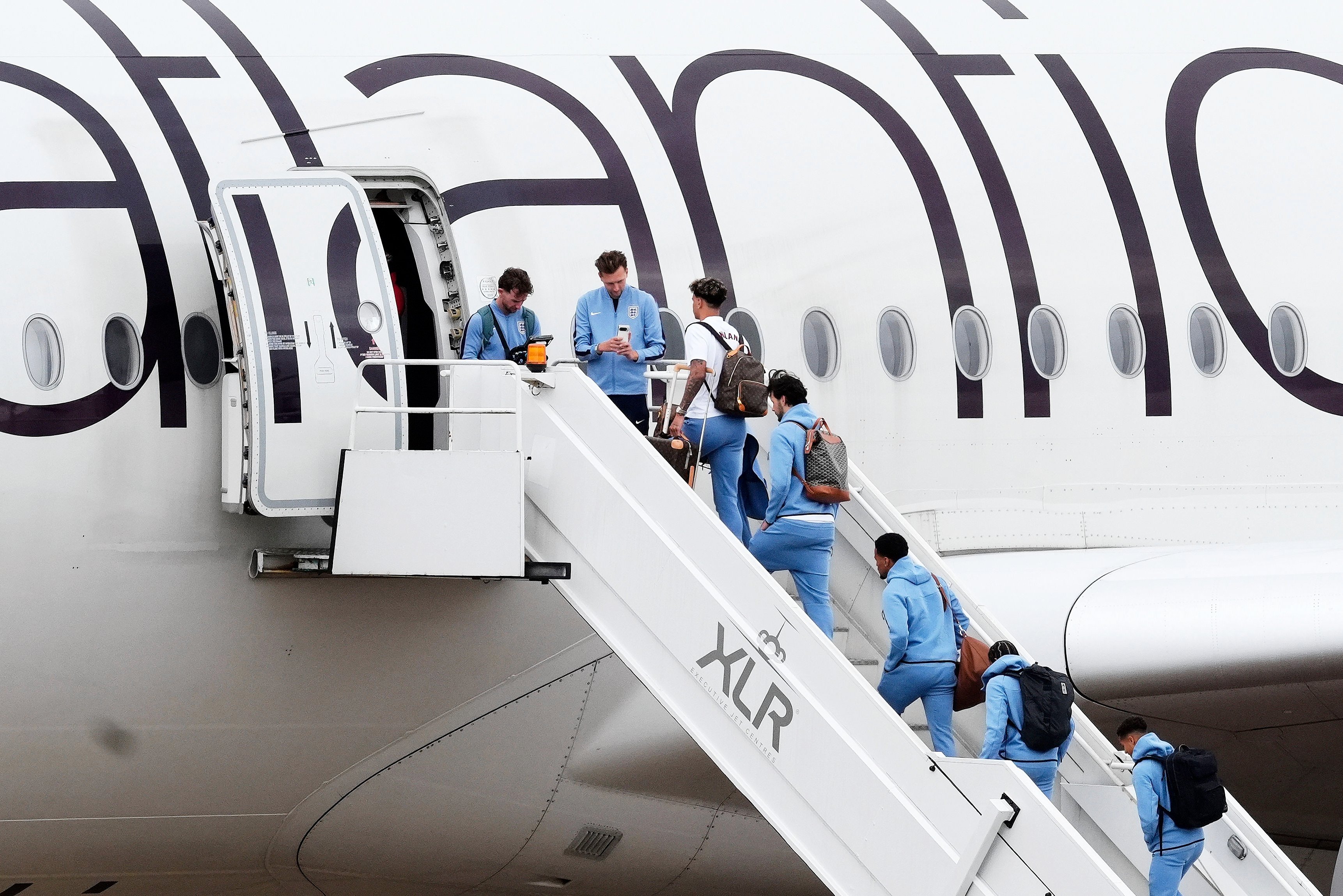
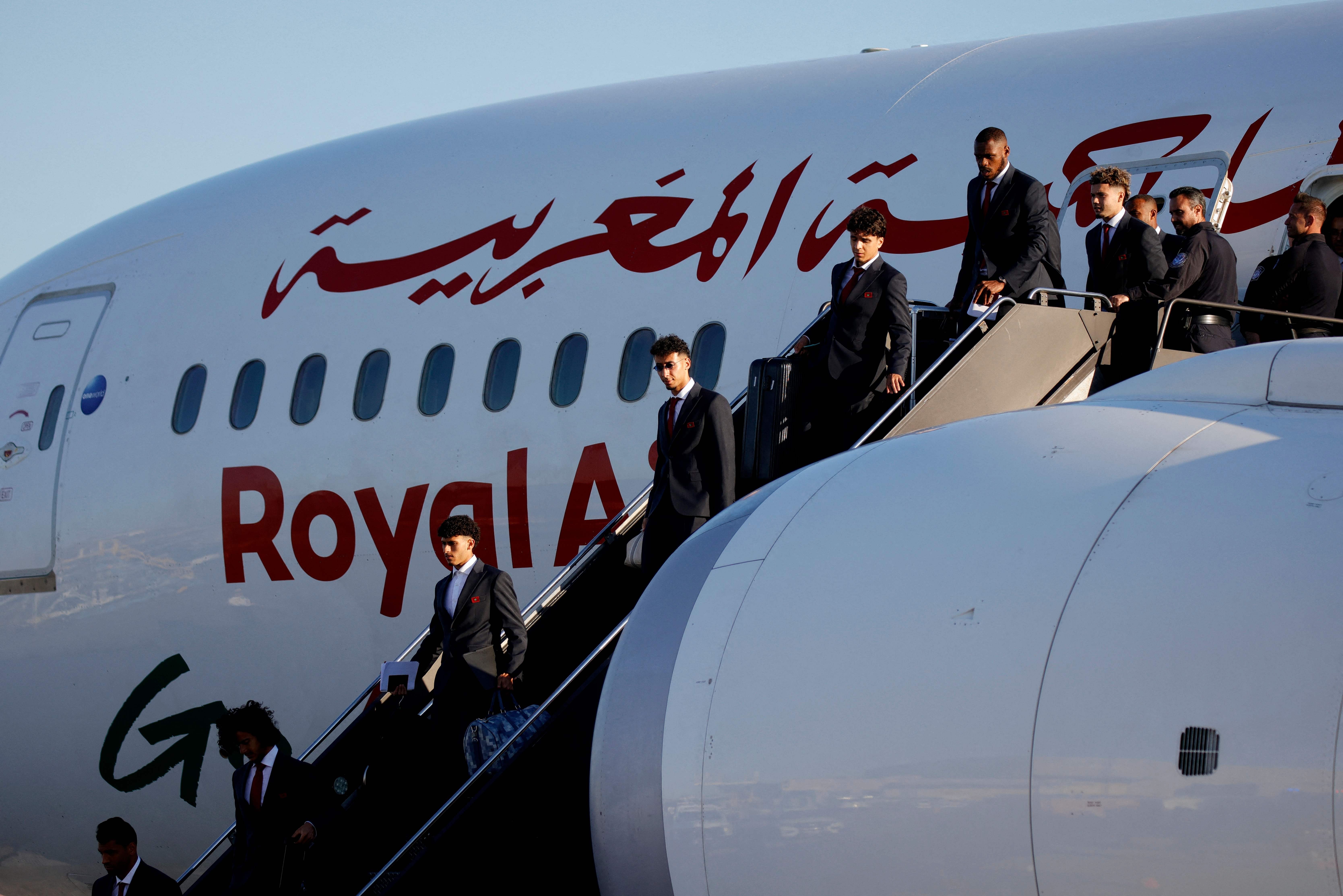
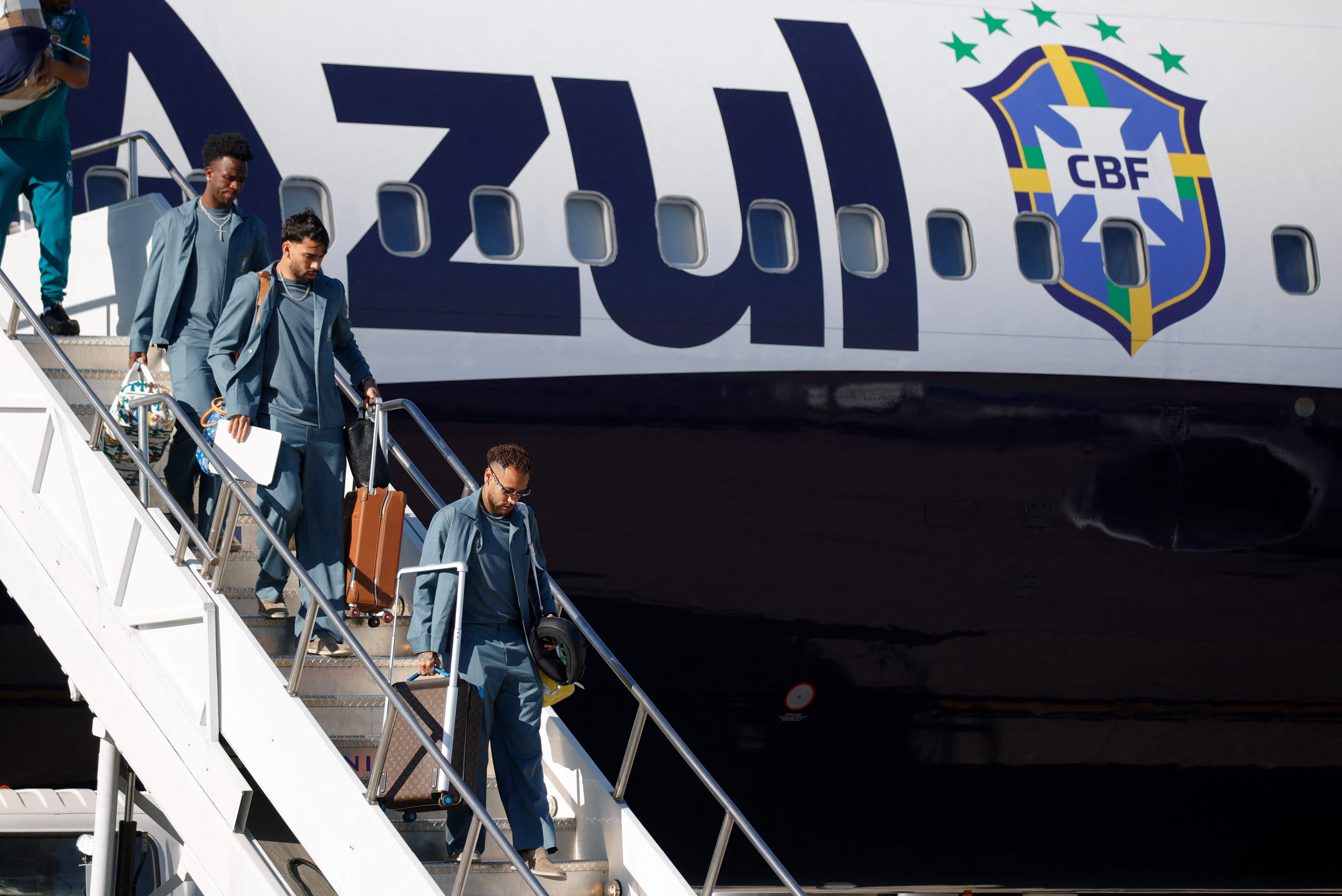
The England team leaves for the World Cup, players from Morocco and Brazil arrive in New Jersey.
Photos Nick Potts/AP, Leonardo MUNOZ/AFP
‘Public fiasco’
“Qatar has been a publicity fiasco,” says Frank Huisingh, who with his Fossil Free Football foundation is trying to mobilize football fans to make football climate neutral. In recent years, Infantino has been busy pleasing Crown Prince Mohammed bin Salman of Saudi Arabia, which is hosting the 2034 World Cup, and Trump – leaders with major interests in the fossil fuel industry. “Once Infantino had chosen those friends, he could no longer really do anything about climate policy. The Saudi economy is still built on oil money and the biggest donors to the Trump campaign were oil companies,” says Huisingh.
What did happen after the World Cup in Qatar: the tournament became bigger and bigger. The edition that starts on Thursday consists of 48 participants for the first time, compared to 32 in the past seven final rounds. There are 104 matches scheduled, versus 64 matches in Qatar. The sixteen host cities are spread across three countries, which means enormous travel distances for teams and the more than five million expected supporters. Despite not having to build any new stadiums, the upcoming World Cup is estimated to almost double the greenhouse gas emissions compared to the average emissions of the past four tournaments.
Bosnia and Herzegovina has to fly more than 5,000 kilometers for three group matches between Canada and the US. From Toronto to Los Angeles and Seattle. They set up their training camp in Salt Lake City. The Czech Republic has to fly more than 4,500 kilometers between Mexico and the US for the group matches. They start in Guadalajara and then play in Atlanta and Mexico City, their training camp is in Dallas.
Sponsorship deal Aramco
One of the FIFA sponsors that the Orange Legion will see frequently around the World Cup is Aramco, the state oil and gas company of Saudi Arabia. Aramco pays reportedly almost 100 million euros per year for the four-year agreement. “We will probably see players suffering from the heat and behind them a billboard for the largest oil company in the world,” says Huisingh of Fossil Free Football.
“Usually they are companies that want to sell us something. A credit card, or chips or cola or beer.” At Aramco it is different. “We football fans are not going to sign a contract with Aramco. So it is about Aramco and therefore Saudi Arabia to create an image, normalize themselves to increase their influence, and, for example, to frustrate climate policy.”
FIFA does not respond to questions from NRC about the follow-up to the climate strategy published in 2021 and the safety of players and fans. In general statements opposite international media the World Football Association emphasizes that it is ‘committed to protecting the health and safety of players, referees, supporters, volunteers and staff’.
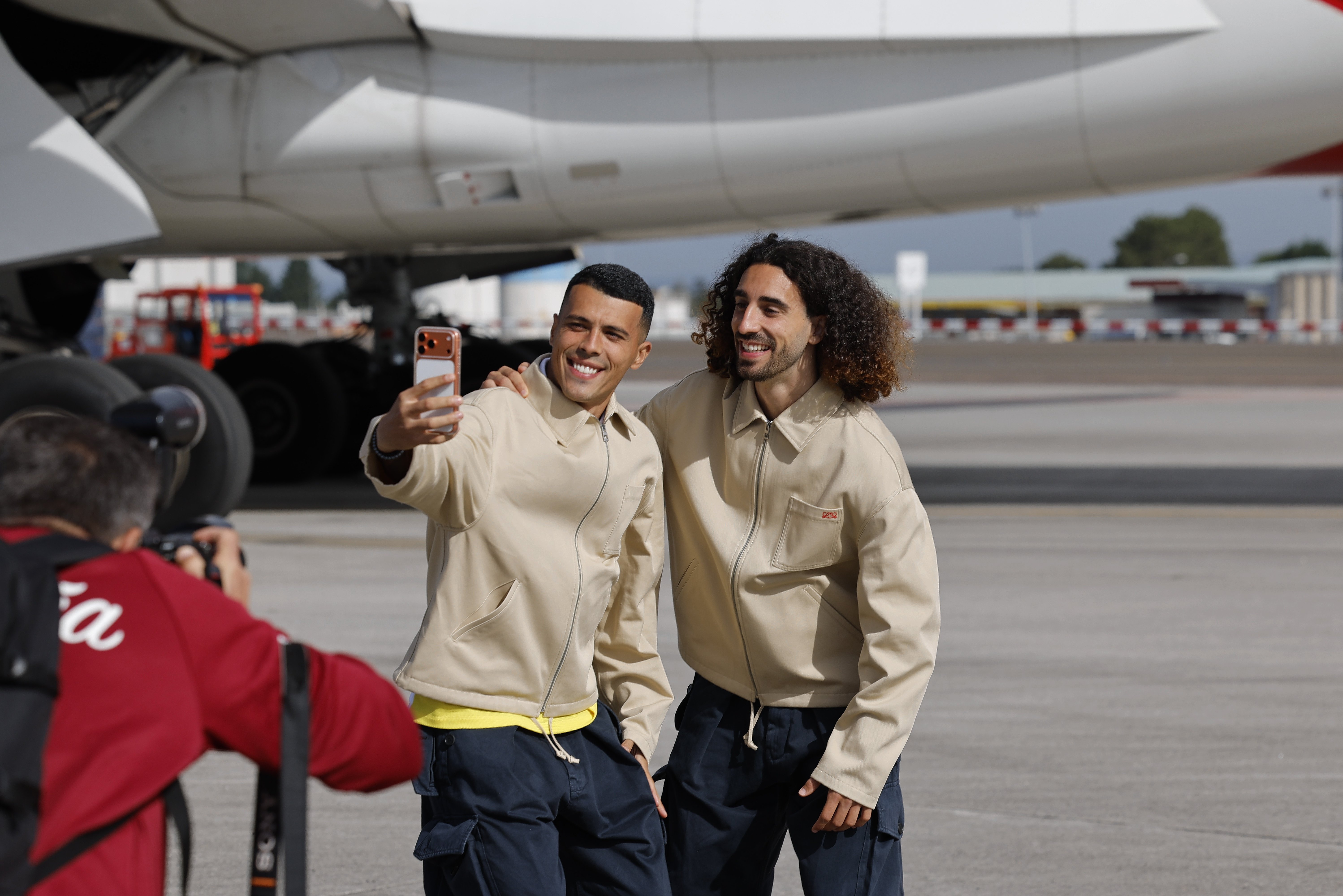
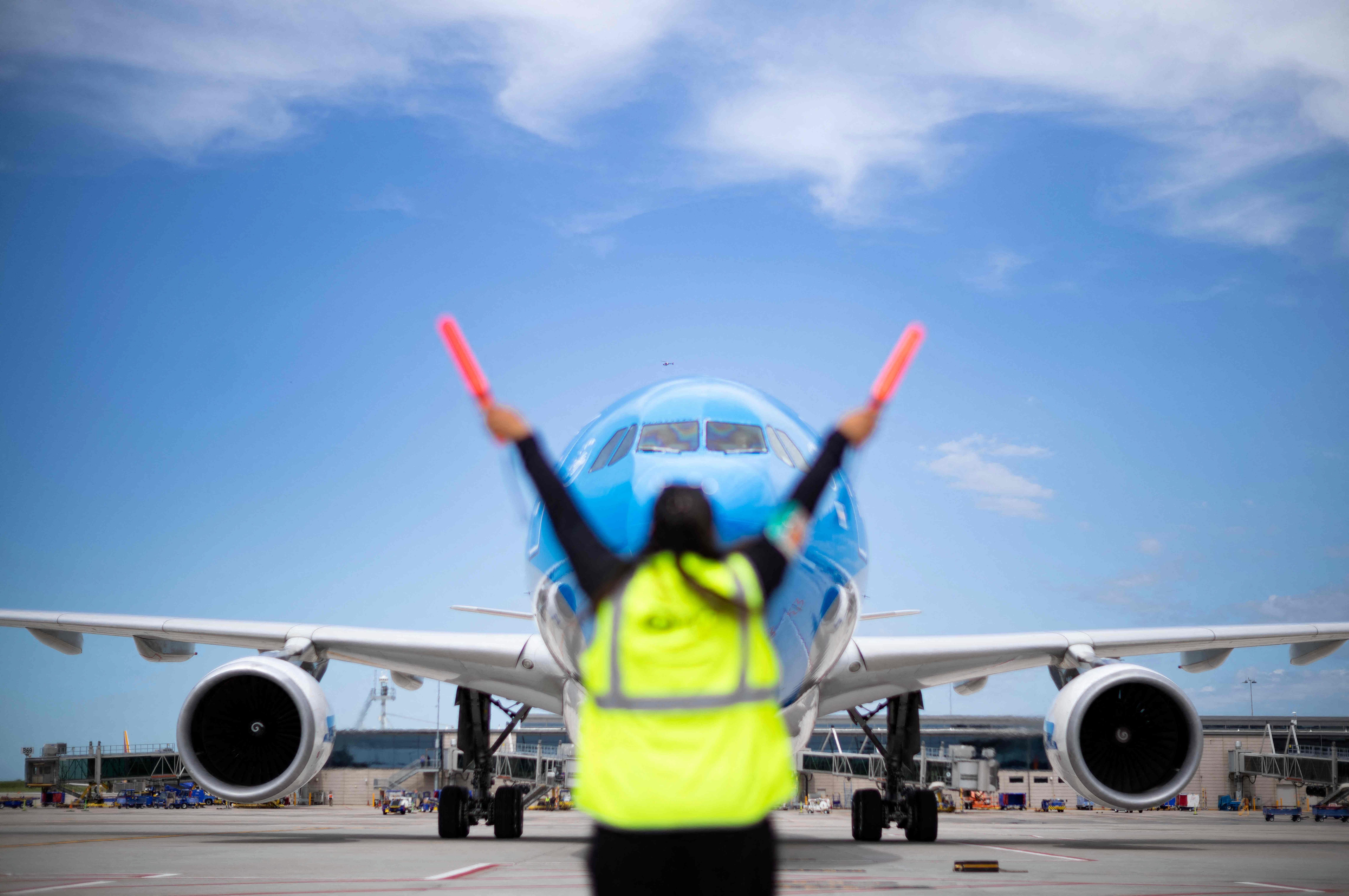
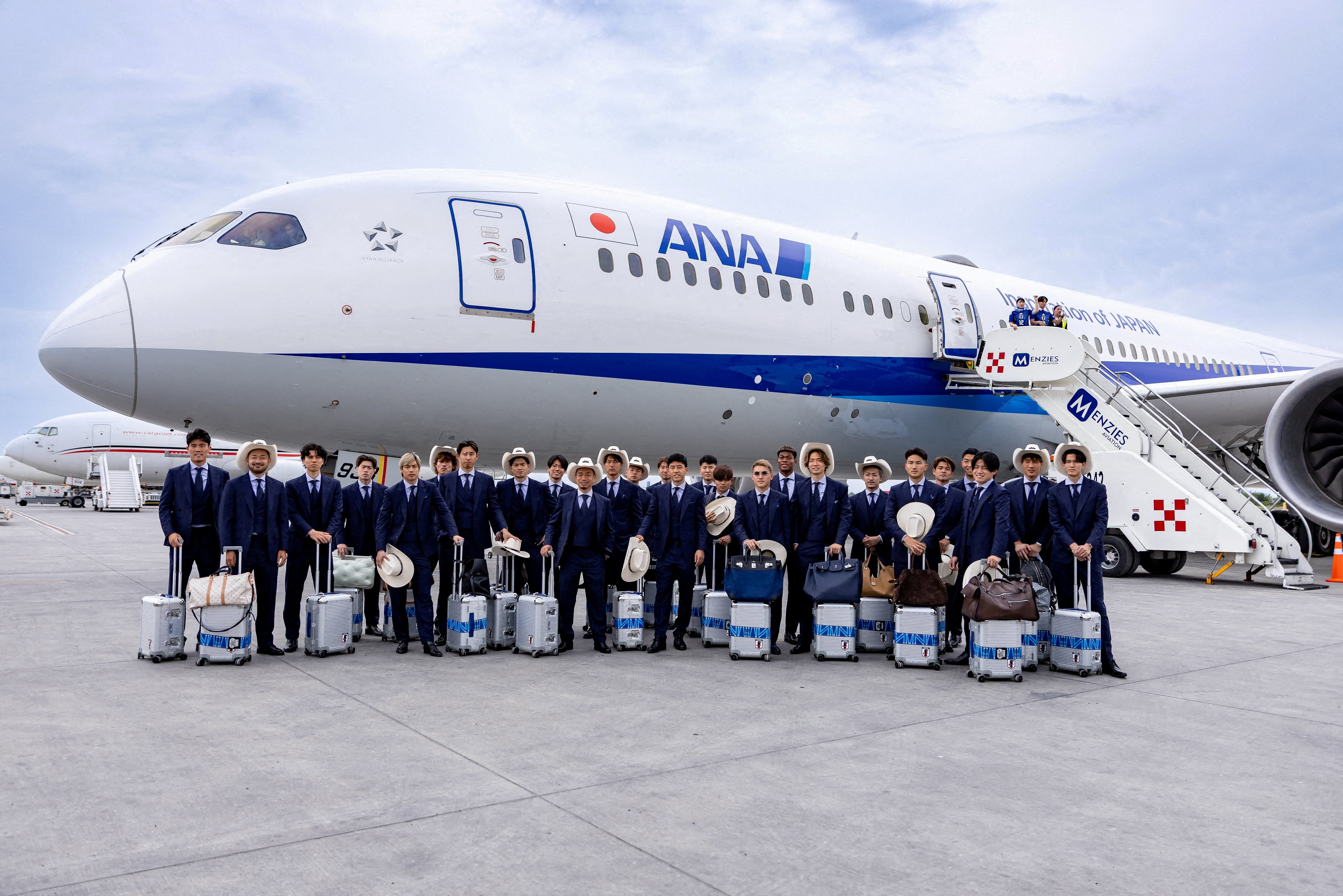
Spanish players Alex Grimaldo and Marc Cucurella before leaving for the World Cup, the Argentina team lands in Kansas, and the Japanese team arrives in Mexico.
Photos ANP/EPA, AFP, REUTERS
According to the scientists who criticize, it is crystal clear what FIFA should do. World Cups should be more geographically compact. A few countries could well share the organization, says Madeleine Orr in the Pledgeball Podcast. This has financial advantages, and if there is a good public transport network, it also has a smaller ecological footprint. But given FIFA’s direction in recent years, Orr fears that “these crazy multi-continental spectacles, which are not sustainable at all” will continue for a while.
At the World Cup in four years’ time in Spain, Portugal and Morocco, there will be slightly less flying, because the distances to be covered are smaller. But the three opening matches will take place in Argentina, Paraguay and Uruguay. Another four years later, in 2034, Saudi Arabia will host the World Cup. Then the expected greenhouse gas emissions, as calculated by the New Weather Institute, will be approximately as high as during the World Cup in Canada, Mexico and the US.
Also read
Kansas City, soon to be home to the Dutch team, is yearning for the World Cup
:format(webp)/s3/static.nrc.nl/wp-content/uploads/2026/05/18163616/250526SPO_2033229930_kansas3.jpg)
:format(webp)/s3/static.nrc.nl/wp-content/uploads/2026/06/05115240/050626SPO_2034099790_.jpg)
The Austrian national team boarded a plane to the United States in Vienna last Thursday.
Photo Max Slovencik/AFP