MOSCOW, June 11. /TASS/. The US and Iran resume limited military exchanges despite ongoing negotiations; India is weighing importing Russian LNG amid supply disruptions in the Middle East; and the US is seeking to deepen economic engagement with Central Asia through critical minerals cooperation. These stories topped Thursday’s newspaper headlines across Russia.
US President Donald Trump commented on the latest resumption of American strikes against Iran, stating that the Iranian armed forces are in complete disarray. His remarks came just hours after a new round of US military attacks on Iran. According to the US Central Command, the operation consisted of “defensive strikes” carried out in response to Iran’s downing of an AH-64 Apache attack helicopter on June 8. At the same time, Trump once again hinted that the crisis could be resolved in the near future. The US president did not announce a halt to negotiations, while journalists reported that talks were continuing. Experts told Vedomosti they believe the strikes are limited, calculated attempts by Washington and Tehran to gain leverage in negotiations and test each other’s determination, though they warn that even controlled escalation carries the risk of a broader conflict.
The United States struck targets located in southern Iran, including Qeshm Island and the port city of Bandar Abbas. Overall, according to Reuters data as of June 10, approximately 20 targets were hit. In response, Iran attacked US facilities located in neighboring Arab states and US partners Qatar, Jordan, and Bahrain. The latest attacks represent not the first significant violation of the ceasefire reached between the United States and Iran in early April, nearly a month and a half after the launch of the US-Israeli anti-Iranian operation.
According to Alexey Yurk, a Research Fellow at the Center for Middle Eastern Studies of the Primakov National Research Institute of World Economy and International Relations, the overnight exchange of strikes was intended to demonstrate strength and resolve amid the obvious lack of progress in negotiations. In his view, both sides are attempting to extract concessions from one another, although the limited nature of the strikes is unlikely to achieve the desired outcome. The expert told Vedomosti these actions may remain isolated incidents but warned of the risk of an uncontrolled escalation caused by unforeseen circumstances. Theoretically, the United States and Iran could reach a peace agreement, but it would most likely take the form of a nonbinding memorandum. “However, even achieving such a result against the backdrop of profound distrust between Tehran and Washington would require serious diplomatic efforts,” he noted.
A new round of violence in the Middle East was predictable from the outset, while the negotiation process does not preclude preparations by either side for a possible return to war, Iran expert and editor-in-chief of the Iran-1979 website Ismagil Gibadullin told Vedomosti. This time, however, neither side appears eager to fully resume hostilities, and instead they are exchanging limited and carefully calibrated strikes, much like moves in a chess match. “In this way, Iran and the United States are probing one another and searching for vulnerabilities, demonstrating their readiness to back political intentions with immediate military responses, but without inflicting full-scale damage. Theoretically, this could be described as a form of ‘ranging fire’ ahead of a renewed conflict and as one of the methods carefully devised by the Trump administration to push Tehran toward a deal,” the expert argued.
India is ready to purchase Russian liquefied natural gas (LNG), Indian Ambassador to Moscow Vinay Kumar told Izvestia. Imports of Russian LNG could help reduce the country’s energy deficit, which has been worsened by the conflict in the Middle East and the closure of the Strait of Hormuz. Beginning in early 2027, the European Union will halt all imports of Russian LNG, and experts believe that these volumes could be redirected, among other destinations, to the Indian market. India may also be able to purchase LNG despite US sanctions by seeking exemptions, similar to those granted through the extension of licenses for imports of Russian oil.
Natural gas is essential for India’s rapidly expanding economy. Since the country’s domestic reserves are limited, it relies heavily on LNG. Traditionally, the primary exporters have been Middle Eastern countries; however, supplies have now been severely disrupted due to the closure of the Strait of Hormuz.
“India is interested in everything it needs from all possible sources, including Russia. Russia is our strategic partner and enjoys special advantages,” Kumar told Izvestia.
Following the escalation of the conflict involving Iran, New Delhi was forced to reduce its LNG purchases. In March, only five LNG carriers reached India from the Persian Gulf countries: two from Qatar and three from the UAE. In previous periods, supplies from the Gulf states accounted for as much as 70% of the country’s total imports.
Secondary restrictions imposed by Washington over energy cooperation with Russia remain a major obstacle to expanding LNG exports. However, the Indian authorities may find ways to bypass those limitations, according to Alexey Kupriyanov, Head of the Center for the Indo-Pacific Region at the Institute of World Economy and International Relations of the Russian Academy of Sciences.
“India is fully capable of resisting US pressure if the issue of purchasing Russian gas becomes critically important for it,” he told Izvestia. “Until that point, the Indians will continue to maintain a balance, seeking the solution that is most advantageous from both an economic and political standpoint,” the expert added.
Alexander Frolov, Deputy Director General of the Institute of National Energy, believes that after European countries abandon LNG purchases under short-term contracts, the first deliveries from the Yamal LNG project to India could begin as early as 2026.
Following the parliamentary elections held on June 7, Armenia’s ruling party retained its leading position but lost its constitutional majority. This means that Yerevan will be unable to fulfill Azerbaijan’s key demand to amend the Armenian constitution. Under such circumstances, the risk of a new escalation in the region grows, Izvestia writes.
One of the election’s main outcomes is that the ruling Civil Contract party failed to surpass the 50% threshold. Nevertheless, it will still secure a majority in parliament through the redistribution of mandates from parties that failed to clear the electoral threshold. As a result, the party will be able to form a government on its own, although it will no longer hold a constitutional majority. Under Armenian law, amending the constitution requires not merely a simple majority but three-fifths of parliamentary seats, meaning at least 70 deputies out of 105. Civil Contract is now expected to secure 64 seats.
Under these circumstances, relations between Yerevan and Baku become significantly more complex. For several years, Azerbaijan has insisted that Armenia amend its constitution, agreeing to sign a peace treaty and withdraw all mutual claims only after such changes are made. The most contentious issue has been the preamble of Armenia’s basic law, which contains indirect claims to Nagorno-Karabakh.
Political analyst Artur Ataev told Izvestia that the Armenian opposition parties that won representation in parliament will not support constitutional amendments. “In such a situation, a new armed escalation could indeed take place,” he argues.
Nikolay Silaev, Lead Research Fellow at the Center for Caucasus and Regional Security Studies at MGIMO University, believes that the issue will most likely remain in an uncertain state.
“I do not see any reason for Azerbaijan to put pressure on the Armenian authorities. The fact is that Pashinyan and his team are precisely the ones prepared to make concessions, so there is little point in directing accusations at them. A military escalation is also unlikely. It would undermine all previous efforts to achieve peace and, moreover, provoke a surge of revanchist sentiment in Armenia. Most likely, the issue will simply be postponed until more favorable times. In the near future, there will be neither war nor peace,” he told the newspaper.
US Secretary of State Marco Rubio’s upcoming visit to Central Asia will serve as a major test of Washington’s updated policy toward the region. The United States is steadily shifting the C5+1 format from the realm of political declarations toward practical economic cooperation, Nezavisimaya Gazeta writes. A clear indication of this approach is the Critical Minerals Dialogue taking place in Astana on June 10-11. The objective of the meeting is to transform the framework memorandums adopted at the Washington summit into a roadmap for tangible American investments.
Rubio has already announced his intention to visit the region later this year as part of the Central Asia – United States, or C5+1, format. At the same time, the top US diplomat has expressed support for repealing the Jackson-Vanik amendment, a Cold War-era US trade restriction originally aimed at countries that limited emigration rights and which technically continues to apply to a number of post-Soviet states despite having long since lost its original purpose. The removal of the outdated restriction could help advance the trade and economic agenda.
However, Leading Research Fellow at the Institute of International Studies of MGIMO University under the Russian Foreign Ministry Alexander Knyazev told Nezavisimaya Gazeta that even if the Jackson-Vanik amendment is repealed, the move would be largely symbolic in nature. With the exception of certain categories of trade, the volume of commerce between the United States and each Central Asian country is not substantial enough to be of major importance. According to him, the United States is currently pursuing a policy of engagement and courtship, a trend that is particularly evident in relation to Kazakhstan and Uzbekistan.
“Washington has likely already come to understand that efforts to pressure the countries of the region into distancing themselves from Russia and China are ineffective and carry considerable risks for the United States itself. The broad range of economic dependencies that regional countries have on Russia and China prevents them, for example, from fully complying with Western demands regarding anti-Russian sanctions. Excessive pressure in this regard could, on the contrary, push the countries of the region toward even closer cooperation with America’s rivals,” the expert noted.
In his view, Astana and Tashkent understand this reality perfectly well and are taking advantage of the moment to secure concrete benefits for themselves, whether in the form of investments, technological cooperation, or other preferences.
At the same time, the mineral agenda also carries risks. Central Asia is already familiar with the fact that external powers enter the region with their own strategic calculations. The United States speaks of diversification and investment, China emphasizes infrastructure and processing capacity, the European Union focuses on the green transition and sustainable supply chains, while Russia stresses traditional economic ties and security cooperation. For the countries of the region, the key question is whether they can leverage the competition among external centers of power in their own interests rather than becoming the object of a new struggle for raw materials.
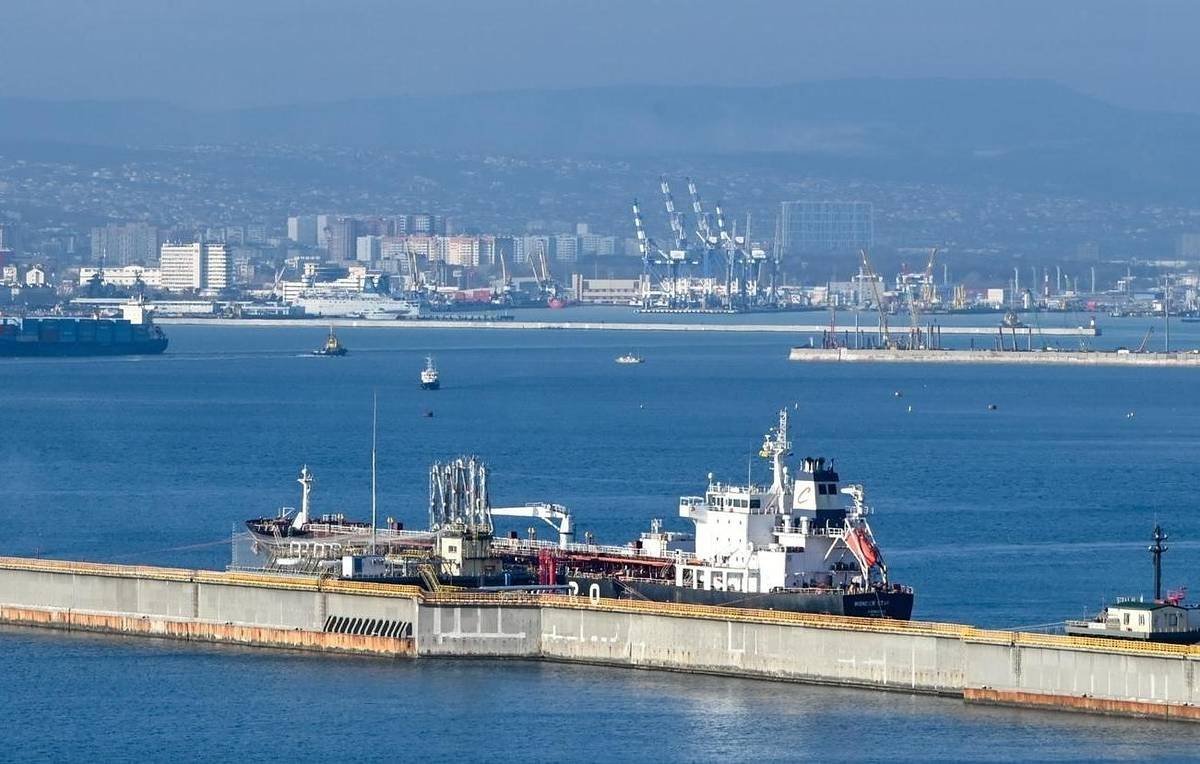
The European Commission (EC) has unveiled a draft of its latest, 21st package of sanctions against Russia. The package includes measures targeting Russian oil and gas exports, including indirect restrictions affecting third countries that import Russian energy resources. Experts interviewed by Rossiyskaya Gazeta argue that freezing the oil price cap will have little effect on Russian exports because supplies have already been redirected to Asia, but tighter sanctions on the shadow fleet and related service providers could raise transportation and compliance costs, although established mechanisms for bypassing such restrictions remain in place.
The most high-profile initiative is a proposal to freeze the price cap for seaborne shipments of Russian oil until January 2027. The EC’s reasoning is clear – under previously adopted rules, the price cap is supposed to be reviewed every six months, with the export price of Russian oil at loading ports not exceeding the market price of Russia’s flagship Urals crude blend minus 15%.
Under this formula, the price cap for Russian oil was set at $44.1 per barrel in January. In May and early June, however, a barrel of Urals crude at loading ports traded at approximately $80-88. Consequently, under the existing rules, the EU would have had to raise the price cap to $70-75 per barrel from July onward, if not higher, as the calculation is based on the average price over the relevant period. The European Commission is reluctant to take that step and will most likely freeze the cap instead. However, the measure has had virtually no impact on either the market or the actual supply of oil.
Valery Andrianov, Associate Professor at the Financial University under the Russian Government, told Rossiyskaya Gazeta that Russia has already redirected its oil exports to the markets of India and China, and these shipments are carried out without the use of Western tankers or Western insurance. As a result, any adjustments to the price cap will have no effect on the volume of these supplies.
At the same time, maintaining the cap at an artificially low level contributes to a wider discount on Russian crude oil. Asian buyers may demand additional price concessions from Russian companies. However, as long as the Strait of Hormuz remains blocked, the impact of this factor is not being felt.
The expert also noted that the 21st sanctions package is expected to expand restrictions on vessels belonging to the so-called “shadow fleet,” as well as on companies that provide bunkering services to those tankers. This will increase costs for Russian companies. Servicing tankers will become more expensive. According to Andrianov, targeted and specifically tailored sanctions are always more painful than broader measures such as the price cap.
TASS is not responsible for the material quoted in these press reviews