The Central Bank of Trinidad and Tobago has filed a lawsuit in the High Court seeking to recover millions of dollars from a construction company and its two directors over what it alleges is a sophisticated fraud involving a forged Government cheque for $20 million.
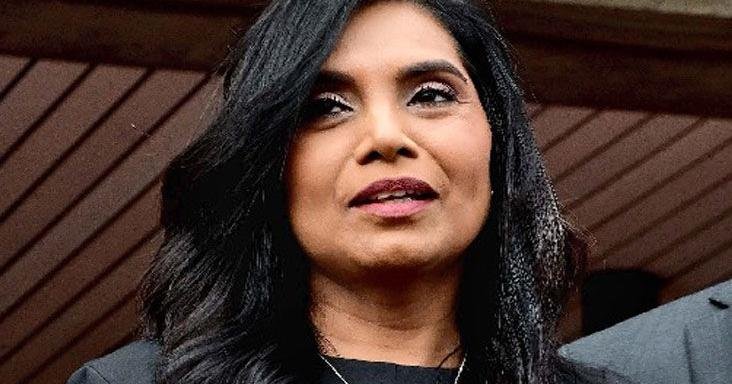
Auditor General Jaiwantie Ramdass in a letter to the Central Bank Governor dated January 23, 2026 red-flagged two fraudulent cheques for $20 million and for $25 million.

Representing Central Bank:
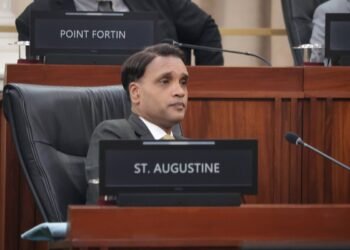
Anand Ramlogan
The Central Bank through its attorney, former attorney general Anand Ramlogan of Freedom Law Chambers, is pursuing legal action with respect to the $20 million cheque.
The legal claim filed on June 10, 2026 named NiPat General Contractors Limited, managing director Nigel Patterson Vincent and director Jackqui Watson-Vincent as defendants.
The Central Bank alleges that the company received funds from a cheque that was never issued by the Government and that large portions of the money were quickly dispersed before the fraud was discovered.
According to the Statement of Case, the matter centres on a cheque purportedly issued by the then Ministry of Planning and Development.
The Central Bank claims that on September 29, 2023, Vincent went to Republic Bank’s San Juan branch and deposited a cheque for $20 million into NiPat’s account.
The cheque was purported to be drawn on the ministry’s account at the Central Bank and made payable to NiPat.
The cheque was subsequently processed through the Electronic Cheque Clearing System.
After an initial query regarding an endorsement irregularity, Republic Bank re-presented the instrument and the Central Bank cleared it, resulting in $20 million being credited to NiPat’s account.
The Central Bank alleges that nearly a month later, on October 26, 2023, it discovered that the cheque was fraudulent.
Account frozen
According to the claim, officials from the Treasury Division of the Ministry of Finance confirmed that the ministry had never issued the cheque and was not indebted to NiPat at the time.
The Central Bank further stated that the signatures appearing on the cheque were not placed there by the individuals whose names appeared on the instrument, and were forgeries.
The bank contends that because the cheque was forged, the signatures were “wholly inoperative” under the Bills of Exchange Act and conveyed no legal entitlement to payment.
One of the most significant aspects of the claim concerns what happened after the funds were deposited.
The Central Bank stated that between October 5 and October 25, 2023, NiPat issued 66 cheques and transferred approximately $18.77 million out of its account.
According to the Statement of Case, among the payments were:
• $10 million to Naissal Construction and Maintenance Services Limited
• $2.5 million to R and D Holdings Limited
• $410,348 in payments to Nigel Vincent
• $170,000 in payments to Jackqui Watson-Vincent
• $400,000 in payments back to NiPat itself.
Court documents include detailed banking records showing dozens of transactions to companies, individuals, suppliers and other entities following the deposit of the cheque.
The Central Bank says that when it alerted Republic Bank to the alleged fraud on October 26, 2023, the bank immediately froze the account.
However, by that time, only $1.23 million remained.
That sum was subsequently recovered and credited to the Central Bank.
As a result, the Central Bank claims it suffered a net loss of $18,766,837.24.
Investigations by the Ministry of Planning, Economic Affairs and Development, which purportedly issued the cheque, confirmed that the ministry did not issue the cheque in question, NiPat was not owed any money by the ministry and had not performed any works or services for the ministry.
The Central Bank’s attorneys argue that the cheque was a forgery and was fraudulently cashed in circumstances where NiPat knew or ought to have known that it had no legal right to the $20 million paid under the instrument.
Restitution and
damages sought
The alleged fraud involving two cheques for $20 million and $25 million was red-flagged by Auditor General Jaiwantee Ramdass in a letter to the Central Bank Governor dated January 23, 2026.
The alleged fraudulent payment occurred during the term of former Central Bank Governor Alvin Hilaire, whose tenure ended in June 2025.
In 2025, a public dispute revealed that the Central Bank had prevented the Auditor General from auditing its accounts.
Hilaire’s successor, Larry Howai, immediately reversed that decision and granted the Auditor General full access to the bank’s systems. As a result, Ramdass was able to uncover the alleged fraud in which two fake cheques valued at $20 million and $25 million were paid out by the bank.
The Central Bank retained Freedom Law Chambers to pursue legal action in relation to one of the cheques.
The Central Bank is seeking substantial damages for fraud, deceit, unjust enrichment, unlawful means conspiracy, breach of trust, knowing receipt and dishonest assistance, together with interest and legal costs.
In a pre-action protocol letter dated March 6, 2026, the bank gave notice to Nigel Vincent and Jackqui Watson-Vincent that it intended to sue to recover the sums paid out.
By e-mail dated March 18, 2026, Central-based attorney Taradath Singh indicated that he was acting on behalf of NiPat and Mr and Mrs Vincent, and sought an extension of time to respond to the pre-action letter.
He also confirmed that he was authorised to accept service of the claim on behalf of his clients.
The matter has been assigned to Justice Sherlanne Pierre.
The Central Bank is asking the High Court for:
• restitution of the allegedly misappropriated funds
• damages for deceit and unlawful means conspiracy
• equitable compensation for breach of trust
• an account of profits against the individual defendants
• a declaration that any remaining proceeds of the $20 million are held on trust for the Central Bank
• interest of up to 10% per annum
• costs.