Groovy Banana co-founder Gaelle Meheut (GM) has called for respectful dialogue amid disagreement following an online backlash over a Pride Month Facebook post.
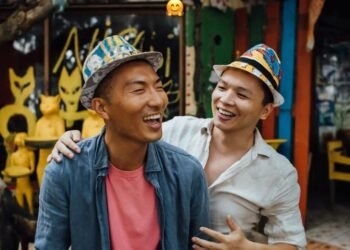
Groovy Banana Photography had offered free photo shoots to Lesbian, Gay, Bisexual, Transgender, Queer or Questioning (LGBTQ) couples during Pride Month. The content was widely shared across Facebook pages and discussion groups, drawing both criticism and support from members of the public.
The discussion prompted a statement from the Prime Minister’s Office (PMO) discouraging activities considered contrary to Vanuatu’s identity as a Christian nation founded on Christian principles, Melanesian values, and faith in God.
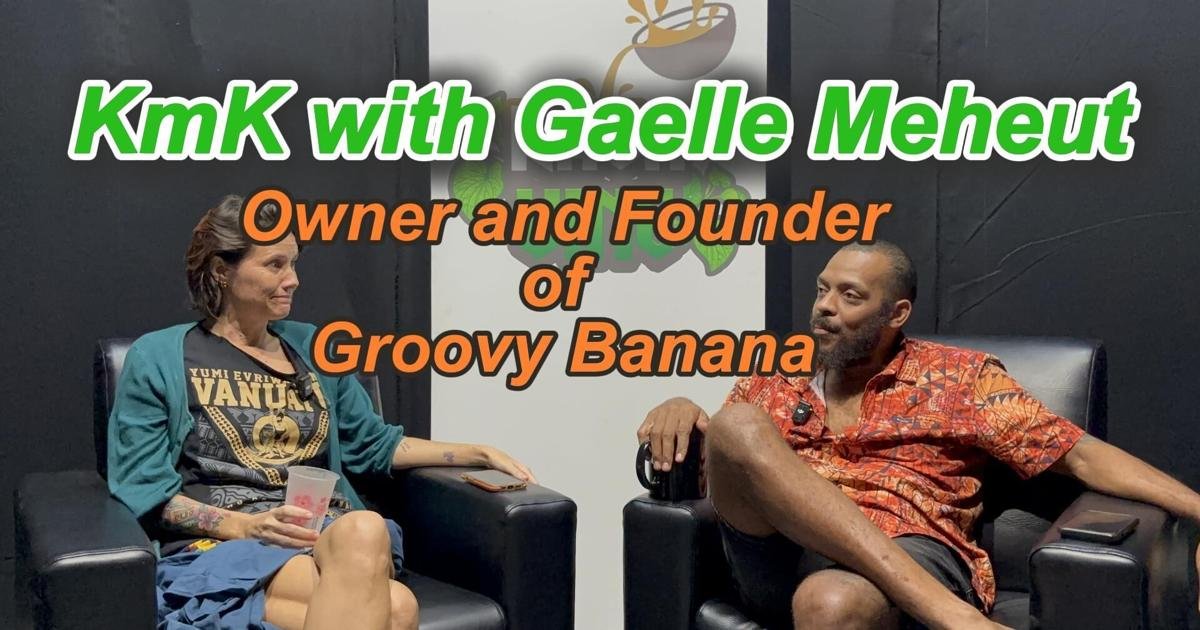
Speaking on the Kava mo Kajap podcast with host Mavuku Tokona (MT), Ms Meheut addressed the online reaction, including criticism of the post, threats against her family, and wider concerns about social media behaviour. She also explained why she stands by her decision and does not regret the post.
MT:Welcome back to another episode of Kava mo Kajap. We had another guest lined up, but plans changed and, as everyone knows, social media exploded this week. Joining us today is Gaelle, co-founder of Groovy Banana Photography. Many people know your work. You’ve been in Vanuatu for 13 years and have photographed countless families, businesses, government events, and visitors.
Recently, you posted a Pride Month message and offered free photo shoots to LGBTQ couples. The post attracted a lot of attention online. We wanted to give you an opportunity to explain your side of the story. When you first made the post and started seeing the reactions, what went through your mind?
GM:What happened is that I wanted to do something nice for the LGBTQ community during Pride Month and show them my support.
A lot of our clients are tourists and international visitors. We also work with local businesses, government departments, and resorts. I wanted people to know that Groovy Banana is an LGBTQ-friendly business and that people would feel safe with us.
I also have many friends who are part of the LGBTQ community. They are ordinary people. LGBTQ people exist everywhere, and they exist in Vanuatu too. They are legally allowed to exist here. I didn’t think there was anything wrong with offering a free photo shoot on my page.
But then screenshots of the post started appearing in other Facebook groups and pages, and that’s when a lot of the hate started.
MT:Did you expect that level of backlash?
GM:I knew there would be criticism because I’ve posted photos from V-Pride events before, both when I attended and when I was hired to photograph them.
I had seen negative comments before, but I didn’t think it would reach the level where the Prime Minister’s Office (PMO) would issue a statement, or where people would start making threats against my family.
MT:The PMO issued a statement condemning Pride-related activities. It didn’t specifically mention you, but it was a broad statement discouraging those activities.
Meanwhile, many of the comments online were from people describing Vanuatu as a Christian country. Yet some of those same comments were extremely hateful.
GM:That’s what surprised me.
People kept telling me this is a Christian country, but then some of the comments became very aggressive. At one point, someone threatened to rape my child.
That’s not just an insult. That’s a threat.
I’ve kept screenshots and links, and I intend to report it to police. I don’t know what outcome there will be, but I don’t think this kind of behaviour should be ignored.
There’s nothing funny about rape. It’s not something people should joke about.
MT:You intend to report it?
I’ve been gathering everything. I think it’s important because comments like that shouldn’t become normal.
MT:One thing that struck me was that while people were condemning your post, Vanuatu continues to deal with real cases of rape and sexual abuse.
That’s what upset me the most.
People were more outraged by a free photo shoot than they were by comments threatening violence against a child.
The LGBTQ community isn’t harming anyone. As long as people are in consensual relationships and not hurting anyone, why should they become targets of hatred?
MT:Some people would say they simply disagree with your views.
People are allowed to disagree. We don’t all have the same beliefs or the same life experiences.
What I’m struggling to understand is why disagreement has to become abuse.
If somebody doesn’t like my page, they can unfollow it. If they don’t agree with me, they can say so respectfully.
MT:Do you think social media encourages this behaviour?
I think we have social media rage now, just like road rage.
People say things online that they would never say face-to-face. Instead of saying, “I don’t agree with you,” they jump straight to insults.
People told me to leave the country. Others said I shouldn’t have a voice because I’m white or because I wasn’t born here.
But I am a citizen and I live here legally.
MT:Do you think some of those comments were driven by anti-foreigner sentiment?
I understand there are frustrations about foreigners owning businesses or having opportunities. I understand some of that history.
But this isn’t a question of race or nationality.
It’s a human rights issue.
I wasn’t trying to impose a culture on anyone. I was simply offering a free photo shoot.
MT:Have you seen any impact on your business?
The people attacking me online are generally not the people who would hire me anyway.
Fortunately, it hasn’t affected business.
But even if it did, that’s not really the point.
The point is that people should be able to express support for a legal community without receiving threats.
MT:Did members of the LGBTQ community reach out to support you?
A lot of support came privately from friends and followers.
Many people don’t want to speak publicly because they know they’ll become targets themselves.
Not everyone wants to be dragged into an online fight.
MT:One criticism often raised is that public support for Pride Month is promoting something people don’t agree with.
GM:But that’s where I think there’s a misunderstanding.
People seem to think that because I posted about LGBTQ people, I’m somehow trying to make people gay.
That’s not how it works.
People don’t become gay because they see a photo shoot.
I’m simply acknowledging that LGBTQ people already exist and telling them they are welcome.
MT:Do you regret making the post?
MT:Would you do it again?
I’ve apologised to anyone who felt offended, because I never intended to upset anyone.
But I don’t believe I did anything wrong.
MT:Some people asked you to remove the post and delete the comments.
GM:No, because I think it’s important that people see what happened.
The comments show exactly how some people behave online.
People were saying it was wrong to offer a photo shoot to LGBTQ couples, yet some of those same people were laughing at comments threatening violence against a child.
That contradiction needs to be seen.
MT:Some critics argued that because you’re a naturalised citizen, you shouldn’t comment on social issues in Vanuatu.
GM:I disagree with that completely.
Citizens have the right to express opinions.
People disagree with governments all over the world. That’s normal.
Being a citizen means participating in society.
MT:What would you say to people who strongly disagree with you?
GM:Let’s talk respectfully.
We can disagree and still treat each other with dignity.
If someone wants to meet face-to-face and have a respectful discussion, that’s fine.
We might never agree, but we can still be respectful.
GM:I think people need to calm down.
This was a free photo shoot.
It’s not a campaign. It’s not a political movement.
It’s simply a gesture of support to a group of people who already exist in our society.
At the end of the day, I believe in kindness.
If we’re kind to each other, that kindness spreads.
That’s the kind of community I want to be part of.
MT:Gaelle, thank you for joining us.
GM:Thank you for having me.